
Choosing the wrong valve for a water system can be a disaster. A failure can lead to leaks, major property damage, and costly project repairs, making your company look bad.
Yes, PVC ball valves are an excellent choice for water supply systems. You must, however, select the correct valve based on the system’s pressure, pipe size, and whether it will be exposed to sunlight.
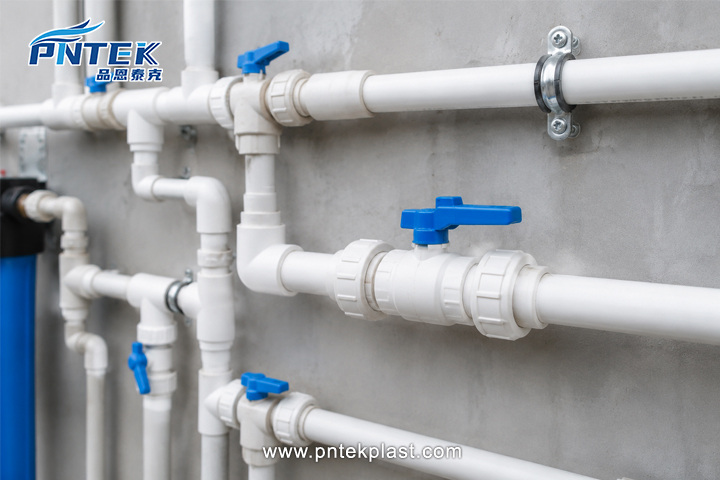
As someone who has been manufacturing these valves for nearly 20 years, I can tell you that PVC is one of the most reliable materials for managing water flow. I’ve supplied valves for everything from residential plumbing in Jakarta to large-scale irrigation projects across Southeast Asia. The key is understanding that not all PVC valves are the same. A professional buyer like you needs to know the specific details that separate a valve that lasts for decades from one that fails in a year. Let’s look at the questions you should be asking.
What pressure rating do PVC ball valves have?
You worry that a valve might fail under pressure. A burst valve means a flooded site, a failed project, and an angry customer calling you to ask why the products you supplied were not strong enough.
PVC ball valves are available in different pressure ratings, most commonly PN10 and PN16. The PN rating indicates the maximum pressure in Bars it can handle at 20°C. Always check the valve body for this rating.
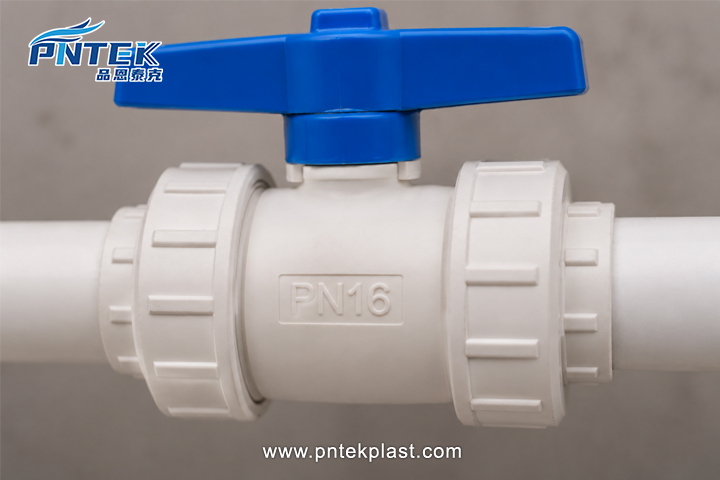
The pressure rating, or PN (Pressure Nominal), is the most important technical detail for safety. It tells you the maximum pressure the valve can safely withstand. For your customers in Indonesia, the two most common ratings you will see are PN10 and PN16. PN10 means the valve can handle 10 Bars of pressure, which is good for low-pressure applications like gravity-fed systems or drainage. PN16 can handle 16 Bars, making it suitable for most municipal water supply and pressurized systems.
It is also important to remember that this rating is for water at room temperature (around 20°C). If the water is warmer, the valve’s ability to handle pressure decreases. Always choose a valve with a pressure rating higher than the system’s expected operating pressure. This provides a crucial safety margin.
| Pressure Rating | Maximum Pressure | Common Applications |
|---|---|---|
| PN10 | 10 Bar / 145 PSI | Irrigation, drainage, gravity-fed water systems |
| PN16 | 16 Bar / 232 PSI | Residential & commercial water supply, pools, industry |
What is the standard size range for PVC ball valves?
You need to order valves, but if you get the wrong size, the entire project stops. This leads to delays, frustrated contractors, and the high cost of holding useless inventory in your warehouse.
The most common standard sizes for PVC ball valves range from 1/2 inch (DN15) up to 4 inches (DN100). This range covers most residential, commercial, and agricultural water supply applications.
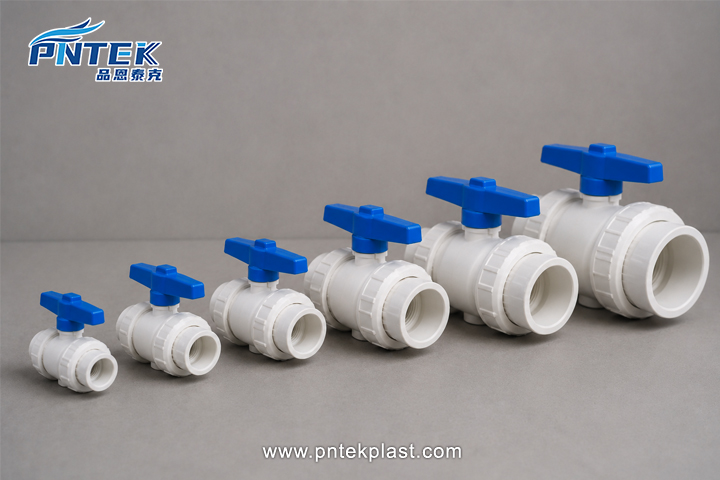
For your work in procurement, managing inventory of the correct sizes is key. The vast majority of sales will come from this standard size range. The size of the valve refers to the nominal pipe size it is designed to connect with. Here is a simple guide to how the sizes are used:
| Inch Size | Metric Size (DN) | Common Use Case in Indonesia |
|---|---|---|
| 1/2″ | DN15 | Connection to individual taps and fixtures |
| 3/4″ | DN20 | Main water lines for smaller homes |
| 1″ | DN25 | Main water lines for larger homes, irrigation |
| 2″ | DN50 | Main distribution lines, pool systems |
| 3″ & 4″ | DN80 & DN100 | Commercial building mains, agricultural mains |
While we, as a factory, can produce much larger sizes (up to 8 inches or more), your core business will focus on this 1/2″ to 4″ range. Working with your sales team to understand which sizes are most popular for local contractors will help you optimize your stock and improve your purchasing efficiency.
How long does a PVC ball valve last?
Your customers expect products to last. If a valve fails just a few years after installation, they will lose trust in the product and, more importantly, they will lose trust in your company.
A high-quality PVC ball valve, made from 100% virgin material and installed correctly, can last for decades. Its lifespan can exceed 50 years in typical water supply applications with minimal chemical or UV exposure.
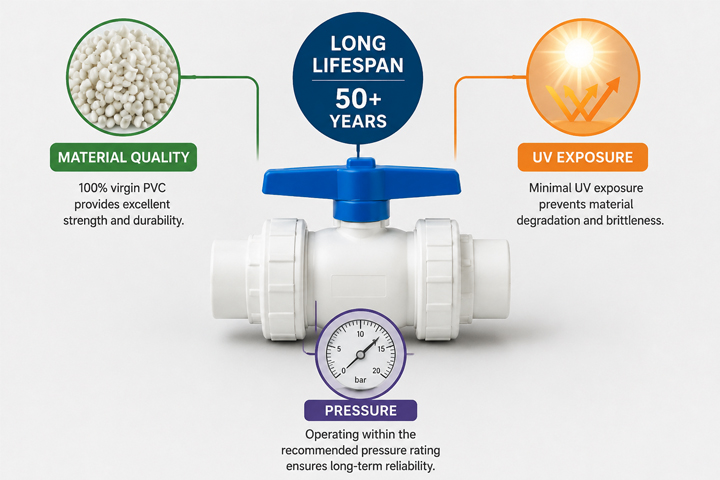
The lifespan of a PVC valve depends almost entirely on one thing: the quality of the raw material. This is a point I always make to my partners. Many factories try to save money by mixing cheap calcium carbonate filler into their PVC. This makes the valve heavy, but it also makes it brittle and weak. I have seen these cheap valves crack and fail in less than two years.
A valve made from 100% virgin PVC resin, like the ones we produce at Pntek, has maximum strength and durability. Other factors that affect lifespan are:
- UV Exposure: Direct sunlight will degrade standard PVC over time.
- High Cycle Rate: A valve that is opened and closed many times a day will wear out its seals faster than a valve that is mostly left open or closed.
- Water Hammer: Sudden pressure spikes can stress the valve.
For a standard water supply system, a quality valve will not be the weak link. It will last as long as the pipes it is connected to.
Are PVC valves resistant to UV exposure?
A contractor installs your valves outdoors for an irrigation system. After a year in the sun, the valve handles crack and the bodies become brittle, causing leaks. The customer blames your product.
No, standard white or grey PVC is not resistant to UV radiation from direct sunlight. Over time, UV exposure will break down the material, making it brittle and prone to cracking and failure.
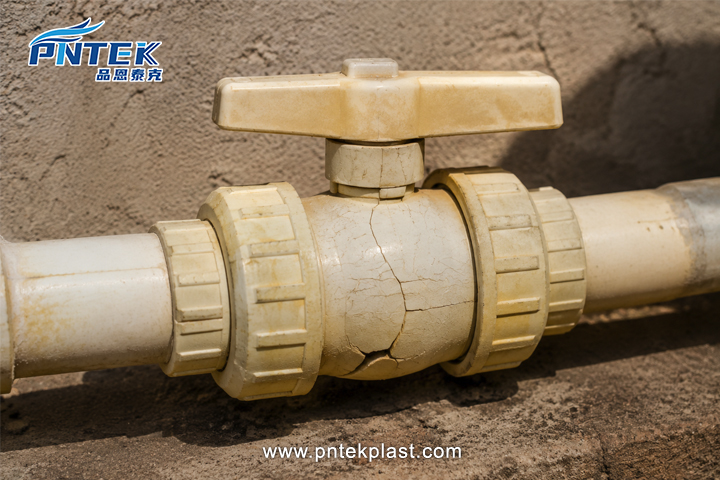
This is a critical point for the Indonesian market, where many water systems for agriculture or rural supply are exposed to intense sunlight. The UV rays cause a chemical reaction that breaks down the long polymer chains that give PVC its strength. The valve doesn’t just change color; it loses its structural integrity.
However, there are simple solutions you can advise your customers on:
- Shielding: The easiest method is to protect the valve from the sun. This can be done by wrapping it with UV-blocking tape, painting it with a light-colored latex paint (not oil-based), or installing it inside a valve box.
- Using UV-Resistant Materials: As a manufacturer, we can produce valves with special UV inhibitors, like titanium dioxide, mixed into the PVC resin. This significantly increases the valve’s resistance to sunlight. These are specialized products, so you would need to specifically request them.
For your business, it is important to know where your products will be used. If a significant portion is for outdoor applications, offering a UV-protected solution or providing clear installation advice is a sign of a professional and responsible distributor.
Conclusion
PVC ball valves are an ideal choice for water systems. Success depends on selecting the right pressure rating and size, ensuring quality material, and protecting the valve from outdoor elements when needed.
Post time: May-19-2026


