
A tiny seal inside your valve fails, causing a massive leak. This unexpected failure leads to system downtime, costly damage, and unhappy clients who blame your product for being faulty.
Choose EPDM for most water-based applications, especially with outdoor exposure, sunlight, or ozone. Select NBR for applications involving oils, greases, fats, or hydrocarbon-based fluids. The right choice depends entirely on the fluid and environment.
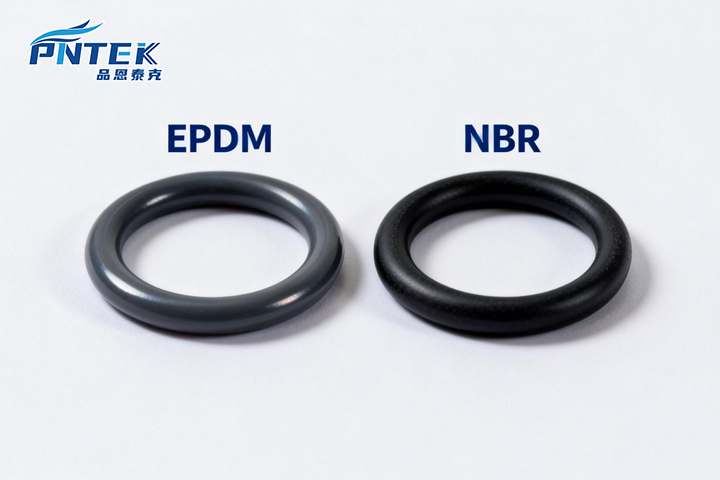
I was talking with my partner Budi about an issue one of his clients had. They were supplying valves for a fish farming operation in Indonesia that used ozone generators to keep the water clean. After a few months, the valves started leaking. The problem wasn’t the valve body; it was the standard NBR seals inside. The ozone was attacking the rubber, making it brittle. We advised them to switch to valves with EPDM seals, and the problem was solved immediately. It’s these small material details that determine the success or failure of a project.
Which is better, EPDM or NBR?
You see two seal options for a valve, and the NBR option is cheaper. You are tempted to choose it to save on costs, but you worry it might not be the right decision.
Neither material is better overall; they are designed for different jobs. EPDM is better for water, weather, and heat resistance. NBR is superior for resistance to oils, fuels, and greases.
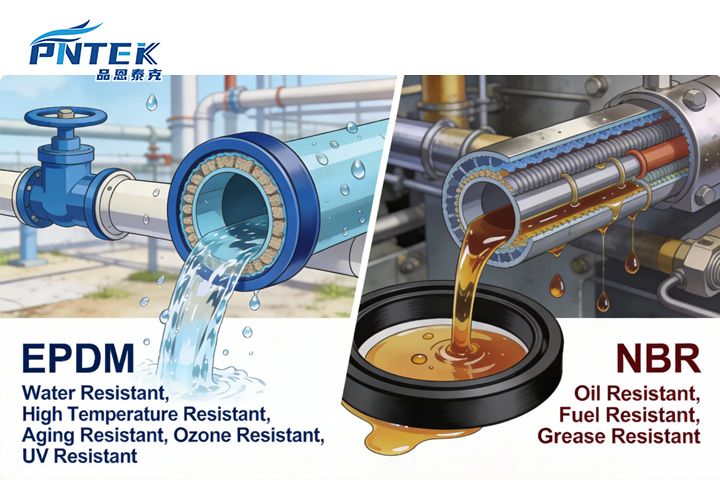
Thinking one is simply “better” is a common mistake. The choice is about chemical compatibility. EPDM (Ethylene Propylene Diene Monomer) has a very stable chemical structure that makes it extremely resistant to weathering, sunlight (UV), ozone, and both hot and cold water. This makes it the perfect choice for most water-related industries like irrigation, swimming pools, and general plumbing. NBR (Nitrile Butadiene Rubber), on the other hand, is known for its excellent resistance to petroleum-based oils, fuels, and fats. However, it breaks down quickly when exposed to ozone and UV light. So, if the valve is for a water line, EPDM is the superior choice. If it is for a system handling oils or certain chemicals, NBR is the only right answer.
What is the difference between EPDM and PVC rubber?
Your client is asking about the “rubber” in the valve. It is easy to get confused between the rigid plastic of the valve body and the flexible material used for the seals inside it.
They are completely different materials for different jobs. PVC is a rigid thermoplastic used to make the valve’s body and ball. EPDM is a flexible synthetic rubber used to make the O-rings and seats that create the seal.
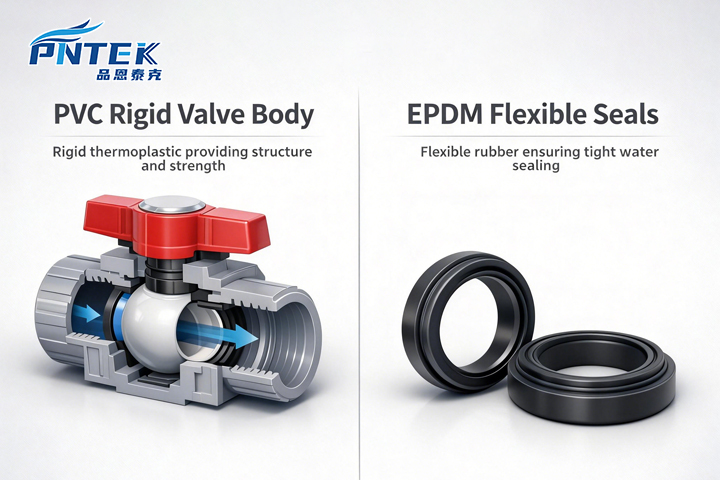
This is a point of frequent confusion. Let’s make it very simple. Think of the valve like a door. The PVC is the strong, rigid door frame and the door itself. It provides the structure and strength. EPDM is the flexible rubber weather-stripping that lines the frame. When you close the door, the weather-stripping compresses to create a perfect, watertight seal. You cannot make a door out of weather-stripping, and you cannot make a flexible seal out of a rigid door frame. In our valves, PVC provides the pressure-resistant housing. EPDM provides the soft, flexible parts inside that actually stop the flow of water. There is no such thing as a “PVC rubber” seal in these valves; the seals are a separate, specialized material.
What is the difference between EPDM and NBR 70?
You are looking at a specification sheet and see “NBR 70″. You know what NBR is, but you are not sure what the number “70″ means or how it compares to EPDM.
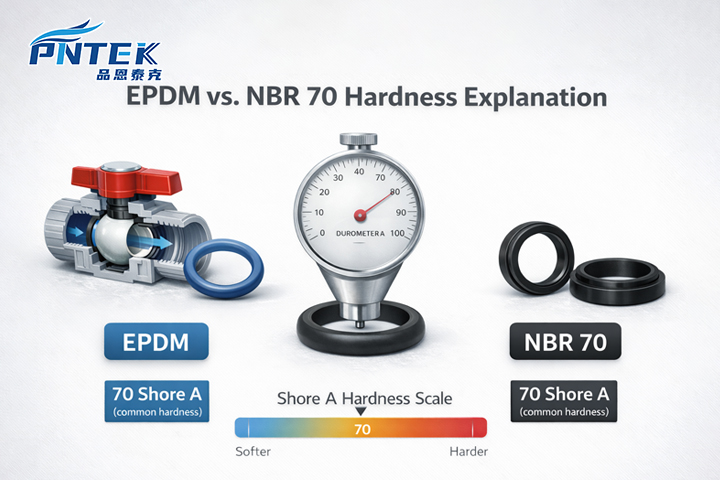
The “70″ in NBR 70 refers to its durometer, or hardness rating. It indicates how hard the rubber is. Both EPDM and NBR come in various hardnesses, with 70 Shore A being a common standard.
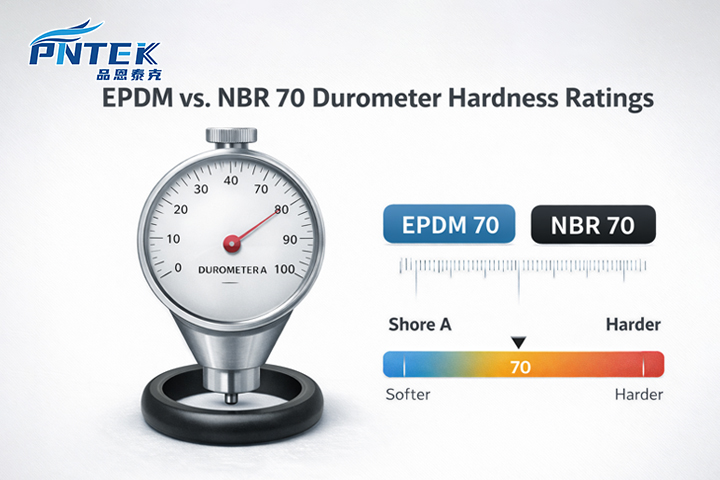
The number is not part of the material type; it is a measure of its physical properties. Hardness for soft rubbers is measured on a “Shore A” scale. A durometer of 70 is a very common, middle-of-the-road hardness. It is firm enough to resist being pushed out of place under pressure but still flexible enough to create a good seal. You can find NBR 50 (softer) or NBR 90 (much harder). The same applies to EPDM; you can have EPDM 70 as well. So, the real comparison is always between the base materials—EPDM vs. NBR. The hardness number tells you if it is suitable for your system’s pressure. For most standard water and air applications, a 70 durometer seal provides the perfect balance of performance and durability.
What is the temperature rating of EPDM vs NBR?
You need to select a valve for a system that might get very hot in the sun or very cold in the winter. Choosing a seal that cannot handle the temperature will cause it to become brittle and leak.
EPDM has a superior temperature range, typically from -50°C to 150°C (-58°F to 302°F). NBR has a more limited range, usually from -40°C to 120°C (-40°F to 248°F).
Temperature performance is a major reason why EPDM is often the premium choice. Its ability to stay flexible at very low temperatures makes it more reliable in cold climates. Its higher maximum temperature means it can handle hot water lines and is less likely to degrade in equipment that sits in the hot sun. NBR, while good, can become hard and brittle when it gets too cold, which can compromise its ability to seal. At high temperatures, it can age and harden faster than EPDM. This is why in China, many standard, low-cost valves use NBR, but we always recommend EPDM for any application that faces temperature extremes or requires long-term reliability.
Seal Material Quick Comparison
| Feature | NBR (Nitrile) | EPDM |
|---|---|---|
| Water Resistance | Good | Excellent |
| Oil & Fuel Resistance | Excellent | Poor |
| Sunlight (UV) / Ozone | Poor | Excellent |
| Temperature Range | -40°C to 120°C | -50°C to 150°C |
| Relative Cost | $ (Lower) | $$ (Higher) |
Conclusion
For water, weather, and temperature extremes, choose EPDM. For oils and fuels, choose NBR. Matching the seal to the application is the secret to a reliable, long-lasting, leak-free PVC valve.
Post time: Jan-12-2026


