
Connecting flexible HDPE pipe to a rigid metal valve or pump seems impossible. The materials and methods don’t match, and a failed connection here means a catastrophic and expensive system failure.
You connect it using a two-part system: an HDPE flange adaptor (also called a stub end) is heat-fused to the pipe, and a separate metal backing ring slides on behind it to provide the bolting strength.
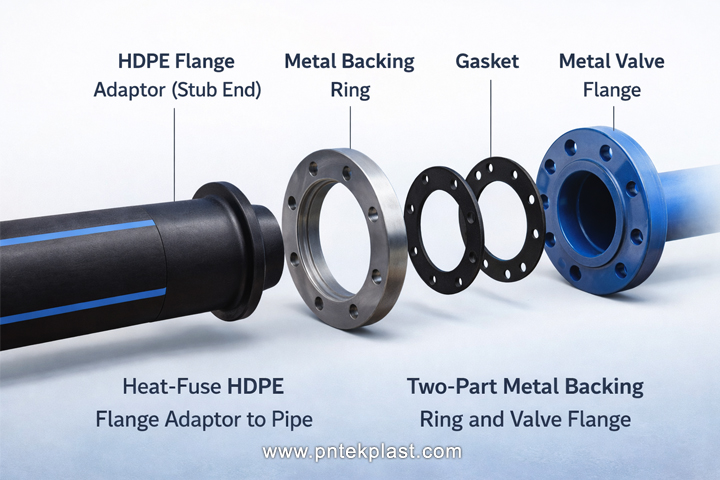
This is one of the most common questions I get from partners like Budi who are transitioning more projects to HDPE. It’s not intuitive at first. Unlike metal pipes where the flange is part of the pipe or welded directly to it, HDPE requires a special approach. The beauty of this system is that it creates a strong, pressure-tight seal without ever putting stress on the HDPE plastic itself. Let’s break down how these parts work together to create a perfect, removable connection.
What is the difference between a flange and a flange adaptor?
You’re looking at a supplier’s catalog and see “flange” and “flange adaptor.” They seem related, but ordering the wrong one will bring your installation to a complete halt while you wait for the right parts.
A standard flange is a single piece of metal that is welded or threaded onto a pipe. An HDPE flange adaptor is a two-part system: an HDPE stub that is fused to the pipe and a loose metal backing ring for bolting.
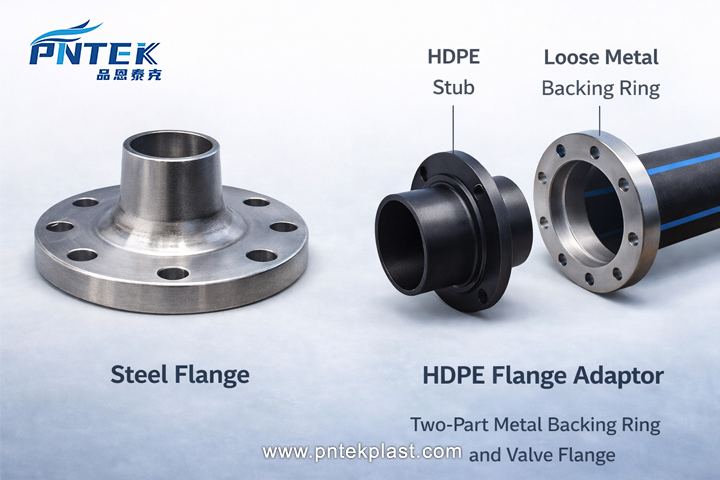
| Component | Material | Purpose |
|---|---|---|
| Flange Adaptor (Stub End) | HDPE | Fused to the pipe and provides the sealing face. |
| Backing Ring (Backing Flange) | Metal | Slides behind the adaptor and provides clamping force. |
| Gasket | Rubber | Creates the pressure-tight seal between the faces. |
The HDPE flange adaptor creates the plastic-to-plastic or plastic-to-metal sealing surface. The metal backing ring is completely separate. Its only job is to provide a strong, rigid surface for the bolts to tighten against. This design cleverly isolates the HDPE from the stress of the bolts, which could otherwise damage the plastic. When you place an order, you must specify both the HDPE flange adaptor and the metal backing ring.
How do you install a flange adaptor?
You have the right parts, but the assembly order is critical. A simple mistake during installation, like forgetting one step, can mean you have to cut off the fitting and start all over again.
First, and most importantly, slide the metal backing ring onto the pipe. Then, butt-fuse the HDPE flange adaptor to the end of the pipe. Finally, place a gasket on the face and bolt it to the mating flange.
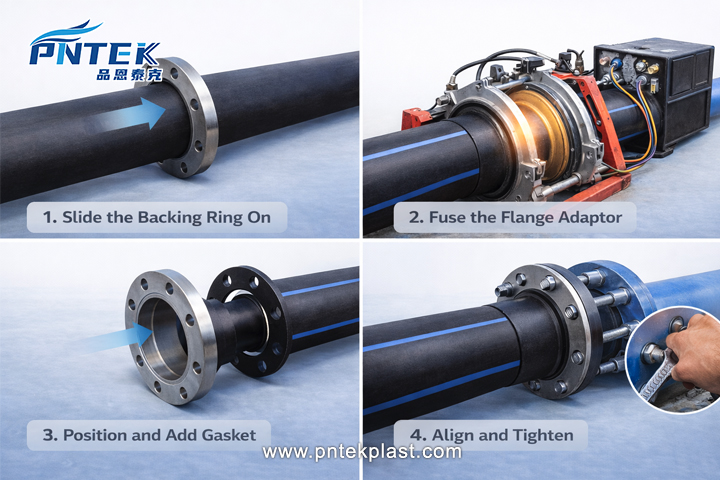
- Slide the Backing Ring On: Before you do anything else, slide the metal backing ring over the open end of the HDPE pipe. The ring should be loose on the pipe. This is the most common and most critical step to remember.
- Fuse the Flange Adaptor: Using a butt fusion machine, weld the HDPE flange adaptor onto the end of the pipe, just like you would join two pieces of pipe. This creates a permanent, strong, leak-proof joint.
- Position and Add Gasket: Once the fused joint has cooled, you can slide the backing ring up against the back of the flange adaptor collar. Place a rubber gasket onto the sealing face of the adaptor.
- Align and Tighten: Align the bolt holes of your backing ring with the holes on the mating flange (e.g., on a valve or pump). Insert your bolts and tighten them in a star pattern to ensure even pressure.
Can flange adaptors be reused?
Your team is dismantling a temporary water line. Throwing away all the components seems wasteful, but reusing a part that is no longer safe could lead to a major failure on the next job.
The metal backing ring can often be reused if it is free of corrosion and damage. The HDPE flange adaptor itself cannot be reused, as it is permanently fused to the pipe and must be cut off to be removed.
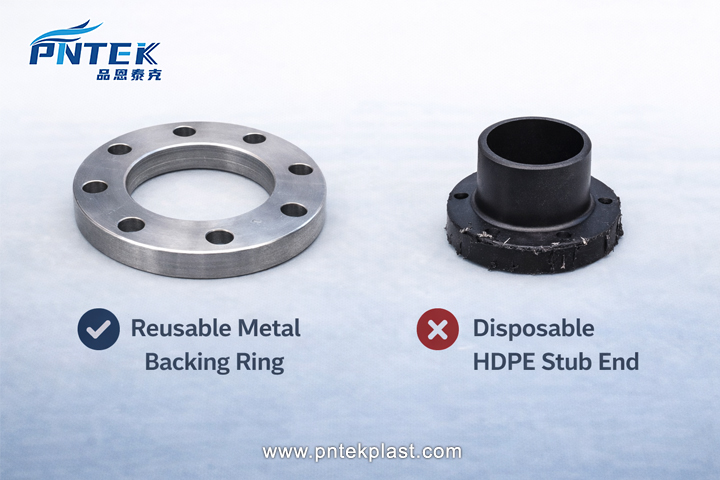
- Check for Corrosion: Make sure there is no significant rust that could weaken the ring.
- Check for Flatness: The ring must be perfectly flat. If it was warped or bent from over-tightening on a previous job, it will not provide even pressure.
- Check for Damage: Look for any cracks or significant damage around the bolt holes.
How do flange adaptors work?
You see the separate parts, but it’s hard to trust how a loose metal ring can create a high-pressure seal. Understanding the mechanics gives you confidence that the connection is secure and reliable.
The system works by transferring force. The bolts are tightened on the metal backing rings, which then press the flared faces of the HDPE adaptors together. This pressure compresses a gasket between them, creating a secure, leak-proof seal.
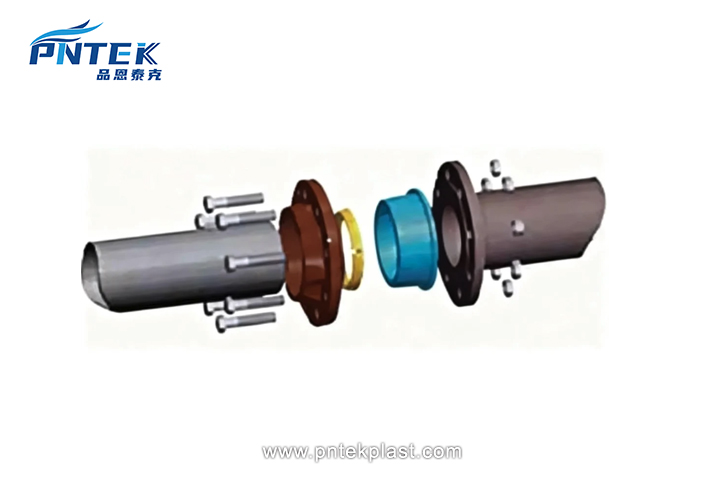
The design is quite clever and simple. It relies on a principle of compression. When you tighten the nuts and bolts, you are pulling the two metal backing rings towards each other. The backing ring’s only job is to distribute this clamping force evenly around the back collar of the HDPE flange adaptor. This even pressure pushes the front face of the adaptor forward. The actual seal isn’t made by the metal rings, but by the two adaptor faces (or one adaptor face and a valve face) squeezing a rubber gasket between them. The HDPE material is flexible enough to create a perfect seal under this compression but strong enough not to deform. This method ensures that the stress from the bolts is handled by the metal backing rings, protecting the HDPE pipe and fitting from any concentrated stress that could cause it to fail over time. It’s a robust system that creates a removable joint that is just as reliable as a fully welded one.
Conclusion
To connect an HDPE flange, use an HDPE flange adaptor and a metal backing ring. This simple two-part system creates a strong, reliable, and easily removable connection for your pipeline.
Post time: Feb-11-2026


