
Are you concerned about weak points and leaks in your piping system? Mechanical joints can fail under ground stress or pressure surges, risking costly water loss and emergency repairs.
HDPE pipes are fused together using thermal energy in a process called heat fusion. This method melts the surfaces of the pipe and fitting, which are then pressed together. As they cool, they form a permanent, monolithic joint that is as strong, or even stronger, than the pipe itself.
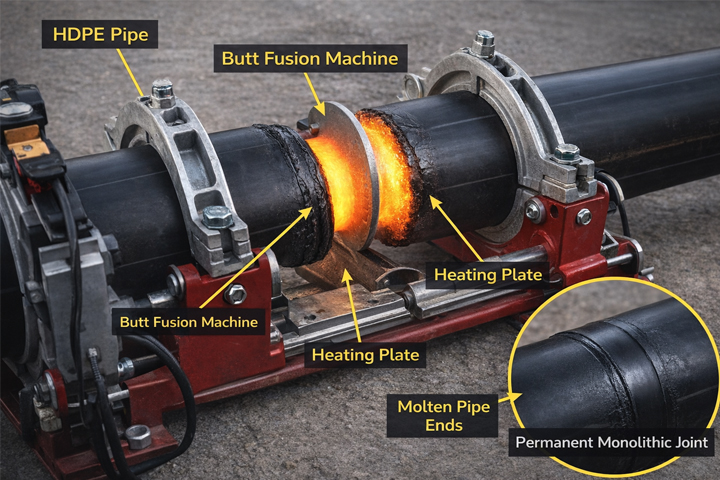
In my years leading Pntek, I’ve seen that the most reliable systems are the ones with the fewest potential points of failure. Heat fusion eliminates the mechanical joint entirely. For a purchasing manager like Carlos, offering a fused HDPE system to his clients in mining or municipal water means offering true peace of mind. He’s providing a leak-proof, maintenance-free solution that will last for generations. That is the essence of a win-win collaboration.
Can you fusion weld an HDPE pipe?
Are you hesitant to “weld” plastic, thinking it can’t be as strong as a metal weld? This misunderstanding might lead you to use inferior mechanical joints where a permanent, superior solution exists.
Yes, you can and should fusion weld HDPE pipe. Because HDPE is a thermoplastic, it can be melted and reformed without losing its properties. This allows us to create a permanent, leak-proof weld that is the industry standard for strength and reliability.
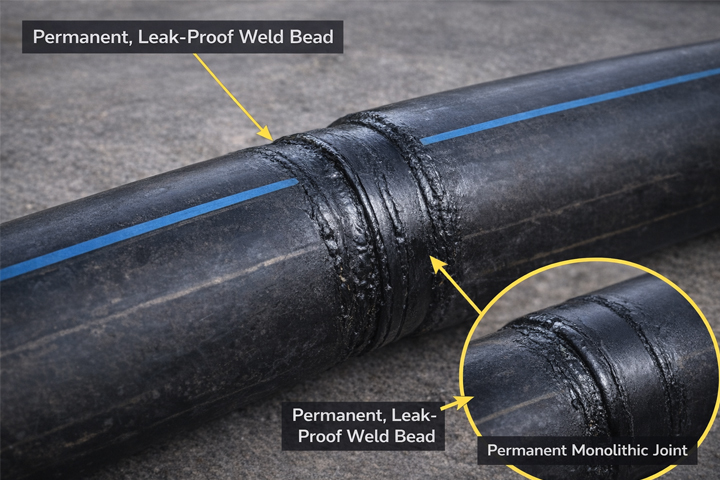
The term “welding” is absolutely correct here. At Pntek, we champion technologies that deliver uncompromising quality, and HDPE fusion is a prime example. It’s a precise, engineered process. When Carlos explains to a contractor that the fusion joint is a true weld and not just glued, he elevates the conversation. He demonstrates a technical understanding that builds confidence and helps his client build a more robust, long-lasting infrastructure.
The Science Behind HDPE Fusion Welding
Unlike PVC, which is joined with solvent cement, HDPE cannot be glued. Its molecular structure resists chemical bonding. Instead, we use a physical process that fundamentally changes the state of the material.
- Thermoplastic Nature: HDPE melts when heated and solidifies when cooled. This process can be repeated without degrading the material. This is the key property that makes fusion welding possible.
- A Monolithic Joint: The goal of fusion is to create a single, continuous piece of plastic. The joint isn’t a connection point; it becomes part of the pipe itself, eliminating gaskets, bolts, and other potential failure points.
This creates a system with significant advantages over traditional piping materials.
| Feature | HDPE Fusion Welding | Mechanical Joining (e.g., Flanges) |
|---|---|---|
| Joint Strength | As strong or stronger than the pipe itself. | Considered a weak point in the system. |
| Leak Potential | Virtually zero. A continuous, seamless pipe. | Moderate to High. Gaskets degrade and bolts loosen. |
| Long-Term Reliability | Excellent. No maintenance required on the joint. | Fair. Requires periodic inspection and tightening. |
How to bond HDPE to HDPE?
Are you trying to connect two HDPE pipes and reaching for glue or clamps? This is a critical mistake that will lead to immediate and total failure of the joint as soon as it is pressurized.
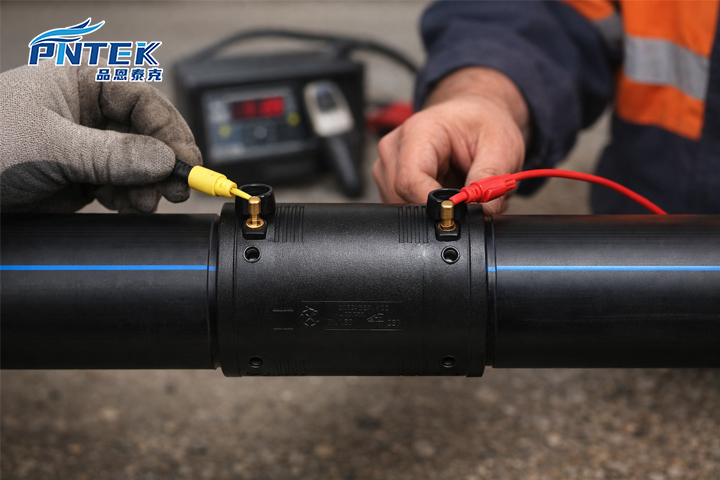
You bond HDPE to HDPE with heat fusion, never with glues or solvents. The two primary professional methods are butt fusion for pipe-to-pipe connections and electrofusion, which uses special fittings with built-in heating coils for repairs and tight spaces.
Knowing the right tool for the job is fundamental to quality work. I always emphasize to our partners that HDPE’s resistance to chemicals is so great, it even resists the chemicals in glues. This is a strength, not a weakness. For Carlos, being able to clearly explain the ‘how’ and ‘why’ of butt fusion versus electrofusion empowers his customers. He’s not just selling pipes and fittings; he’s providing the knowledge to build a system correctly.
The Two Main Fusion Methods Explained
The method you choose depends on the pipe size and the accessibility of the joint. Both produce a permanent, reliable weld.
1. Butt Fusion: This is the workhorse method for joining long, straight runs of HDPE pipe, typically 2 inches in diameter and larger.
- The pipe ends are clamped into a machine and perfectly shaved flat (“faced”).
- A calibrated heating plate is inserted between the ends, melting them to a specific temperature.
- The plate is removed, and the molten ends are pressed together under controlled pressure.
- The joint is held under pressure to cool, forming a strong, permanent weld.
2. Electrofusion: This method is perfect for repairs, making connections in a trench, or in areas where a large butt fusion machine won’t fit.
- A special electrofusion fitting (like a coupler or saddle) with embedded copper coils is used.
- The pipe ends are cleaned and inserted into the fitting.
- An electrofusion processor is connected to the fitting, sending a precise electrical current through the coils.
- The coils heat up, melting the inside of the fitting and the outside of the pipe, fusing them together.
How should HDPE pipe be cooled after fusing?
Are you rushing the fusion process to save time on the job site? Improper cooling can create a hidden flaw in your weld, leading to a brittle joint that fails unexpectedly under pressure.
An HDPE fusion weld must cool down naturally while remaining clamped under pressure in the fusion machine. Never use water, wet rags, or fans to speed up the process. This controlled cooling is critical for the joint to develop its full strength and flexibility.
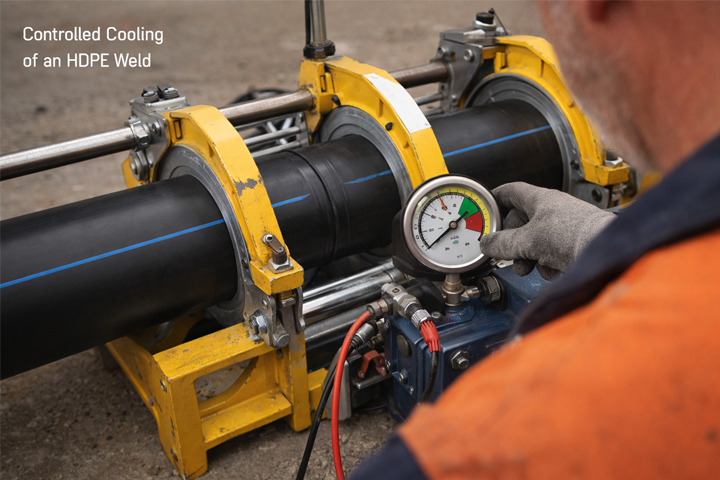
Patience is a key ingredient in quality. At our automated production facilities, every step is precisely controlled, and the cooling phase is one of the most critical. Rushing this step is like taking a cake out of the oven too early; it might look done, but it’s weak on the inside. When Carlos advises his clients to strictly follow the cooling time charts, he is protecting them from future failure and ensuring the system they install is as strong as we designed it to be.
The Critical Role of the Cooling Phase
What happens during cooling is just as important as what happens during heating. It’s when the material’s final properties are locked in.
- Proper Crystallization: Slow, natural cooling allows the melted polymer chains to rearrange themselves back into a strong, interwoven, and stress-free structure. This gives the joint both strength and ductility (flexibility).
- The Danger of Quenching: Rapidly cooling the joint with water (quenching) freezes the polymer chains in a disorganized, high-stress state. This creates an extremely brittle joint. It might look fine on the outside, but it will have no ductility and can crack easily under pressure or impact.
Always adhere to the manufacturer’s recommended cooling times, which vary based on pipe diameter and wall thickness.
| Do | Don’t |
|---|---|
| Follow the manufacturer’s time chart for cooling. | Use water, wet rags, or fans to speed it up. |
| Keep the pipe clamped under full fusion pressure. | Release the pressure before the cooling time ends. |
| Allow the joint to cool to ambient temperature before rough handling. | Apply stress (bending, pulling) immediately after unclamping. |
What type of fittings for HDPE pipe?
Do you have your HDPE pipe but are unsure how to make turns or connect to a valve? Using the wrong fitting can compromise the integrity of your entire leak-proof system.
There are three main categories of fittings for HDPE: butt fusion fittings (welded like the pipe), electrofusion fittings (for electrical welding), and mechanical fittings (like flange adapters and compression fittings) for transitions and smaller pipes.
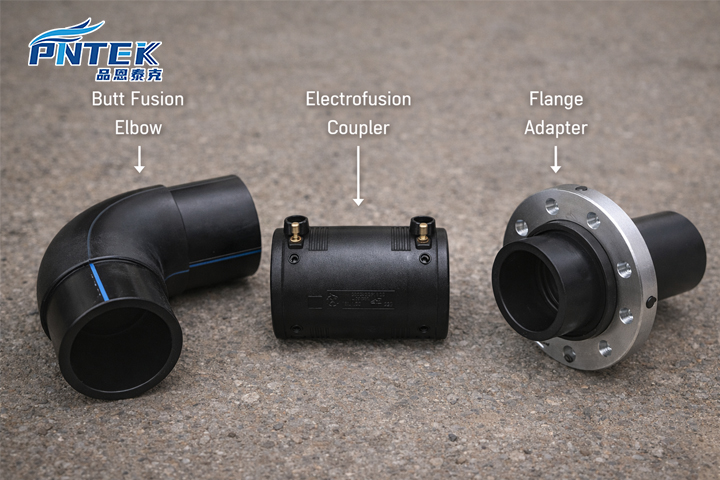
A system is only as strong as its weakest link, and fittings are critical links. My philosophy is to provide a complete, integrated solution. This means supplying the right fitting for every possible situation. For a purchasing manager like Carlos, having a full range of fitting types in stock is essential. It means he can confidently supply an entire project, from large-diameter welded mainlines to small-diameter mechanical take-offs, ensuring compatibility and performance throughout.
Choosing the Right HDPE Fitting
The right choice depends on the application, pipe size, and available equipment.
| Fitting Type | Best For | Pros | Cons |
|---|---|---|---|
| Butt Fusion | Long runs, large pipes (>2″), fully welded systems. | Creates a joint as strong as the pipe; smooth interior flow. | Requires large equipment and space to work. |
| Electrofusion | Repairs, tie-ins, tight spaces, saddles for new branches. | Fast and easy to use in a trench; highly reliable weld. | Fittings are more expensive; requires an EF processor. |
| Mechanical | Transitions to other materials (valves, metal pipe); small pipes (<4″). | No special welding gear needed; can be disassembled. | A potential leak path over time; lower pressure rating. |
For maximum system integrity, butt fusion and electrofusion fittings are preferred for creating a fully welded, monolithic pipeline. Mechanical fittings like flange adapters are essential for connecting the HDPE system to other components like pumps and valves.
Conclusion
HDPE pipe is joined using heat fusion, creating a weld as strong as the pipe. This requires precise heating, followed by a critical natural cooling period, using fusion-specific fittings.
Post time: Jan-26-2026


