
Your project’s success depends on strong pipe connections. A weak joint can cause major leaks, leading to costly repairs and delays. Getting the connection right from the start is essential.
The best ways to join two HDPE pipes are butt fusion and electrofusion. Both methods use heat to melt the plastic, creating a permanent, seamless joint that is as strong as the pipe itself and completely leak-proof.
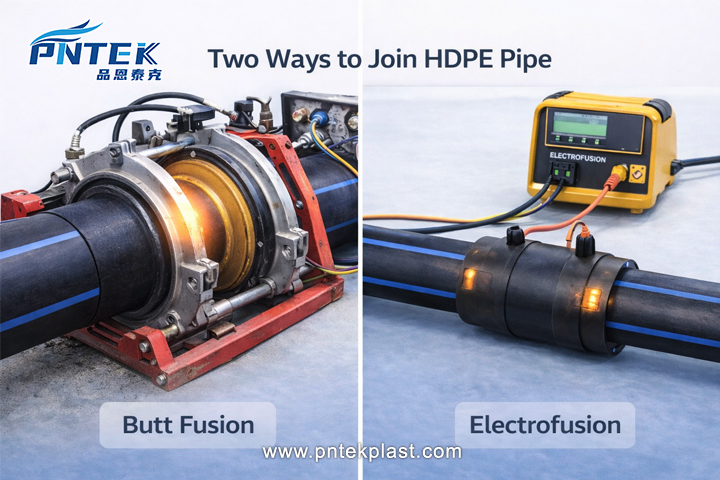
I’ve spent nearly two decades manufacturing piping systems, and I’ve seen firsthand how a project can succeed or fail based on one small detail: the joint. A purchasing manager like Minh in Vietnam knows this well. He’s not just buying pipe; he’s buying a guarantee that the water or gas will stay inside it for the next 50 years. The method used to connect those pipes is the most critical part of that guarantee. It’s a topic worth understanding in detail, so let’s break down the most common questions I get from clients.
Can you connect HDPE to PVC?
You need to connect a new HDPE line to an existing PVC system. A direct weld seems easy, but it will fail, causing project setbacks. You need a special fitting for this job.
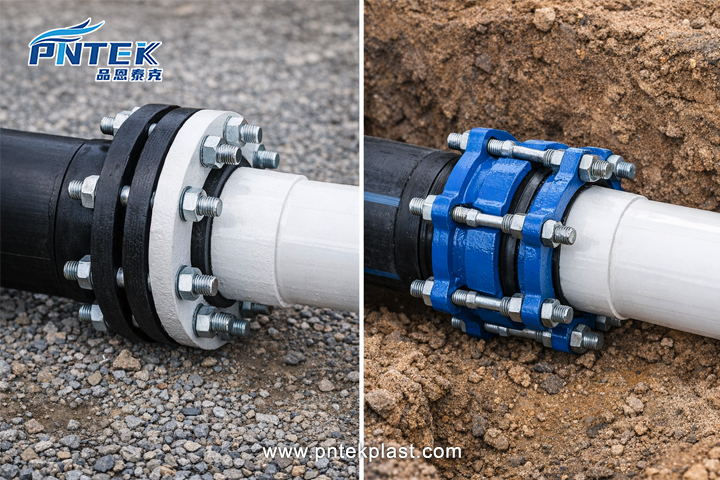
Yes, you can connect HDPE to PVC, but never by welding or gluing. You must use a mechanical transition fitting. These create a secure seal between the different materials, ensuring a durable, leak-proof connection without heat.
You cannot fuse HDPE and PVC together because they are fundamentally different plastics. They have different chemical makeups and melt at different temperatures. Trying to heat-weld them is like trying to weld wood to steel—it just doesn’t work. PVC is typically joined with solvent cement, which is a chemical process. HDPE joining relies on thermal fusion, a heat-based process. Applying PVC solvent cement to HDPE will do nothing, and the heat needed for HDPE would destroy the PVC.
The correct solution is to create a mechanical joint. This isolates the two materials while providing a strong, sealed connection.
Key Transition Fittings
- Flange Adapters: This is the most common method for larger pipes. An HDPE flange adapter is fused onto the HDPE pipe. A PVC flange is glued onto the PVC pipe. Then, a gasket is placed between the two flanges, and they are bolted together. This creates a strong connection that can be disassembled if needed.
- Mechanical Joint (MJ) Adapters: These fittings use a combination of bolts and compression gaskets to create a seal around the outside of the pipe. They are very common in municipal water systems for connecting to things like ductile iron valves or existing PVC lines.
Here is a simple breakdown to help you choose:
| Fitting Type | How It Works | Best Use Case |
|---|---|---|
| Flange Adapter | Two bolted-together faces with a gasket seal. | Connecting to valves, pumps, or existing flanged PVC pipe. Good for above-ground or accessible locations. |
| MJ Adapter | A compression gasket is tightened to seal the pipe. | Buried pipelines and transitions where you need a robust, restrained joint that can handle ground movement. |
I always advise clients to think about the application. For a project with high pressure, a flanged connection is reliable and easy to inspect.
What is the coupling agent for HDPE?
You hear the term “coupling agent” and might think of glue. Using an adhesive on HDPE will create a weak bond that fails quickly. You need to understand that HDPE uses a different principle entirely.
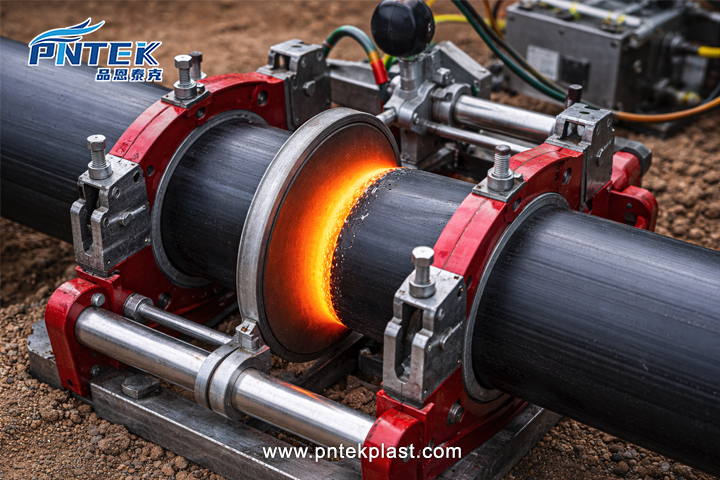
HDPE pipes do not use a chemical coupling agent or glue. The “agent” that joins them is heat. Fusion methods like butt fusion or electrofusion use precisely controlled heat to melt the pipe ends, which then fuse together as they cool.
The term “coupling agent” is more common in industries that work with composite materials or adhesives. In the world of HDPE piping, it’s a misleading term. We don’t add a substance to bond the pipes; we change the state of the pipe material itself. HDPE is a thermoplastic, which means you can melt it and let it cool to reform a strong solid. This property is its greatest advantage.
Heat is the True “Agent”
When you apply heat correctly to two HDPE surfaces, the molecular chains from both pieces mix together. As the material cools under pressure, these chains lock into place. The result isn’t two pieces of pipe stuck together; it’s one single, continuous piece of pipe. We call this a monolithic joint because it has become one solid structure. This is why a properly fused joint is as strong, or even stronger, than the original pipe wall. There is no weak point.
Why Material Quality Matters
This is where my experience as a manufacturer becomes critical for my clients. This fusion process only works perfectly if the raw material is high quality and consistent. We use only 100% virgin PE100 resin. This ensures that when a technician on a project site applies heat, the material will melt and fuse exactly as the engineering specifications predict. If a manufacturer uses recycled materials or poor-quality resin, the melting points can be inconsistent, leading to a weak or failed joint, no matter how skilled the operator is. The quality of the “agent”—the heat—is useless if the material itself is flawed.
What type of jointing is used for HDPE pipes?
Your project requires reliable, leak-free joints. Choosing the wrong jointing method can compromise the entire system’s integrity. You must match the method to the project’s specific demands for a lasting result.
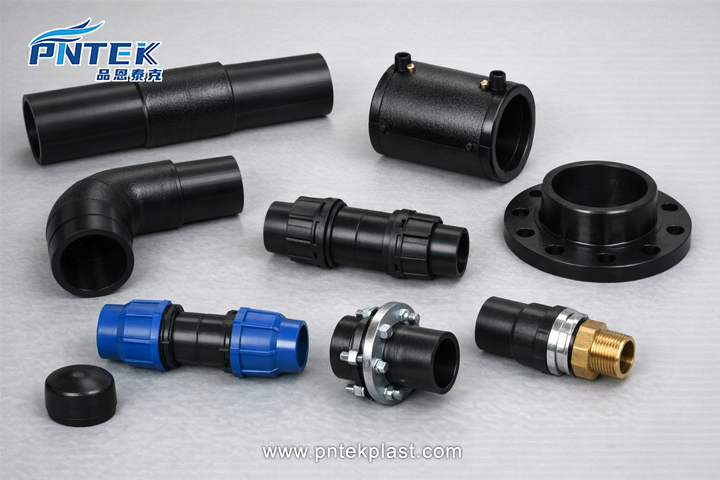
The main jointing types for HDPE pipes are thermal fusion and mechanical connections. Thermal fusion, including butt fusion and electrofusion, creates permanent joints. Mechanical fittings are used for transitions or when disassembly might be needed.
Over the years, I’ve supplied pipes for countless projects, from large municipal water mains to industrial processing plants. The choice of jointing method is always a key discussion point. The decision depends on pipe size, site conditions, pressure ratings, and the skill of the installation crew. Understanding the primary options is crucial for any purchasing manager or engineer.
Thermal Fusion Methods
- Butt Fusion: This is the most common method for pipes 63mm and larger. The process involves facing the pipe ends to make them perfectly clean and square, heating them with a special plate, and then pushing them together under controlled pressure. This creates a strong, permanent weld. It’s ideal for long, straight pipelines.
- Electrofusion: This method uses special fittings with built-in heating coils. The pipes are inserted into the fitting, and a machine passes an electric current through the coils. This melts the inside of the fitting and the outside of the pipe, fusing them together. It is perfect for repairs, working in tight trenches, or connecting branch lines.
Mechanical Connection Methods
- Flange Connections: As discussed earlier, these are great for connecting HDPE to other materials or equipment like pumps and valves.
- Compression Fittings: These are very common for smaller diameter pipes (typically under 110mm), especially in irrigation. They work by tightening a nut that compresses a ring and a gasket onto the pipe, creating a watertight seal.
| Jointing Type | How It Works | Best For | Resulting Strength |
|---|---|---|---|
| Butt Fusion | Direct pipe-to-pipe heat fusion | Large diameter, long pipelines | As strong as the pipe |
| Electrofusion | Fusing with an electric coil fitting | Repairs, tight spaces, tie-ins | As strong as the pipe |
| Mechanical Flange | Bolting two ends with a gasket | Connecting to valves and equipment | Strong, but relies on gasket/bolts |
| Compression Fitting | Squeezing a gasket onto the pipe | Small diameter, lower pressure | Good, but not a monolithic joint |
I always tell my clients that for critical, long-term infrastructure, thermal fusion is the superior choice. It eliminates the potential leak points that exist with mechanical gaskets and bolts.
How to put HDPE pipe together?
You have the right equipment, but one small misstep can ruin the joint. A rushed or dirty process will lead to a failure later. Following the correct procedure step-by-step is the only way to guarantee a strong weld.
To put HDPE pipe together with butt fusion, you must clean and face the ends, align them perfectly in the machine, heat them until a bead forms, then press them together under pressure until they cool completely.
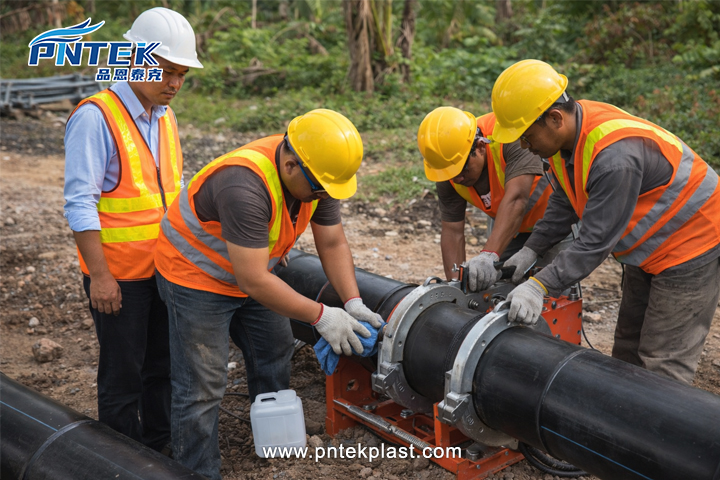
From my manufacturing perspective, I see the pipe as only half of the final product. The other half is the quality of the installation. A perfect pipe can be ruined by a poor joint. I once visited a site in Southeast Asia where the crew was struggling with failed welds. The problem wasn’t the pipe or the machine; they were skipping the cleaning step. A little bit of dust was getting into the weld and creating a weak point. We showed them the proper procedure, and the problems stopped immediately. For a manager like Minh, ensuring his teams follow these steps is just as important as sourcing quality pipe.
The Butt Fusion Process: Step-by-Step
- Clean the Pipe: Wipe the inside and outside of both pipe ends. Use a lint-free cloth and an approved cleaner like isopropyl alcohol. Any dirt, moisture, or oil will destroy the integrity of the weld.
- Clamp and Align: Secure the pipes in the fusion machine. Bring the ends together to check their alignment. They must meet perfectly with no gaps.
- Face the Pipe Ends: Use the machine’s facer tool to shave a small amount of material from each end. This creates fresh, clean, and perfectly parallel surfaces for welding. Remove the facer without touching the freshly faced ends.
- Melt the Ends: Check the heater plate to ensure it’s at the correct temperature for your pipe size and wall thickness. Insert the plate between the pipes and press them against it until the specified bead of molten plastic forms on each end.
- Join and Cool: Quickly remove the heater plate and bring the molten pipe ends together under the specified fusion pressure. Hold this pressure for the required cooling time. Do not rush this step. The joint must cool completely to gain its full strength. A proper weld is indicated by a uniform, double roll-back bead around the joint’s circumference.
This process requires a certified technician. Investing in proper training for installation crews is one of the best ways to reduce risk and ensure a pipeline performs reliably for its entire service life.
Conclusion
Joining HDPE correctly relies on heat fusion or mechanical fittings. Following the proper procedure with quality materials is key to building a strong, leak-proof, and long-lasting piping system.
Post time: Feb-12-2026


