You need a simple on/off valve for a main water line, but the options seem complicated. Choosing the wrong type could mean you cannot tell if it is open or closed, leading to operational mistakes.
The two main types of gate valves are the rising stem and the non-rising stem. A rising stem valve’s handle moves up and down with the gate, showing its position. A non-rising stem‘s handle only spins in place.
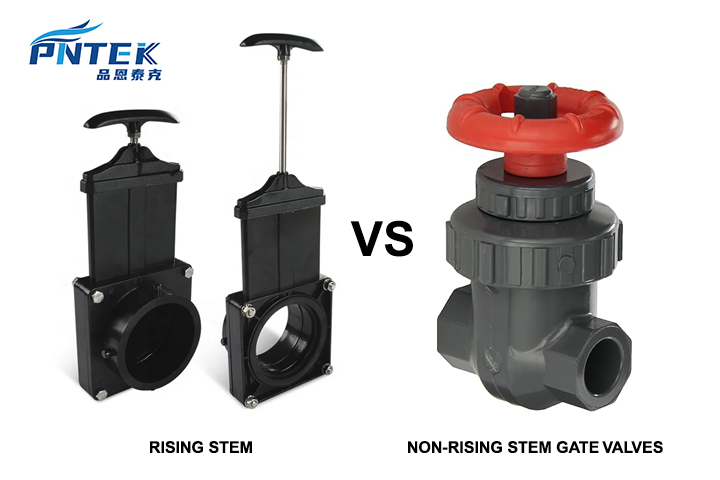
When I discuss large-scale water projects with my partner Budi, the topic of main isolation valves always comes up. His clients in Indonesia need reliable ways to shut off water for maintenance without any guesswork. The choice between a rising stem and a non-rising stem valve is a perfect example of how a small design difference can have a big impact on daily operations. One gives you a clear visual sign, while the other is more compact. Understanding this fundamental difference is the key to selecting the right valve for the job.
What are the disadvantages of using gate valves?
You installed a gate valve, but now you need to reduce the flow, not stop it. Trying to use a gate valve for this purpose can quickly damage the valve and cause problems in your pipeline.
Gate valves are poor at throttling flow. They can vibrate and cause seat and disc erosion when partially open. They are also slow to operate and can be prone to getting stuck from sediment buildup.
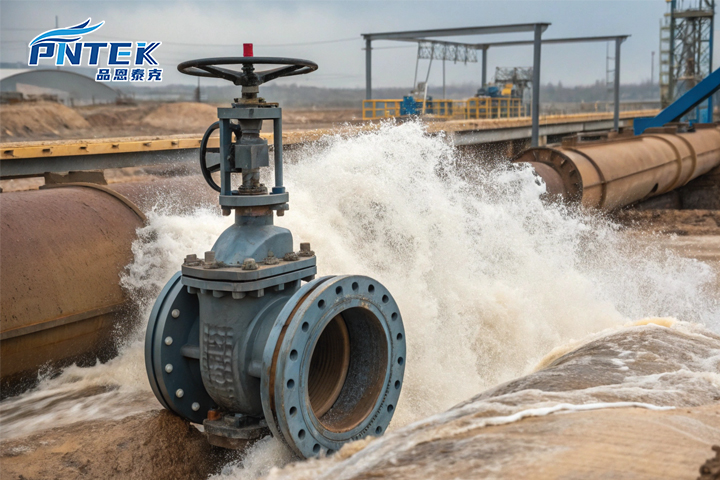
Gate valves are designed for one job: to be fully open or fully closed. They are excellent at this. When a gate valve is fully open, the “gate” is completely out of the flow path, so there is almost no pressure drop. But the moment you try to use it to control flow by leaving it partially open, problems begin. The high-speed water rushing through the small opening creates intense turbulence. This turbulence causes the gate to vibrate and chatter against its seat. Over time, this erosion will permanently damage the sealing surfaces of both the gate and the body. When you finally do try to close it completely, it will no longer create a perfect seal and will leak. They are also very slow. A large gate valve can take dozens or even hundreds of turns of the handle to go from fully open to fully closed.
Key Disadvantages of Gate Valves
| Disadvantage | Why it Happens | Consequence |
|---|---|---|
| Poor Throttling | The gate vibrates in partial flow. | Rapid wear and tear on the gate and seat. |
| Slow Operation | Requires many turns of the handwheel. | Not suitable for emergency shutoff. |
| Prone to Jamming | Sediment can build up in the bottom cavity. | The valve may not close completely. |
| Position Uncertainty | Hard to tell if a non-rising stem valve is open or closed. | Potential for operational errors. |
Can I use a saddle valve on PVC?
You need to tap into an existing PVC water line for a small connection. A saddle valve seems like a quick and easy solution, but you are worried it might damage the plastic pipe.
No, you should never use a standard saddle valve on PVC pipe. Saddle valves work by piercing the pipe, which will cause the PVC to crack and fail, leading to a major leak.
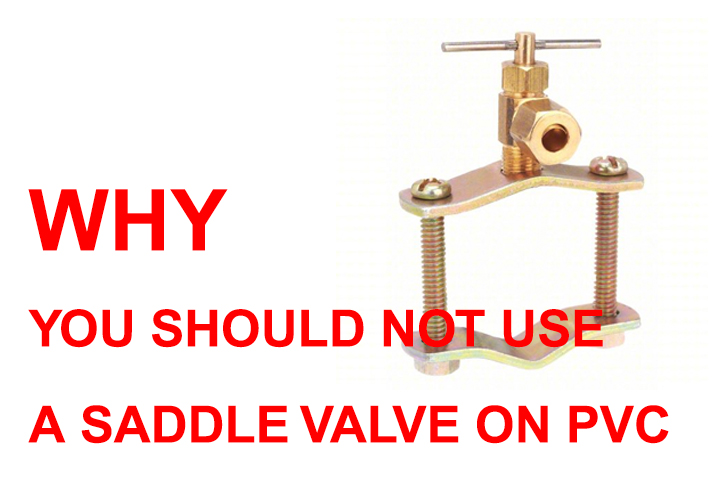
This is a critical point of safety I always emphasize with Budi. Saddle valves were designed for rigid metal pipes like copper. They have a sharp pin that you screw down to pierce the pipe wall to create the water tap. This method is a disaster for PVC. PVC is strong, but it is also a notch-sensitive material. This means that if you create a sharp point of stress, like a hole from a piercing pin, a crack can easily start and travel through the pipe wall. The constant pressure of the water will exploit this weak point. It might not leak immediately, but over time, with changes in pressure and temperature, that small hole will become a large crack and the pipe will burst. The correct way to tap into a PVC line is by using a “saddle tee” or a “tapping sleeve.” These fittings glue or bolt around the pipe, and you then use a drill to create a clean hole, providing a secure, leak-proof connection without compromising the pipe’s structure.
What is the most common and widely used gate valve?
You need to stock the most common type of gate valve for general water distribution. You want to offer the one that your customers will ask for most often to simplify your inventory.
The most common and widely used type is the non-rising stem (NRS), solid wedge, resilient-seated gate valve. It is favored for its compact design, durability, and suitability for underground waterworks and general plumbing.
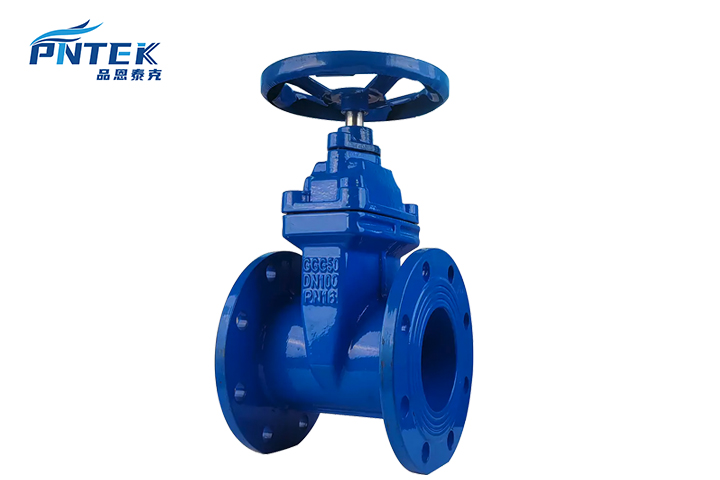
This specific type is the workhorse of the water industry, and it is the valve Budi’s clients are likely most familiar with. Let’s break down why it is so popular. “Non-rising stem” means it is very compact, which is perfect for installation in tight spaces or buried underground, as you do not need extra room for a stem to move up and down. “Solid wedge” refers to the simple, tough, single-piece gate inside, which is reliable and cost-effective. The most important part is “resilient-seated.” This means the metal gate is coated in rubber (like EPDM). When the valve closes, this rubber wedge presses against the smooth inner body of the valve, creating a bubble-tight seal. This design is much better at sealing than old metal-to-metal seats and it prevents sediment from getting trapped at the bottom, ensuring a better long-term seal. It is this combination of a compact, reliable, and leak-proof design that has made it the global standard for water mains.
What are the alternatives to a gate valve?
You need an on/off valve, but a gate valve seems too slow or is not right for the application. You need to know what other options are available to make the best choice.
The two main alternatives to gate valves are ball valves and butterfly valves. Ball valves are excellent for quick, quarter-turn shutoff in smaller pipes. Butterfly valves are a cost-effective choice for large-diameter pipes.
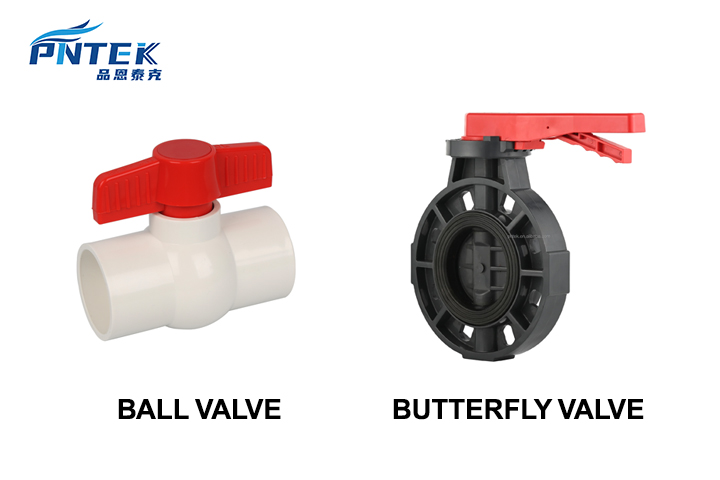
Choosing between these valves depends entirely on the job. A ball valve is my go-to recommendation for any pipe up to about 4 inches in diameter. It uses a metal ball with a hole through it. A simple 90-degree turn of a handle aligns the hole with the pipe for full flow or turns it against the flow to stop it completely. This makes it incredibly fast to operate, and you can see its position just by looking at the handle. It is also much better at throttling flow than a gate valve. For very large pipes, like a 12-inch water main, a gate valve becomes huge and expensive. This is where a butterfly valve is perfect. It uses a thin disc in the center of the pipe that rotates 90 degrees to open or close. They are lightweight, compact, and much more affordable than a large gate valve, making them the standard choice for large-scale waterworks and industrial plants.
Gate Valve vs. Alternatives
| Valve Type | Best For | Pros | Cons |
|---|---|---|---|
| Gate Valve | Fully open/closed isolation | Unobstructed flow, good seal | Slow, bad for throttling |
| Ball Valve | Quick shutoff, smaller pipes | Fast, reliable, good for throttling | More expensive, higher pressure drop |
| Butterfly Valve | Large pipes | Lightweight, low cost, fast | Disc is always in the flow |
Conclusion
Gate valves come as rising or non-rising stem types, ideal for simple on/off control. For other needs, ball and butterfly valves offer faster operation and better performance for different pipe sizes.
Post time: Dec-10-2025