Connecting HDPE pipe with the wrong parts? This leads to immediate system failure, costly repairs, and lost trust. You need a specialized connector designed for the job.
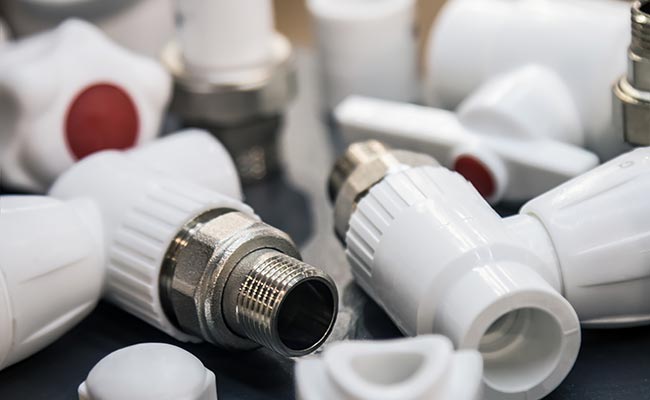
An HDPE fitting is a connector made from the same High-Density Polyethylene material as the pipe. It is used to join pipes, change direction, or connect to valves. Fittings are joined by heat fusion or mechanical means to create a fully sealed, permanent system.
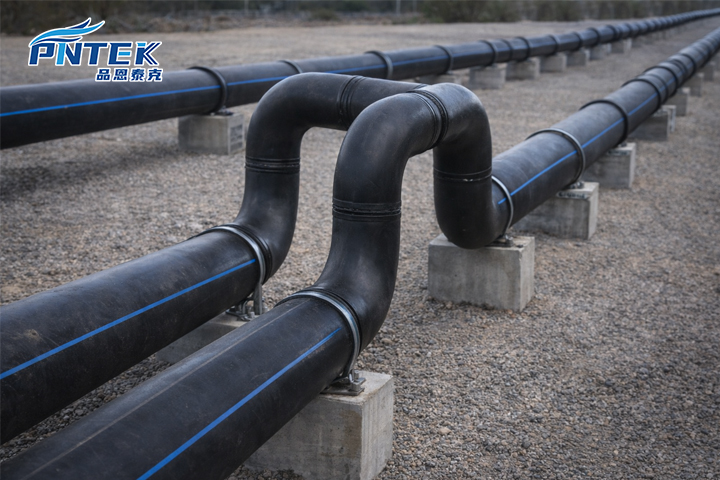
At Pntek, we don’t just sell pipes; we provide complete, integrated solutions. An HDPE system is only truly leak-proof when the fittings are as reliable as the pipe itself. For a purchasing manager like Carlos, understanding the different types of fittings is crucial. It allows him to provide his clients with a total package, ensuring every connection is secure and the entire system performs flawlessly for decades.
What does HDPE mean?
Confused by the acronym HDPE on technical sheets? This uncertainty can make you hesitate when selecting materials, potentially costing you the best solution for your project.
HDPE stands for High-Density Polyethylene. It is a robust thermoplastic made from petroleum. Its key features are high strength, durability, and excellent resistance to chemicals and corrosion, making it a superior choice for long-life piping systems.
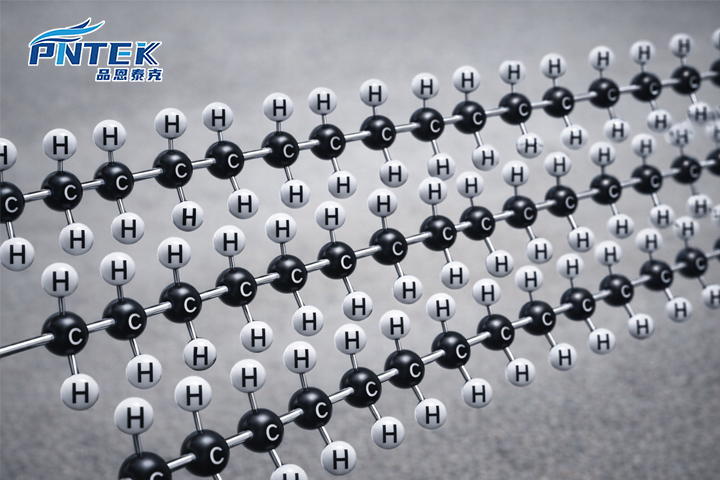
The name itself tells you a lot about the material. “Polyethylene” means it’s a polymer, which is a large molecule made of repeating units of ethylene gas. The “High-Density” part is what makes it special for pipes. During manufacturing, the polymer chains line up in a very straight, ordered way, packing tightly together. This dense molecular structure is what gives HDPE its signature strength and rigidity. It’s what allows it to withstand high pressure and resist impacts.
Comparing Polyethylene Types
For someone like Carlos, knowing the difference between the types of PE is key to ordering the right material. While they are all “polyethylene,” their densities give them very different properties and uses.
| Type | Density | Key Characteristics | Common Uses |
|---|---|---|---|
| HDPE | High | Strong, rigid, durable, chemical resistant | Pressure pipes, geothermal, gas lines |
| MDPE | Medium | Good flexibility and crack resistance | Gas distribution pipes, irrigation |
| LDPE | Low | Very flexible, soft | Drip tubing, plastic bags, shrink wrap |
This clarity helps ensure the right material is specified for the right job, preventing costly mix-ups.
How to join two pieces of HDPE?
Trying to connect two pieces of HDPE pipe? Using traditional glues or cements will fail immediately, leaving you with a major leak and a failed project timeline.
HDPE is joined using heat fusion, also known as thermal welding. This process involves melting the surfaces of the two HDPE pieces and pressing them together until they cool. This creates a permanent, monolithic joint that is as strong as the original pipe material.
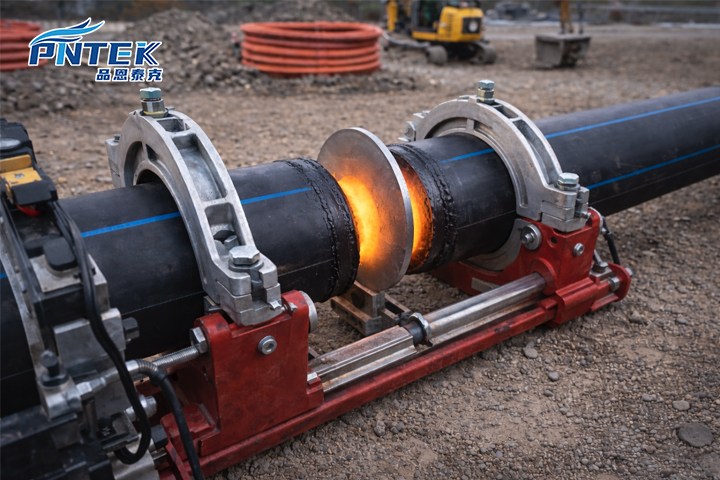
The reason you can’t glue HDPE is the same reason it’s so great for pipes: it’s highly resistant to chemicals. Glues simply can’t bond with its surface. Instead, we use its thermoplastic nature to our advantage. The primary professional methods create a joint that is more like a weld than a connection.
Primary Joining Methods
- Butt Fusion: This is the most common method for larger pipes. A machine holds the two pipe ends, shaves them perfectly flat, and then melts them with a heating plate. The plate is removed, and the molten ends are fused together under pressure. The result is a seamless, strong joint.
- Electrofusion: This method uses special fittings with built-in heating coils. The pipe is inserted into the fitting, and an electrical current is applied. The coils melt the inside of the fitting and the outside of the pipe, creating a permanent bond. It’s ideal for repairs or tight spaces.
Both methods result in a fully sealed system, which is why HDPE is trusted for critical applications like gas and water mains.
Can you use PVC fittings on HDPE?
Have leftover PVC fittings and a new HDPE pipe system? Thinking of mixing them to save costs will lead to certain failure and a system that will not hold pressure.
No, you cannot directly use PVC fittings on HDPE pipe. The materials are incompatible and have completely different joining methods—PVC uses solvent cement and HDPE uses heat fusion. To connect them, you must use a specific mechanical transition fitting, like a flange adapter.
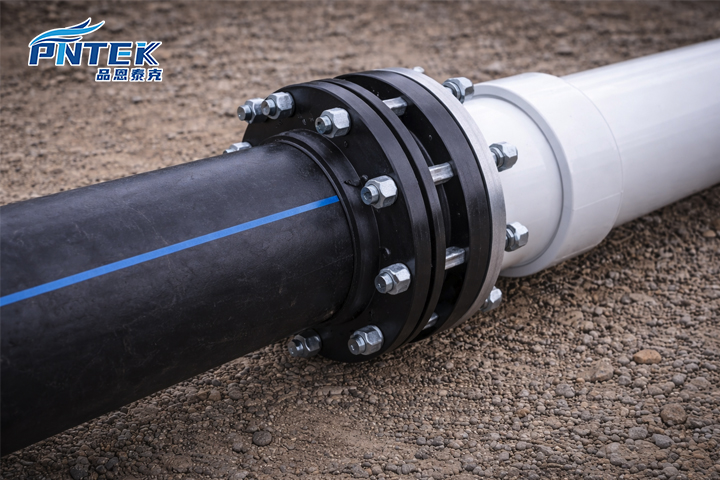
This is a critical point of failure I see in the field. The temptation to mix and match materials to use up stock is high, but it’s a recipe for disaster. PVC and HDPE are fundamentally different plastics. One is designed to be chemically bonded, the other to be thermally welded. Trying to glue HDPE is like trying to glue Teflon; it simply won’t stick.
Why They Can’t Be Mixed
To make it clear for our partners like Carlos, I often use a simple chart to show why these materials need to be treated differently.
| Feature | HDPE | PVC |
|---|---|---|
| Material Family | Polyolefin | Vinyl |
| Joining Method | Heat Fusion (Welding) | Solvent Cement (Gluing) |
| Flexibility | Flexible and ductile | Rigid and brittle |
So, how do you connect them when you need to? You must use a mechanical transition. The most common way is with flange adapters. You fusion-weld an HDPE flange adapter to the HDPE pipe and glue a PVC flange adapter to the PVC pipe. Then, you can bolt the two flanges together with a gasket in between. This creates a secure, serviceable connection.
What is the downside of HDPE?
HDPE seems like the perfect piping material, but are there hidden drawbacks? Choosing it for the wrong application could lead to unexpected problems with your installation.
The main downsides of HDPE include its high thermal expansion rate, which requires design considerations. It is also less rigid than metal pipe and can be damaged by long-term UV exposure if not protected. Lastly, proper joining requires specialized equipment and trained technicians.
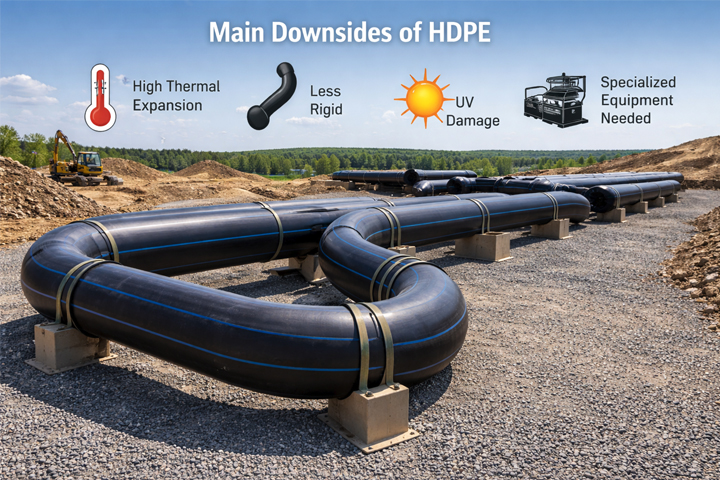
No material is perfect for every single job. As a leader in this industry, I believe in being honest about a product’s limitations so our customers can make the best choices. For HDPE, the downsides are really just design considerations. The most significant is its thermal expansion. It expands and contracts with temperature changes much more than metal. This means long, straight runs need expansion loops or offsets designed into the system to prevent stress. It’s also sensitive to UV light. While our Pntek pipes contain carbon black as a UV inhibitor for excellent outdoor life, unprotected pipe can become brittle over many years in direct sunlight. Finally, the need for specialized fusion equipment and trained installers can be a barrier for some smaller contractors. However, the long-term reliability of a properly fused joint far outweighs this initial investment.
Conclusion
An HDPE fitting is a dedicated connector made from High-Density Polyethylene, joined by heat fusion. It’s incompatible with PVC and has design considerations like thermal expansion, ensuring system integrity.
Post time: Jan-27-2026