Are you worried about field installations that require special tools or electricity? A slow or complex connection method costs time and money, reducing the profitability of a project.
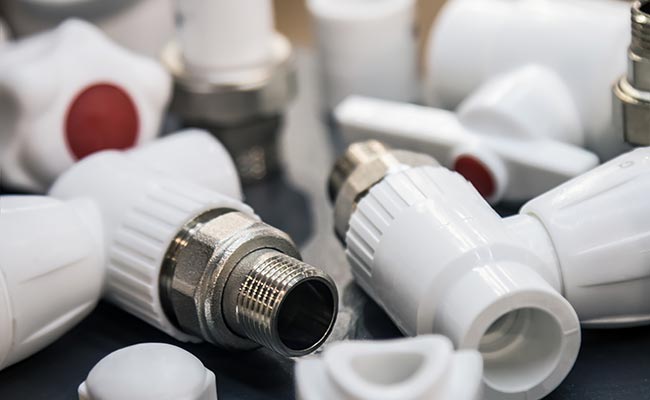
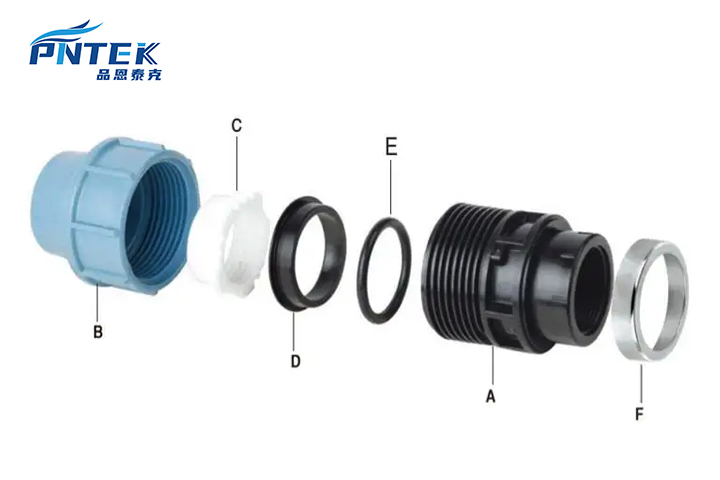
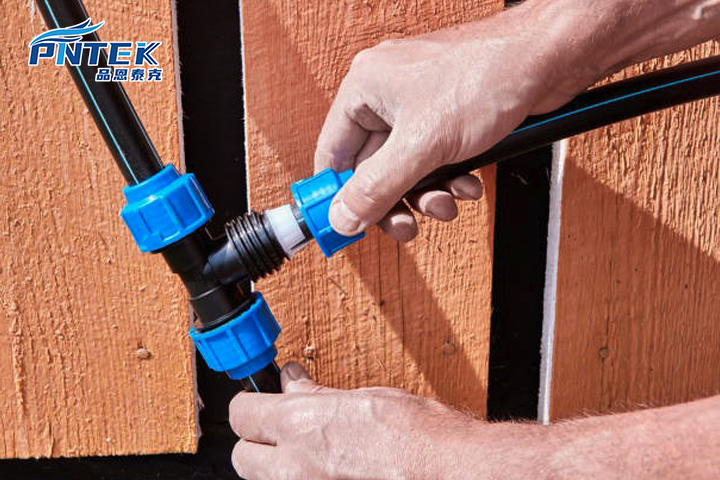
A PP compression fitting is a mechanical connector used to join PE (Polyethylene) pipes. Made of Polypropylene (PP), it creates a watertight seal by manually tightening a nut, which compresses an internal ring against the pipe. No heat or special tools are required.
In my years leading Pntek, I’ve seen that the most elegant solutions are often the simplest. The PP compression fitting is a perfect example. It’s a robust, reliable product that empowers any worker to make a perfect connection quickly. For a purchasing manager like Carlos, offering this kind of efficiency to his contractor clients isn’t just selling a part; it’s selling productivity and confidence.
What does PP mean in piping?
Do you see different plastic acronyms like PP and PE and wonder if they’re interchangeable? Using the wrong material for an application can lead to a fitting cracking under pressure or degrading in the sun.
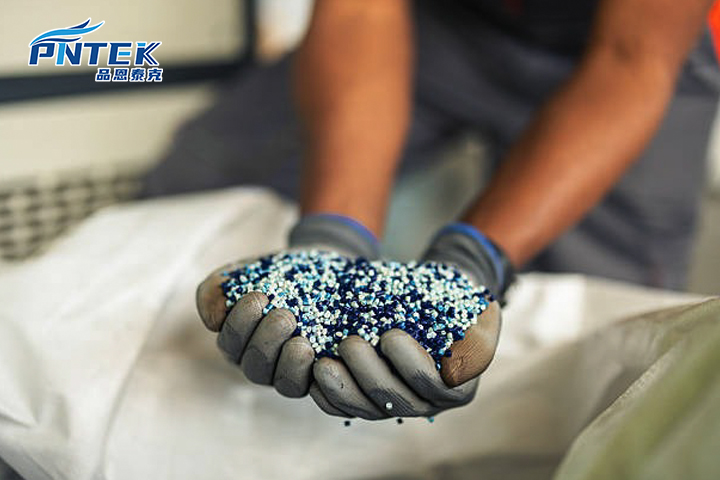
PP stands for Polypropylene. In piping, it’s a very tough and rigid thermoplastic known for its excellent chemical resistance, impact strength, and ability to be molded into complex shapes. It’s the ideal material for making the strong, durable bodies of compression fittings.
Understanding materials is fundamental to quality. At Pntek, we choose PP for our fitting bodies specifically for its rigidity. While the pipe is flexible Polyethylene (PE), the fitting needs to be strong to create the compression force for the seal. It’s a purposeful design choice. When Carlos explains this to a customer, he demonstrates a deeper knowledge that builds trust. He’s not just moving boxes; he’s providing a technically sound system where each part is chosen for a reason.
Why Polypropylene is the Right Choice for Fittings
The job of the fitting is different from the job of the pipe. The pipe needs to be flexible, while the fitting needs to be strong and stable. Polypropylene delivers the exact properties needed for a high-performance fitting body.
- Impact Strength: PP can handle the bumps and drops of a busy construction site without cracking. It’s also strong enough to withstand the force of a wrench during tightening.
- Chemical Resistance: This is crucial for agricultural use, where fertilizers and other chemicals are often run through irrigation lines. PP won’t corrode or break down, ensuring a long service life.
- UV Resistance: When manufactured with carbon black or other UV stabilizers, PP holds up very well under direct sunlight, making these fittings perfect for above-ground irrigation and water systems.
The PP and PE Partnership
It’s essential to understand that in a typical compression setup, you’re connecting two different but related plastics.
| Component | Material | Key Property |
|---|---|---|
| The Pipe | PE (Polyethylene) | Flexibility, Durability |
| The Fitting | PP (Polypropylene) | Rigidity, Strength |
This combination is what makes the system work so well. The flexible PE pipe easily inserts into the rigid PP fitting, and the strength of the PP nut and body provides the power to create a secure, leak-proof seal on the pipe surface.
What is the pressure rating for Polypropylene compression fittings?
Are you unsure if a fitting can handle the pressure of your water system? Choosing an underrated fitting is a recipe for a blowout, causing water loss, damage, and dangerous conditions on a job site.
Most standard PP compression fittings are rated for either PN10 or PN16. This means they are designed to operate safely at a pressure of 10 bar (about 145 psi) or 16 bar (about 232 psi), respectively, for cold water applications.
Pressure ratings are a promise of safety and performance. When we manufacture a PN16 fitting at Pntek, we are guaranteeing it can handle that stress, day in and day out. For Carlos, this is a critical piece of information. When a contractor asks for a fitting for a municipal water line, he can confidently provide a PN16 product, knowing it meets the demanding requirements and protects his client’s project and reputation.
How to Read Pressure Ratings
- PN stands for Pression Nominale (Nominal Pressure). It’s a French term that has become the global standard.
- The Number is the Pressure in Bar. A bar is a unit of pressure roughly equal to the atmospheric pressure at sea level. 1 bar is approximately 14.5 psi.
- The Rating Assumes a Temperature. Standard PN ratings are for water at 20°C (68°F). If the water temperature increases, the maximum allowable pressure decreases.
Choosing the Right PN Rating
| Rating | Max Pressure (Bar) | Max Pressure (PSI) | Typical Application |
|---|---|---|---|
| PN10 | 10 bar | ~145 psi | Agricultural irrigation, drip systems, residential garden lines, gravity-fed systems. |
| PN16 | 16 bar | ~232 psi | Main water supply lines for residential and commercial buildings, high-pressure industrial lines. |
For a purchasing manager like Carlos, stocking both PN10 and PN16 fittings is smart. It allows him to serve the full spectrum of his market, from farmers needing irrigation solutions to contractors building urban infrastructure, ensuring he always has the right part for the job.
Which is better, Sharkbite or compression fitting?
Are you trying to choose between a SharkBite and a compression fitting for your project? Making the wrong choice can mean using a product that isn’t designed for your pipe type or application, leading to leaks.
Neither is “better”; they are designed for completely different jobs and pipe materials. PP compression fittings are for flexible PE pipes used outdoors. SharkBite fittings are for rigid pipes like Copper, PEX, and CPVC used indoors.
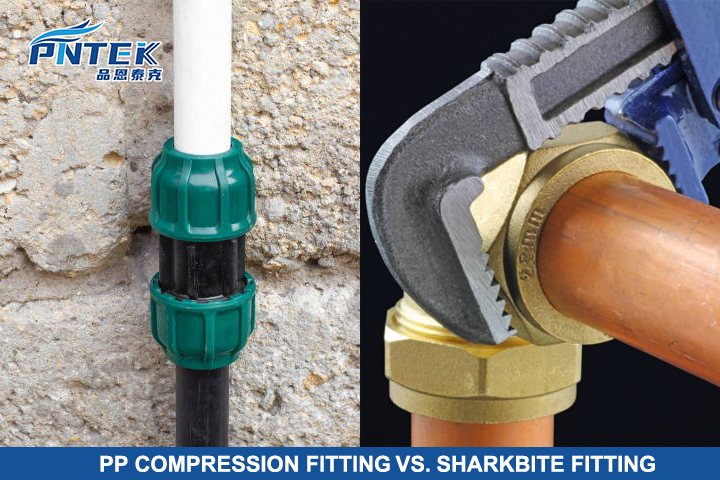
This is one of the most common points of confusion I see in the industry. It’s like asking if a hammer is better than a screwdriver. They are both excellent tools, but for different tasks. I make sure my partners, like Carlos, are experts on this topic. When he can clearly explain why a PP compression fitting is the right choice for an irrigation line, he is providing true value and preventing a costly mismatch for his customer.
A Tale of Two Technologies
The core difference lies in the pipe material they are designed to connect and the environment where they are used. A PP compression fitting is the champion of outdoor, cold-water Polyethylene systems. A SharkBite is the champion of indoor, hot-and-cold multi-material plumbing.
| Feature | PP Compression Fitting | SharkBite (Push-to-Connect) |
|---|---|---|
| Pipe Compatibility | Polyethylene (PE) pipe only. | Copper, PEX, CPVC, PE-RT. Not for flexible PE pipe. |
| Primary Use | Outdoor systems: irrigation, main water lines to the house, well pumps. | Indoor systems: connecting sinks, toilets, water heaters, repairs. |
| Material | Polypropylene (plastic). | DZR Brass. |
| Mechanism | A nut compresses a gripping ring and O-ring onto the pipe. | Stainless steel teeth grip the outside of the pipe. |
| Cost | Very cost-effective. | Significantly more expensive per fitting. |
The most important takeaway is that you cannot use a SharkBite on the soft, flexible PE pipe that PP compression fittings are made for. The teeth of the SharkBite will not grip it properly and it will leak. Conversely, you would not use a PP compression fitting to connect a copper pipe under your sink. They are specialized tools for specialized jobs.
Conclusion
PP compression fittings are tough, tool-free connectors for PE pipe, ideal for outdoor use. They are rated by pressure (PN) and are fundamentally different from SharkBite fittings used for indoor plumbing.
Post time: Dec-11-2025