
You are tired of dealing with pipe joints that leak. Traditional threaded or compression fittings always seem to fail over time, costing you money in repairs and damaging your reputation for quality work.
A socket fusion fitting uses a special heating tool to weld the pipe and fitting together into a single, solid piece of plastic. This creates a permanent, monolithic joint that is completely leak-proof and often stronger than the pipe itself.
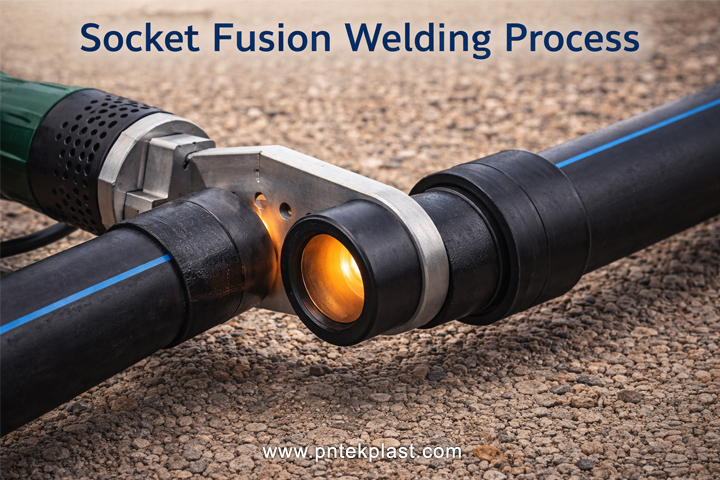
When I explain our different joining systems to partners like Budi, I find there’s often some confusion around the terminology. Words like “coupling“, “socket“, and “coupler” get used interchangeably, which can be confusing for someone new to the technology. But understanding these simple components is the first step to appreciating why this method is so secure. Once you see how they work together to eliminate the weaknesses of a traditional joint, you will understand why it’s the best choice for any critical pipeline. Let’s break down the basic terms.
What is a fusion coupling used for?
You need to connect two straight pipes. You have a box of fittings, but using the wrong one could create a weak point or an unnecessary turn in your pipeline.
A fusion coupling is a short, straight fitting designed to join two pieces of pipe of the same size in a straight line. It uses heat fusion to create a permanent, seamless connection, effectively making the two pipes into one.
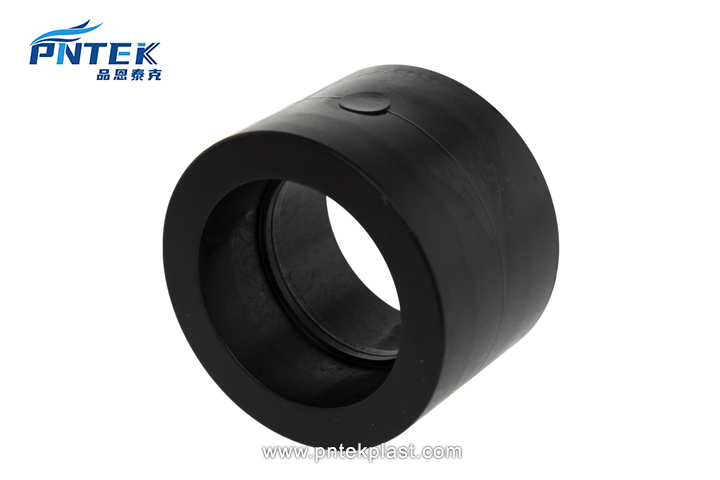
Think of the fusion coupling as the most fundamental piece in a fusion-welded system. Its only job is to create a perfectly straight, strong connection between two pipe ends. While we also make elbows for turns and tees for branches, the coupling is the simplest expression of the technology. It’s essentially a thick, strong sleeve of HDPE or PP-R. Inside this sleeve are the sockets that receive the pipe ends. When you are running a long, straight water main or irrigation line, these couplings are what you will use to join the standard lengths of pipe together. The process creates a joint that is just as strong and chemically resistant as the original pipe, ensuring consistent performance along the entire length of the pipeline without any weak links.
What is the difference between a coupling and a socket?
You hear an installer say, “The pipe didn’t go all the way into the socket.” But the part you ordered was called a coupling. This confusion can make it hard to troubleshoot issues.
A coupling is the entire fitting. The socket is the hollow recess inside the coupling (or elbow, or tee) where the heated pipe is inserted. The socket is the feature; the coupling is the component.
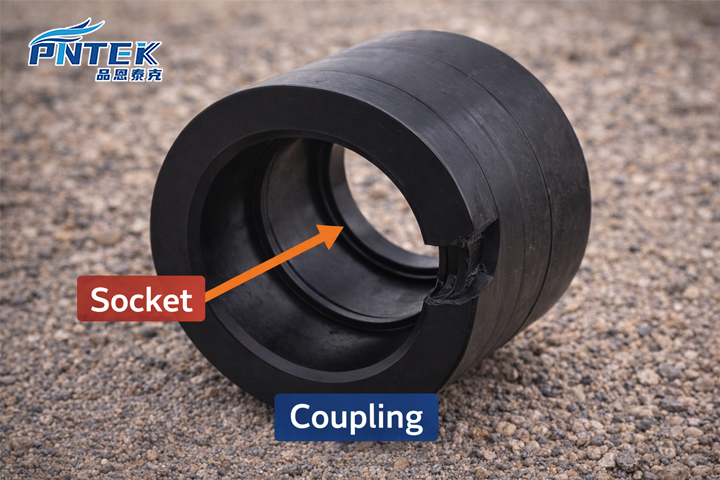
This is a really important distinction for understanding how the weld works. Think of it this way: the coupling is the whole donut, and the socket is the hole in the middle. In socket fusion, the dimensions of that “hole” are precisely engineered. Its depth determines how far the pipe can be inserted, and its diameter is designed to create a perfect interference fit with the heated, slightly swollen pipe end. At Pntek, we manufacture these sockets to incredibly tight tolerances. If the socket is too loose, you get a weak bond. If it’s too tight, you can’t push the pipe in fully, leading to a “cold weld” or an incomplete joint. So, while the entire part is a coupling, the “socket” is the critical, functional feature that makes a secure weld possible.
Is a socket coupler different from a fusion coupling?
You are reviewing a purchase order and see “socket coupler” listed. You remember ordering “fusion couplings” last time. Are they the same thing, or is this a mistake?
No, they are not different. “Socket coupler” and “fusion coupling” are two names for the exact same part: a straight coupling designed to be joined using the socket fusion method. The terms are used interchangeably in the industry.
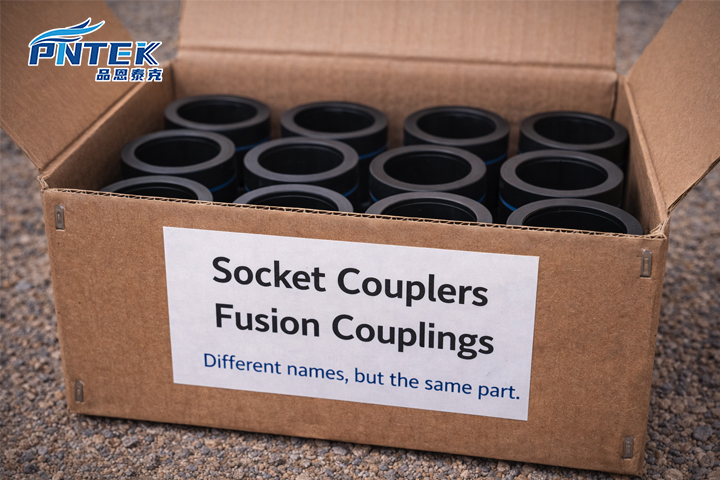
This is a common source of confusion, especially for purchasing managers like Budi who deal with suppliers from all over the world. Some regions or manufacturers prefer the term “socket coupler” because it describes both the feature (socket) and the function (coupler). Others prefer “fusion coupling” because it describes the process (fusion) and the function (coupling). It’s just a matter of industry jargon. What’s important is not the name, but the specifications. When ordering, you should always focus on verifying the material (e.g., PE100), the pressure rating (e.g., PN16), and the diameter. As long as those match your project requirements, you can be confident that you are getting the right part, whether the box says “socket coupler” or “fusion coupling.”
What is the difference between socket fusion and butt fusion?
You need to join large-diameter pipes for a water main. You realize your socket fusion machine is too small, and the process seems completely different for these bigger pipes.
Socket fusion uses a fitting with a socket for smaller pipes (up to 125mm). Butt fusion joins larger pipe ends directly without a fitting. Socket fusion heats the outside of the pipe; butt fusion heats the pipe ends.
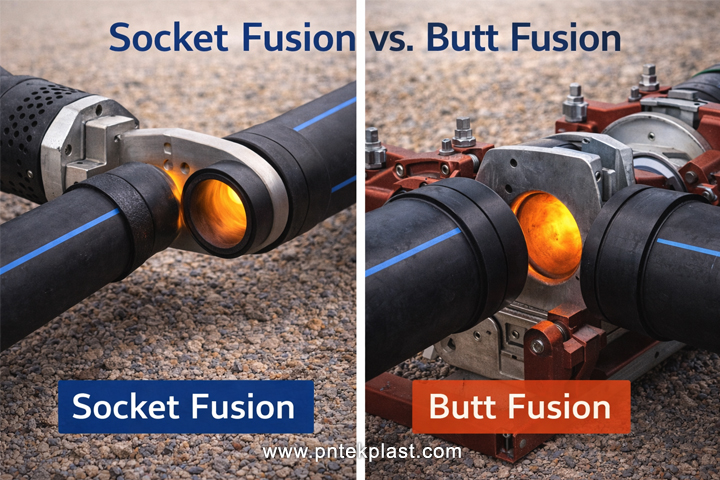
The choice between these two methods is almost always determined by pipe size.
| Feature | Socket Fusion | Butt Fusion |
|---|---|---|
| Method | Pipe is inserted into a fitting’s socket. | Pipe ends are pressed directly together. |
| Components | Requires a separate fitting (coupling, elbow, etc.). | No fitting needed for a straight joint. |
| Pipe Size | Typically for smaller diameters (e.g., 20mm to 125mm). | For larger diameters (e.g., 90mm and up). |
| Resulting Joint | The fitting is visible as the joint. | A raised external and internal bead is formed. |
| Application | Ideal for smaller pipes, plumbing, and tight spaces. | Standard for large water mains and gas lines. |
Socket fusion is perfect for smaller, more manageable pipe sizes. The fittings provide structure, and the tools are often handheld and portable. For large-diameter pipes, creating a massive socket fitting would be incredibly expensive and impractical. Butt fusion is a more elegant solution here. A machine holds the two pipe ends in perfect alignment, shaves them flat, heats them, and then presses them together with controlled hydraulic pressure. The result is a simple, strong bead that is incredibly reliable for critical infrastructure.
Conclusion
Socket fusion creates a strong, leak-proof weld. Understanding the terms and how it differs from butt fusion allows you to choose the right, most reliable joining technology for your project.
Post time: Jan-30-2026


