
Connecting plastic pipe to a metal valve or pump is a constant headache. Special transition fittings are expensive, heavy, and can introduce new points of failure into your system.
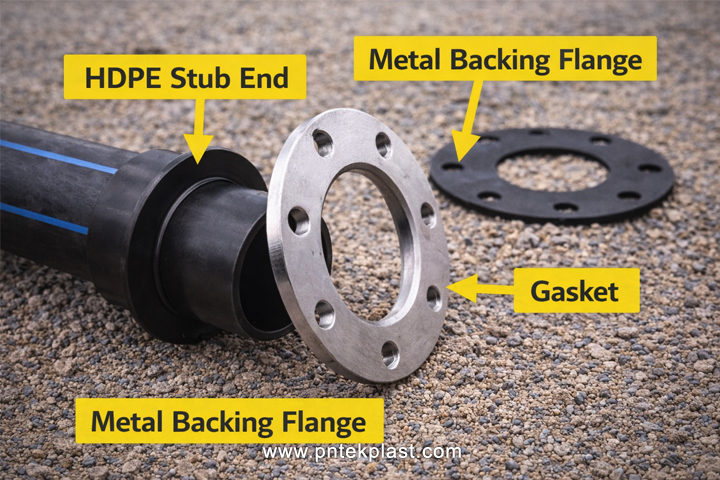
A stub end is a short piece of pipe with a flared collar that is welded to the end of a pipe. It is used with a metal backing flange to create a removable, bolted connection that is both strong and cost-effective.
I remember discussing a large water treatment project with a partner. They were struggling with the cost of stainless steel flanges needed to connect their HDPE pipes to various pumps and tanks. When I showed them the stub end and backing flange system, it was a revelation. They realized they could get the corrosion resistance of HDPE on the inside, but use cheaper, coated carbon steel for the backing flanges that provide the clamping force. This simple change saved them a significant amount on their materials budget. It’s a perfect example of smart engineering that solves multiple problems at once.
What is an HDPE stub end?
You see a part that looks like a flange but is made of plastic. You are not sure if it is a complete flange or something else, which makes ordering confusing.
An HDPE stub end is a specific fitting made from High-Density Polyethylene. It consists of a short pipe section with a flared, disc-like collar. It is not a flange itself but is used with a metal backing flange to create a connection.
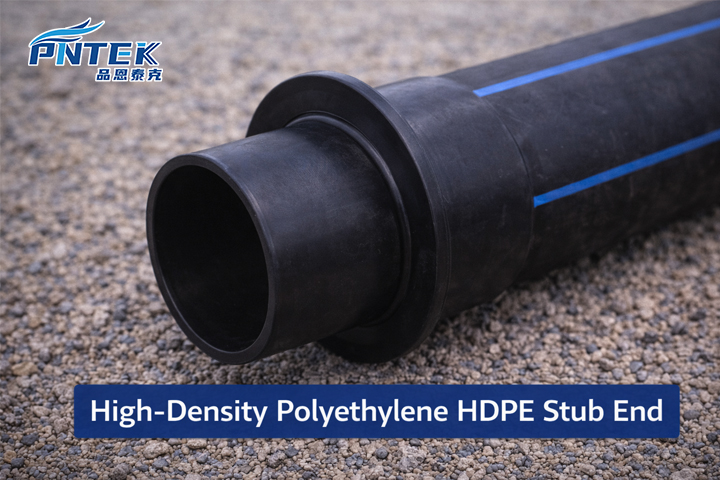
The genius of the HDPE stub end is that it creates a two-part system that gives you the best of both worlds. The stub end itself is welded directly to your HDPE pipe. This means the fluid inside the pipe only ever touches one material: seamless, corrosion-resistant HDPE. The flared collar, or “lap,” of the stub end acts as the sealing face. Then, a separate metal backing flange slides over the pipe behind the stub end. This metal flange provides the strength to bolt the connection to another flanged component, like a valve or pump. Because the metal flange never touches the fluid, you don’t need to use expensive, corrosion-resistant alloys. This separation of roles—the plastic stub end for the seal and the metal flange for the strength—makes it a very efficient and economical solution for connecting plastic to metal.
What are the different types of stub ends?
You need to order stub ends, but see different types listed. Choosing the wrong type for your pipe size or equipment will cause delays on site when they do not fit.
The main types of HDPE stub ends are defined by their welding method. Socket fusion stub ends are for smaller pipes, while butt fusion stub ends are used for larger diameter pipes.
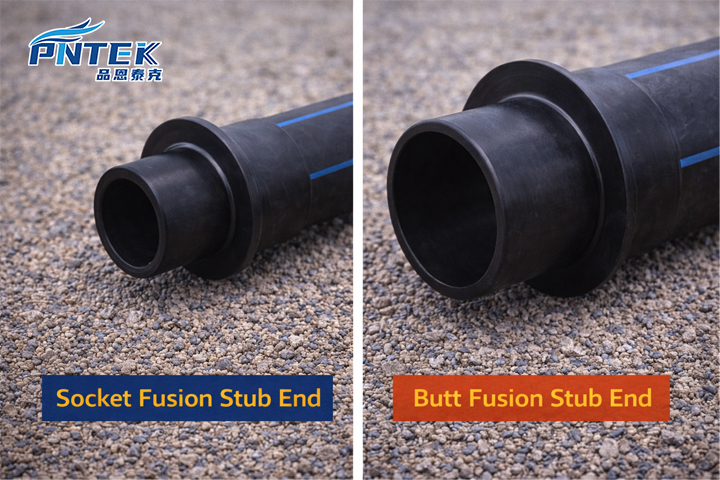
At Pntek, we manufacture both types to cover the full range of project needs. The type you choose depends entirely on the size of the pipe you are using.
Socket Fusion vs. Butt Fusion Stub Ends
Our Socket Fusion Stub Ends are designed for smaller pipes, generally from 20mm up to 110mm. These have a socket, or hollow recess, that the pipe is inserted into after both parts are heated. This method is quick and easy for smaller, more manageable pipe sizes often found in plumbing or smaller industrial lines.
Our Injection Butt Fusion HDPE Stub Ends are for larger projects, with sizes ranging from 50mm all the way up to 1200mm. For these large pipes, it is more practical to join the ends directly. The end of the stub end and the end of the pipe are heated and then pressed together, or “butted,” to form a weld. This is the standard for large-diameter water mains and industrial process piping.
| Feature | Socket Fusion Stub End | Butt Fusion Stub End |
|---|---|---|
| Size Range | 20mm – 110mm | 50mm – 1200mm |
| Welding Method | Pipe inserts into the fitting’s socket. | Pipe end joins directly to the fitting’s end. |
| Typical Use | Smaller diameter plumbing, irrigation. | Large water mains, industrial piping. |
How are these stub ends made?
A stub end has to withstand immense bolting pressure. You worry that a poorly made plastic part could crack or fail, causing a major leak at a critical connection point.
High-quality stub ends are made by injection molding. We inject molten, high-grade PE100 resin into a precision-engineered steel mold under extreme pressure, creating a dense, void-free, and incredibly strong single piece.
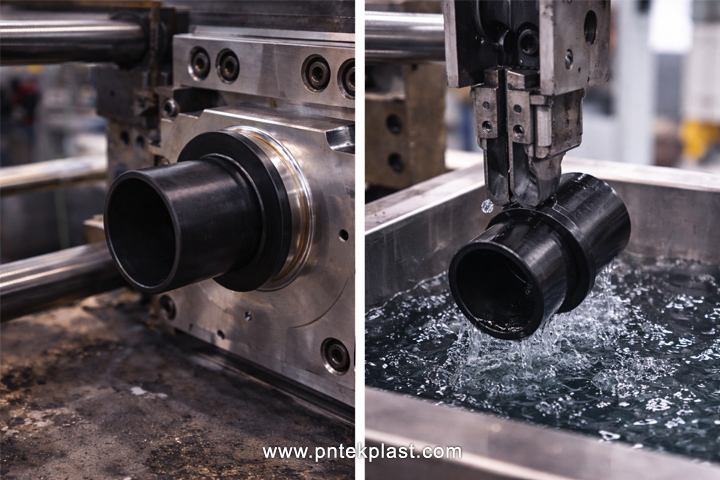
The manufacturing process is key to the fitting’s reliability. It all starts with the best raw materials—we use high-density PE100 pellets. These pellets are melted down into a liquid state. This molten plastic is then injected at very high pressure into a hardened steel mold that has been polished to a mirror finish. This high pressure ensures the plastic fills every single corner of the mold, creating a part with a consistent density and no internal air bubbles or weak spots. The part is held under pressure as it cools and solidifies before being ejected from the mold. Our automated process ensures that every single stub end, from the smallest to the largest, has perfect dimensions, especially the thickness and flatness of the flared collar, which is the critical sealing surface. This rigorous process guarantees a part you can trust.
What is the main purpose of using a stub end?
You need to connect a plastic pipe to a metal valve. Welding them is impossible, and using specialized adapters can be expensive and create extra joints that might leak.
The main purpose of a stub end is to create a removable, flanged connection point on a plastic pipe, primarily for joining it to a metal flange on a valve, pump, or tank.
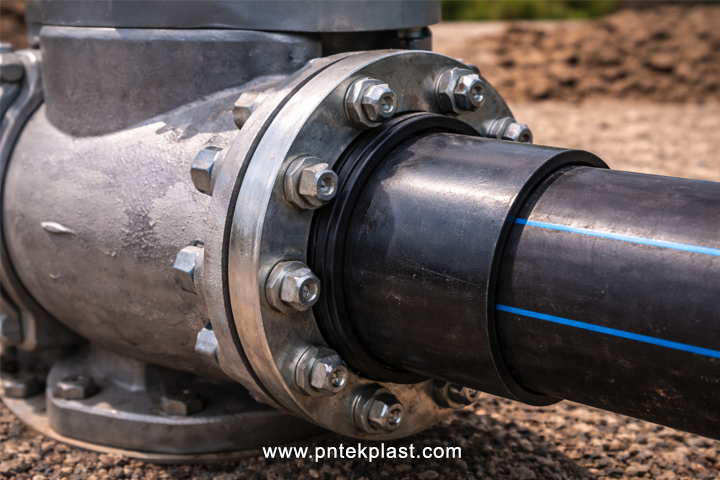
The stub end assembly is a versatile problem-solver with several key purposes:
• Joining Dissimilar Systems: This is its number one job. It provides a safe and reliable way to connect a welded HDPE piping system to a flanged metallic system.
• Creating Removable Joints: A fully welded pipeline is permanent. By using stub ends, you create strategic break points. This is essential for installing equipment like pumps or filters that may need to be removed for maintenance or replacement later on.
• Reducing Costs: As I mentioned, the backing flange does not touch the material inside the pipe. This allows you to use standard, low-cost carbon steel backing flanges instead of expensive stainless steel or alloy flanges, which significantly cuts down material costs.
• Simplifying Installation: The backing flange can rotate freely around the pipe before it is bolted. This makes it incredibly easy for installers to line up the bolt holes with the connecting flange. It eliminates the difficult task of twisting a heavy pipe section to get the bolt holes to match.
Conclusion
The stub end is an essential fitting that provides a cost-effective and reliable method for creating removable flanged connections on HDPE piping systems, simplifying installation and long-term maintenance.
Post time: Feb-03-2026


