
You are trying to choose the right pipe material. Codes like PE 80 and PE 100 are confusing, and making the wrong choice can lead to system failure and costly repairs.
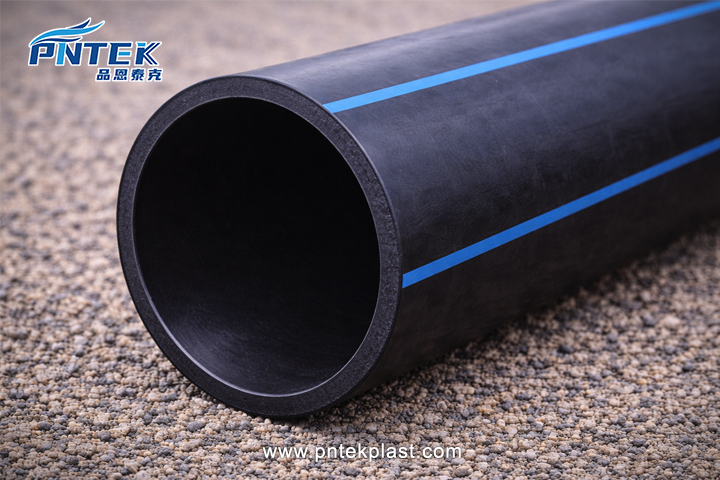
PE 100 is the latest generation of High-Density Polyethylene (HDPE). The “100″ means it has a Minimum Required Strength (MRS) of 10.0 MPa, making it stronger than older materials. This allows for pipes with thinner walls that can still handle high pressure.
When I talk with purchasing managers like Budi, the question of “PE 80 vs. PE 100” always comes up. It seems like a small difference, but that number is the key to the material’s performance. It represents decades of chemical engineering and innovation. Understanding this simple classification is the first step to choosing the most reliable and cost-effective pipe for any project. Let’s break down what those numbers really mean for your business.
What is the difference between PE 80 and PE 100?
You are comparing quotes and see PE 80 and PE 100 pipes. The PE 80 is cheaper, but is it strong enough? Choosing based on price alone is a big risk.
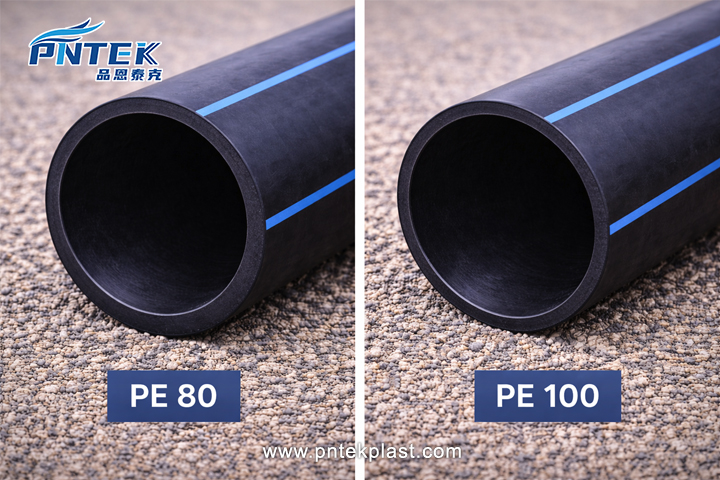
PE 100 has a Minimum Required Strength (MRS) of 10.0 MPa, while PE 80′s is 8.0 MPa. This makes PE 100 stronger, allowing it to handle higher pressure. For the same pressure rating, a PE 100 pipe can have a thinner wall, saving material and weight.
The number in the name is the most important thing to understand. It is not just a marketing term; it is a scientific classification based on long-term strength. The Minimum Required Strength (MRS) is determined by testing the material under pressure for a very long time to predict its performance over 50 years.
- PE 80: Has an MRS of 8.0 MPa. This was the standard for many years and is still a good material.
- PE 100: Has an MRS of 10.0 MPa. This is a 25% increase in minimum strength over PE 80.
This extra strength gives you two major advantages. First, you can use a PE 100 pipe to handle higher pressures than a PE 80 pipe of the same wall thickness. Second, and more commonly, you can use a PE 100 pipe with a thinner wall to achieve the same pressure rating. A thinner wall means less raw material, making the pipe lighter and often more cost-effective. It also gives the pipe a larger internal diameter, which improves flow characteristics.
What does PE 100 grade mean for an HDPE pipe?
You see “PE 100 Grade” on a specification sheet. It is easy to ignore as just another technical term, but this grade directly impacts the pipe’s performance and long-term reliability.
A “PE 100 grade” HDPE pipe is certified to be made from high-performance PE 100 resin. This guarantees its high strength (10.0 MPa MRS), excellent pressure rating, and superior resistance to slow crack growth, ensuring a long service life.
When you see “PE 100 Grade,” it is a guarantee of quality and performance. It means the pipe is not just made from any generic plastic; it is made from a resin that has been specifically engineered and tested to meet a high standard. Besides the higher strength, this grade offers other critical advantages. One of the most important is its superior resistance to Slow Crack Growth (SCG). During installation, pipes can get small scratches or nicks. In lower-quality materials, these small imperfections can slowly grow into a large crack over years of pressure cycling, eventually causing the pipe to fail. PE 100 is designed to resist this, making it much more durable and forgiving of real-world installation conditions. It is the ideal choice for pipes that will be buried and need to last for decades without any problems.
Why is the modulus of elasticity of PE 100 important?
You read “modulus of elasticity” on a data sheet and your eyes glaze over. This technical term seems irrelevant, but it actually describes one of the material’s biggest practical advantages.
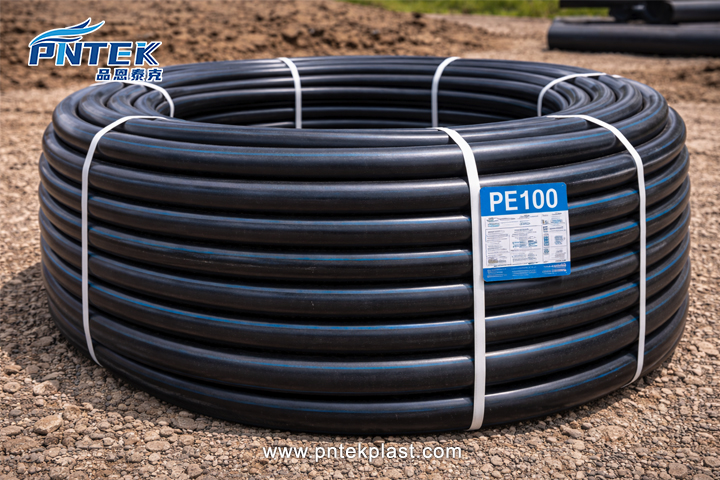
The modulus of elasticity measures stiffness. PE 100 has a low modulus, making it highly flexible. This allows the pipe to bend around obstacles, be supplied in long coils, and be used in trenchless installation methods, which drastically reduces installation costs.
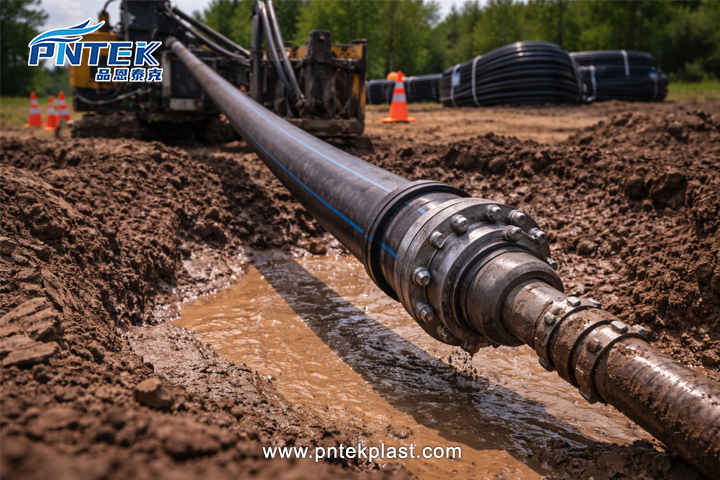
It is important not to confuse strength with stiffness. A material like glass is very stiff, but it is not strong against impact because it is brittle. PE 100 is both very strong and very flexible. This flexibility is a huge advantage during installation. For smaller diameters, we can supply the pipe in long coils of 100 meters or more. This means fewer joints are needed, which saves a lot of time and eliminates potential weak points. For larger diameters, this flexibility allows the pipe to be used in modern installation methods like Horizontal Directional Drilling (HDD). This lets installers pull the pipe underground without digging a long, disruptive trench. This is perfect for crossing rivers, roads, or environmentally sensitive areas. In a country like Indonesia with varied terrain, this flexibility can save a huge amount of money on installation costs compared to rigid pipes.
Is PE 100 a better choice than PVC?
PVC is a very common pipe material, and you are probably very familiar with it. It often has a lower initial cost, so why should you switch to PE 100?
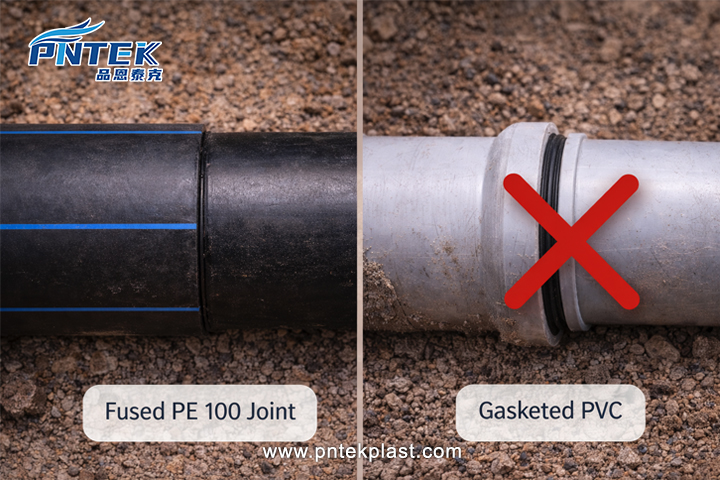
PE 100 is generally better for buried mains. Its key advantages over PVC are its flexibility, higher impact resistance, and leak-proof fused joints. PVC’s solvent-welded or gasketed joints are often the weakest point in the system, a problem that fusion welding completely eliminates.
| Feature | PE 100 (HDPE) | PVC |
|---|---|---|
| Jointing Method | Heat Fusion (Butt or Socket) | Solvent Cement or Gasket |
| Joint Reliability | Monolithic (as strong as the pipe) | Potential weak point |
| Flexibility | Highly flexible, can be coiled | Rigid |
| Impact Resistance | Excellent, does not shatter | Good, but can be brittle |
| Installation | Ideal for trenchless methods | Requires traditional trenching |
While both materials are good, they are designed for different strengths. The single biggest advantage of PE 100 is the jointing method.
The joints are the key. When you heat fuse a PE 100 pipe, the joint becomes a single, continuous piece of plastic. It cannot leak. With PVC, you are either using a chemical solvent weld or a rubber gasket. These joints are almost always the first place a leak will occur over the long term. For any buried pipeline where repairs would be expensive and difficult, the guaranteed leak-proof joint of PE 100 makes it the superior long-term investment.
Conclusion
PE 100 is more than just a number. Its superior strength, flexibility, and leak-proof fused joints make it the modern, reliable choice for any critical long-term piping project.
Post time: Feb-06-2026


