
You see “PE100″ in a spec sheet for HDPE pipe and feel confused. This technical jargon makes it hard to be sure you are getting the right product for your project.
PE100 is not a separate material from HDPE; it is the highest performance classification or grade of HDPE resin. The “100″ signifies a high Minimum Required Strength (MRS), making it the modern standard for strong, reliable pressure pipes.
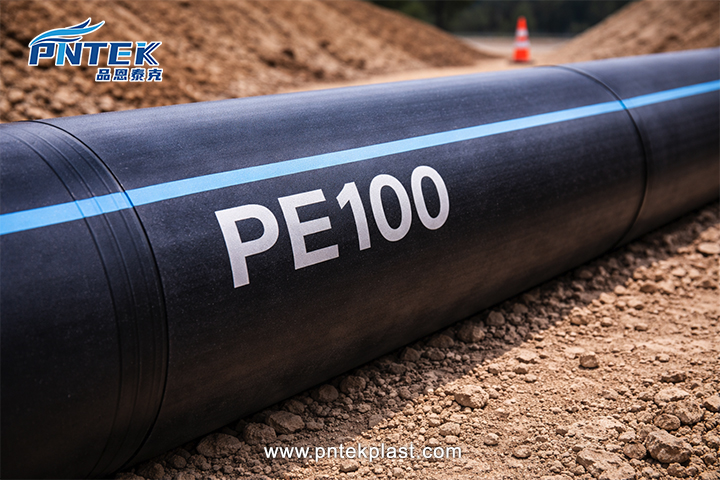
In my nearly two decades of manufacturing plastic piping systems, this is a fundamental concept that ensures project safety and longevity. Think of HDPE as the family name and PE100 as the most capable member of that family. For a procurement manager like Arief in Indonesia, specifying “PE100″ is non-negotiable. It removes all ambiguity and guarantees the pipe has the engineered strength to handle the pressures of critical water infrastructure. Let’s break down exactly what this grade means and how it compares to others.
Which is better, PE80 or PE100?
You have quotes for both PE80 and PE100 pipes. Without a clear understanding, choosing the cheaper option seems logical but could be a mistake. PE100 offers much better value.
PE100 is definitively better than PE80 for pressure pipe applications. It has a higher strength, which allows it to handle the same pressure with a thinner wall. This makes the pipe lighter, less expensive to produce, and gives it a larger internal diameter for better flow.
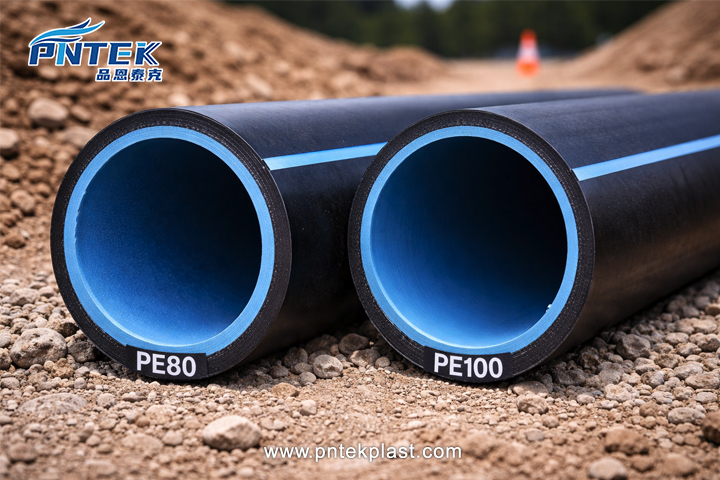
The numbers in these grades directly relate to their long-term strength. PE80 has a Minimum Required Strength (MRS) of 8.0 MPa, while PE100 has an MRS of 10.0 MPa. That 25% increase in strength is a huge leap in material science. From a manufacturing standpoint, this is a big deal. It means for any given pressure rating, like PN16, we can use less material to make the PE100 pipe. This is measured by the Standard Dimension Ratio (SDR). A PE100 PN16 pipe has an SDR of 11, while a PE80 PN16 pipe needs a thicker wall, giving it an SDR of 9. The PE100 pipe is not only stronger but also more efficient. It saves on material costs, reduces shipping weight, and makes handling on-site easier for installation crews.
PE100 vs. PE80: A Practical Comparison (for PN16 Pipe)
| Feature | PE80 Pipe | PE100 Pipe | The PE100 Advantage |
|---|---|---|---|
| MRS | 8.0 MPa | 10.0 MPa | 25% stronger material |
| SDR | SDR 9 | SDR 11 | Thinner wall for the same pressure |
| Weight | Heavier | Lighter | Easier to transport and install |
| Flow | Smaller internal bore | Larger internal bore | Higher flow capacity |
What is the difference between PE 40 and PE100?
You might see “PE 40″ on a very old technical drawing or specification. It’s important to know if this is a comparable material. It is an obsolete grade for pressure pipes.
The difference is enormous. PE100 is a modern, high-strength material with 2.5 times the long-term strength of PE 40. PE 40 is an obsolete, first-generation polyethylene grade that is not suitable for modern pressure pipe applications.
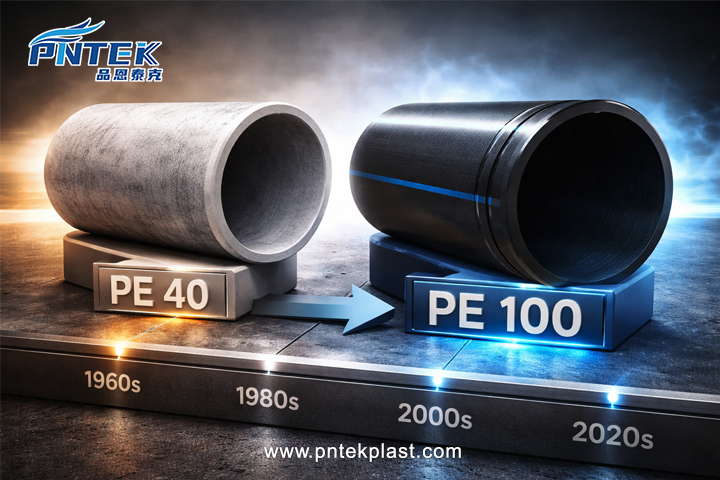
This question highlights the incredible progress we’ve made in polymer chemistry. PE 40 was one of the very early polyethylene materials used for pipes decades ago. It has a Minimum Required Strength of only 4.0 MPa. If you tried to make a PN10 (10 bar) pressure pipe from PE 40 today, the wall would have to be incredibly thick and rigid, making it impractical and extremely expensive. The development from PE 40, through PE 63 and PE 80, to the current standard of PE100 is a story of creating stronger, more reliable, and more efficient materials. At our factory, we wouldn’t even consider using a resin that performs like PE 40 for pressure pipes. The PE100 resin we use provides the performance and safety factors that modern infrastructure projects require. If you encounter PE 40 in a specification, it needs to be updated to PE100 immediately.
The Generational Leap in PE Strength
| Grade | Minimum Required Strength (MRS) | Era of Use | Status |
|---|---|---|---|
| PE 40 | 4.0 MPa | 1950s | Obsolete for pressure pipes |
| PE 63 | 6.3 MPa | 1960s-1980s | Largely replaced |
| PE 80 | 8.0 MPa | 1980s-2000s | Still used in some applications |
| PE100 | 10.0 MPa | 1990s-Present | Current global standard |
What is PN16 HDPE PE100?
You see this long string of letters and numbers on a project specification. It looks complicated and intimidating. It’s actually a very precise and helpful description of the pipe.
This is a full technical specification for a pipe. “PN16″ means the pipe has a pressure rating of 16 bar. “HDPE” is the material, High-Density Polyethylene. “PE100″ is the specific high-strength grade of that material. It describes a very strong pipe.
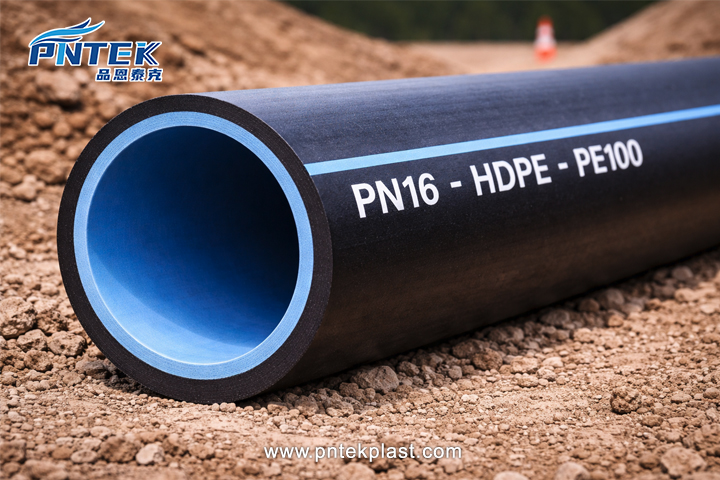
This is exactly the kind of clear specification that engineers and procurement managers need. It leaves no room for error or misinterpretation. Let’s break it down completely.
- PN16: The ‘PN’ stands for “Pression Nominale,” which is French for Nominal Pressure. It means the pipe is designed to operate continuously with an internal pressure of 16 bar (or about 232 PSI) at 20°C.
- HDPE: This specifies the base material is High-Density Polyethylene, known for its toughness and chemical resistance.
- PE100: This certifies that the HDPE resin used has a high Minimum Required Strength of 10 MPa.
As a manufacturer, seeing this full specification tells me exactly what to produce. These terms are all linked. To achieve a PN16 rating using PE100 resin, the pipe must be manufactured with a specific wall thickness, resulting in an SDR of 11. This complete description ensures everyone—the designer, the manufacturer, and the installer—is talking about the exact same product.
What does PE100 stand for?
You know that PE100 is good, but you don’t know what the name actually means. Understanding the name helps you remember why it’s the right choice. It stands for strength and reliability.
“PE” stands for Polyethylene, the type of plastic. The “100″ refers to its Minimum Required Strength (MRS) after 50 years of service. It represents a long-term hoop stress of 10.0 MPa, which is multiplied by 10 to get the designation “100″.
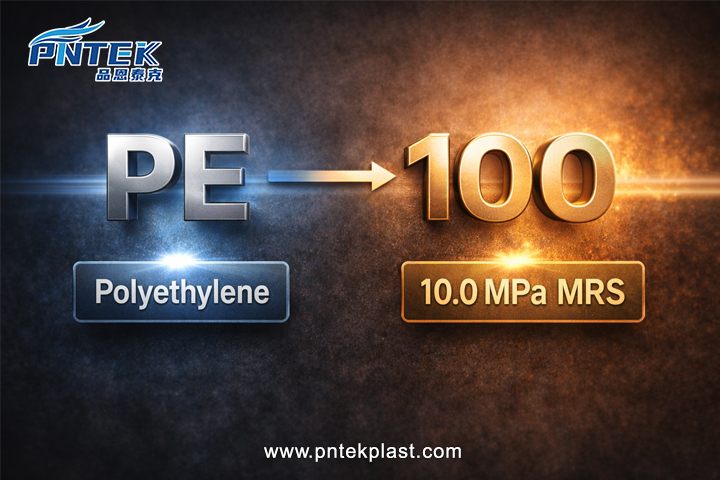
This is the most important technical detail of the material. The strength rating isn’t based on a simple, short-term burst test. It’s a long-term engineering value derived from extensive testing. The tests predict the strength of the material after being subjected to constant internal pressure for 50 years. The “hoop stress” is the force within the pipe wall that resists the pressure of the water or gas trying to burst it open. A PE100 classification is a guarantee that the material can handle a constant stress of 10 Megapascals for that 50-year period at a standard temperature. This conservative, long-term approach to rating is why PE100 pipes are trusted for critical infrastructure that needs to last for generations. It is a promise of durability, and it’s the foundation upon which we build our company’s reputation.
Conclusion
PE100 is the grade that defines modern HDPE pipes. It guarantees a high level of strength, ensuring long-term reliability for your most critical projects. Always specify PE100.
If you want an accurate quotation based on your quantity, delivery terms, and specifications, feel free to contact us for a fast and professional quote.
Post time: Mar-25-2026


