You’re trying to source pipes and see “poly pipe” and “HDPE pipe” used in quotes and datasheets. This creates uncertainty, making you worry if you are comparing the right products or missing a key detail.
There is no functional difference. “Poly pipe” is the common, informal industry nickname for HDPE (High-Density Polyethylene) pipe. When someone in the waterworks industry says “poly pipe,” they are referring to HDPE pipe used for pressure applications like water and gas mains.
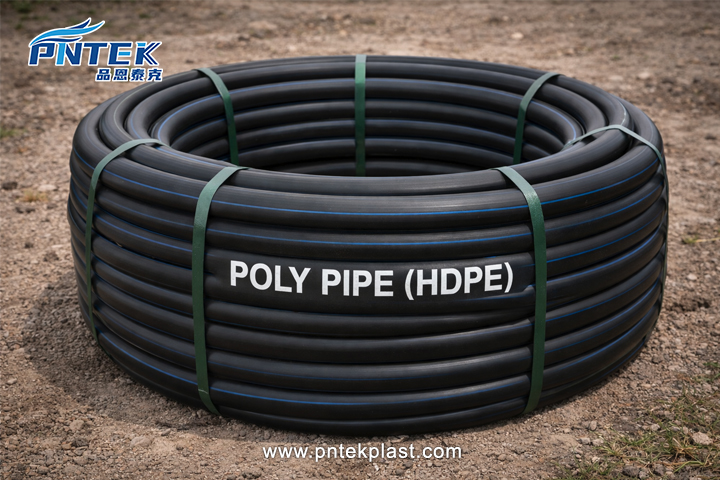
I was on a video call with a new distributor in Surabaya, and he kept asking about our “poly pipe” prices versus our “HDPE” prices. I paused the conversation and explained that they are the same thing. His face showed immediate relief. He thought he was missing something technical. This is a very common point of confusion. “Poly” is just the easy-to-say slang term, while “HDPE” is the specific engineering material. Think of it like this: you might ask for a “Coke,” but the product itself is Coca-Cola. For any professional purpose, we’re talking about HDPE, and usually the PE100 grade.
Can you use PVC fittings on HDPE pipe?
You have a stock of PVC fittings and an HDPE pipe that needs a connection. Using what you have on hand would be fast and cheap, but is it safe or even possible?
No, you cannot use standard PVC fittings on HDPE pipe. The materials are chemically incompatible and require completely different joining methods. Trying to glue a PVC fitting onto an HDPE pipe will create a joint that is guaranteed to fail under pressure.
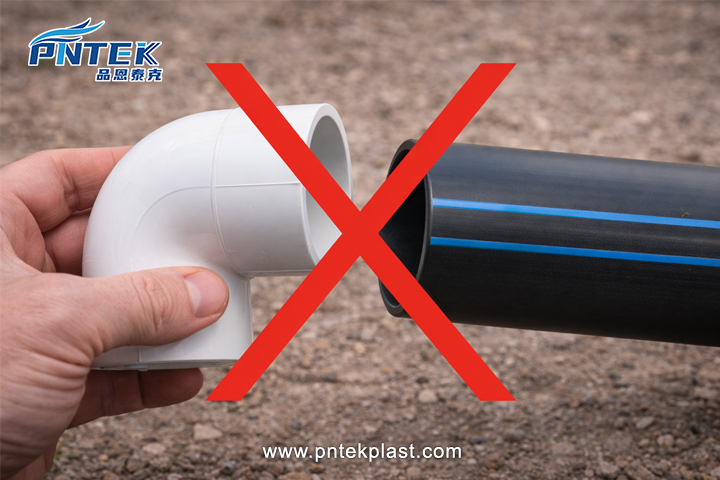
This is a critical safety and reliability issue. PVC and HDPE are two completely different families of plastic. PVC fittings are joined using solvent cement, which is a type of chemical glue. The solvent works by chemically softening the surface of the PVC pipe and fitting, allowing them to fuse together as the solvent evaporates. HDPE, on the other hand, is a polyolefin. It has a waxy, inert surface that no glue or solvent cement can properly bond to. If you tried to glue them, you would create a weak, temporary seal that would blow apart as soon as the line is pressurized. The only correct way to connect a PVC system to an HDPE system is by using a special transition fitting, such as a flange adapter on each side bolted together, or a specific mechanical compression coupling designed to bridge the two different materials.
Do you glue a HDPE pipe?
You need to join two pieces of HDPE pipe. With PVC, the process is simple: apply primer and glue. This leads you to wonder if a similar adhesive exists for HDPE pipe.
No, you never use glue on HDPE pipe. HDPE’s chemical makeup makes it impossible for adhesives to create a permanent, pressure-tight bond. The only proper way to join HDPE is through thermal heat fusion, which melts the plastic itself to form the joint.
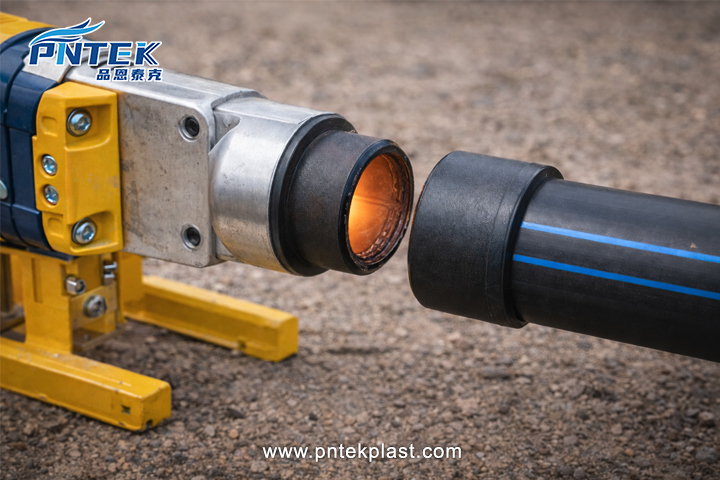
The reason you cannot glue HDPE is due to its material science. HDPE has a very high resistance to chemicals and solvents, which is one of its main advantages. This same property means that chemical adhesives, like the solvent cement used for PVC, simply don’t work. They cannot “bite” into the surface of the plastic to create a weld. Trying to find a “glue” for HDPE is a common mistake for teams that are new to the material. The correct and only industry-accepted method for creating a permanent, structural joint is heat fusion. This process uses a specialized heating tool to melt the surfaces of the pipes or fittings that are being joined. Once they are in a molten state, they are pushed together and held under pressure. As the plastic cools, it fuses into a single, seamless piece. The resulting joint is not just a seal; it is a fully monolithic weld that is as strong, or even stronger, than the original pipe itself.
What is the best way to join HDPE?
Knowing you can’t use glue, you need to understand the correct professional method. Choosing the right technique is essential for ensuring your pipeline is strong, leak-proof, and will last for decades.
The best way to join HDPE is with heat fusion. This process creates a permanent, monolithic joint that is as strong as the pipe itself. The two main methods are butt fusion for large pipes and socket fusion for smaller pipes and fittings.
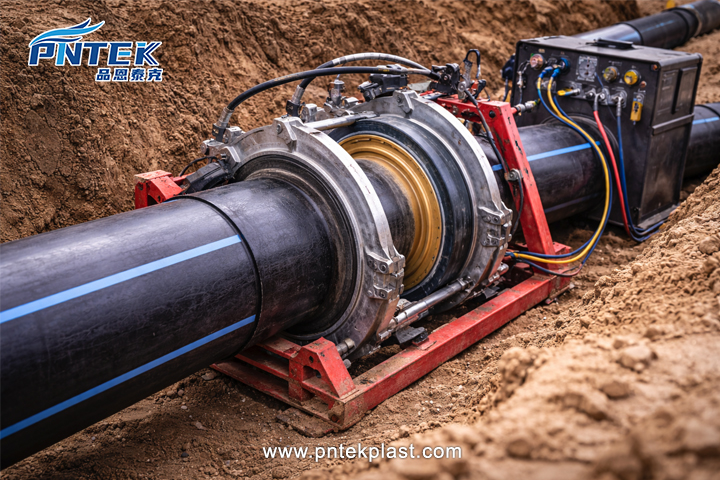
Heat fusion is the gold standard for HDPE because it eliminates the most common point of failure in any pipeline: the joint. Instead of relying on a separate material like a gasket or glue, it turns the two ends into one solid piece. The specific method depends on the pipe size.
Butt Fusion
- The two pipe ends are clamped into a machine that ensures perfect alignment.
- A special trimmer faces the ends, making them perfectly clean and parallel.
- A temperature-controlled heater plate is placed between the ends, melting them to a specific depth.
- The heater plate is removed, and the molten ends are pressed together under controlled pressure, creating the weld.
Socket Fusion
- A heating tool with corresponding male and female heads heats the outside of the pipe and the inside of the fitting simultaneously.
- Once heated, the tool is removed, and the pipe is immediately pushed into the fitting’s socket.
- The parts are held for a brief cooling period, allowing the plastics to fuse together permanently.
What is the life expectancy of HDPE pipe?
You are making a significant investment in your infrastructure. You need to be sure that the material you choose will not need costly repairs or replacement in just a few years.
HDPE pipe has a conservative design life of 50 years, but real-world projections and studies show it can last 100 years or more. Its durability comes from its exceptional resistance to corrosion, chemical attack, and physical fatigue, ensuring a very low total cost of ownership.
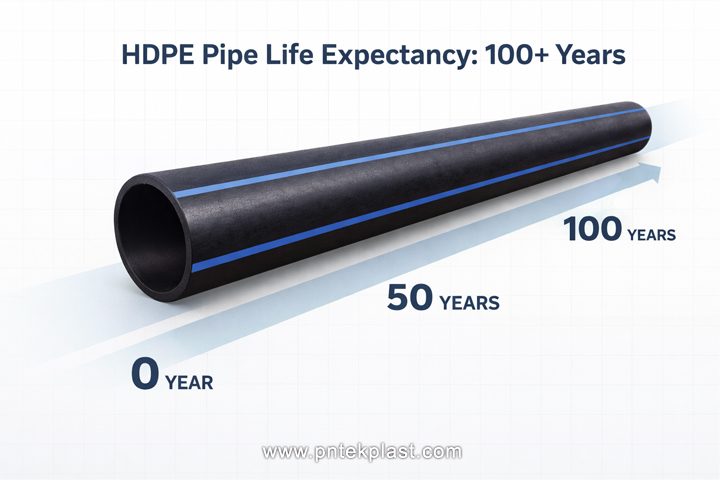
The long life of HDPE pipe is not just a claim; it’s a result of its core material properties. This makes it an incredibly wise long-term investment, which is a key factor for any purchasing manager’s evaluation. There are several reasons it lasts so long:
- It’s Chemically Inert: HDPE does not rust or corrode like metal pipes. It is also highly resistant to the chemicals, acids, and alkalis found in soil and water, so the pipe wall does not degrade over time.
- It’s Fatigue Resistant: HDPE is a flexible material. This allows it to safely absorb pressure surges, vibrations, and ground movement that would cause rigid pipes like PVC or iron to crack and fail.
- It’s Abrasion Resistant: The material is very tough and holds up well to abrasive materials that may be flowing inside the pipe, such as sand or grit, which is common in some water sources.
- Leak-Proof Joints: As we discussed, the heat-fused joints are as strong as the pipe. This eliminates water loss from leaky joints, which is a major long-term problem with older systems using gasketed or bell-and-spigot joints.
Conclusion
Poly pipe is just a nickname for HDPE. It’s a superior material joined by heat fusion, not glue, offering a service life of up to 100 years or more.
Post time: Feb-10-2026