
You see “PVC” and “UPVC” used for valves and worry you are buying the wrong type. This confusion can lead to ordering materials that do not meet your project’s specifications or safety standards.In today’s market, there is no practical difference. “UPVC” (Unplasticized Polyvinyl Chloride) is the technically correct term for the rigid material used in valves. “PVC” is simply the common, shorter name used for the exact same product.
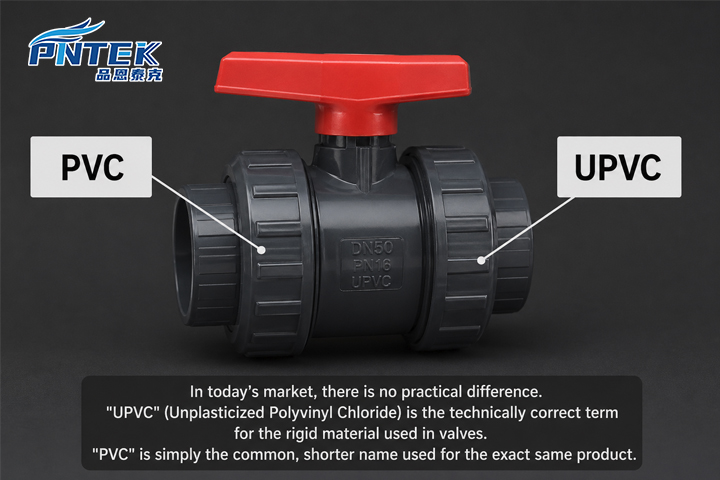
I get this question all the time from partners like Budi, and it is a very good one. The industry uses these terms interchangeably, and it can be confusing. The simple truth is, for the rigid, grey or white valves you use in water systems, PVC and UPVC mean the same thing. The “U” stands for “unplasticized,” meaning no softeners have been added. This is what makes the material strong and rigid, perfect for pipes and valves. Some regions prefer the term UPVC for technical accuracy, while others just say PVC for simplicity. When you buy from us, whether the box says PVC or UPVC, you are getting the same high-quality, rigid valve.
What Pressure Rating Do PVC Ball Valves Have?
You worry that the valve you buy will not handle the system’s pressure. A failure under pressure means catastrophic leaks, project delays, and serious damage to your reputation with your customers.
The pressure rating depends on the valve’s size and operating temperature. Standard compact ball valves are typically rated for PN16 (16 bar or 235 psi) at room temperature. This rating decreases significantly as the fluid temperature increases.
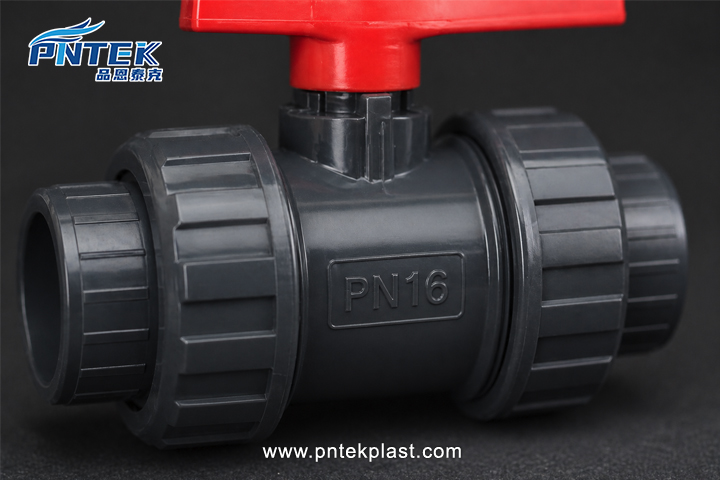
The pressure rating is one of the most critical technical details, and it’s more than just a single number. For a professional buyer like you, Budi, it is important to understand the factors that determine a valve’s true strength.
The Critical Role of Temperature
PVC, like all thermoplastics, gets softer as it gets hotter. This means a valve that can safely handle high pressure at room temperature cannot handle the same pressure with hot water. A valve rated PN16 at 20°C might only be safe for 4-5 bar at 60°C. A reliable manufacturer will always provide a pressure-temperature chart. This is essential for ensuring the safety and longevity of an installation, especially in industrial or hot water applications.
Understanding the Numbers: PN vs. PSI
You will see two common ratings: PN (Pressure Nominal) and PSI (Pounds per Square Inch).
- PN is the European standard, measured in Bar. PN16 means the valve is rated for 16 Bar.
- PSI is the American standard. PN16 is roughly equivalent to 235 PSI.
Knowing both helps you compare products from different international suppliers. Our valves are clearly marked with their PN rating, so there is never any confusion.
How Long Is the Service Life of PVC Ball Valves?
You install thousands of valves for your clients, but how long will they actually last? The fear of premature failures and the high cost of replacements makes it difficult to trust a new supplier’s claims.
A high-quality PVC ball valve made with 100% virgin PVC can last over 50 years in a properly designed water system. However, factors like UV exposure, chemical contact, and frequent operation can reduce this lifespan.
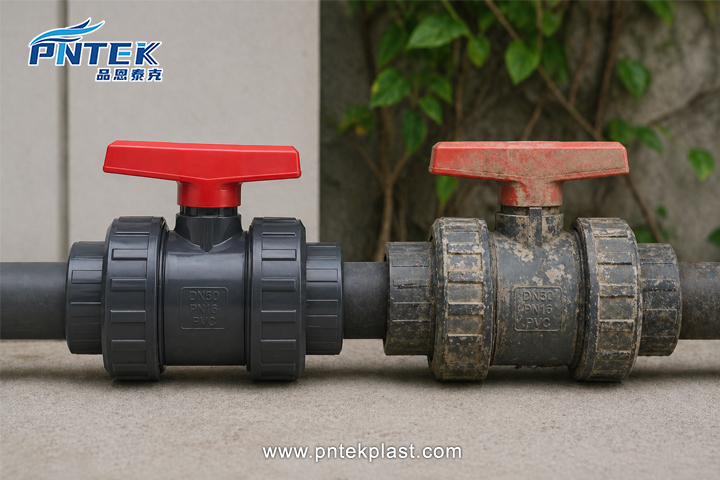
A long service life is not something that just happens; it is the direct result of using the right materials and the best manufacturing processes. For your customers’ projects in Indonesia, several factors are extremely important for ensuring the valves last for decades.
First is UV Radiation. This is the number one enemy of PVC in outdoor applications like irrigation. The intense tropical sun in Indonesia will break down the polymer chains in standard PVC, making it brittle and weak in just a couple of years. That is why we add special UV-inhibiting additives to our raw material formula. This is a critical step that low-cost producers often skip.
Second is Mechanical Wear. The seals are the parts that experience the most wear. A valve that is opened and closed every day will put stress on its stem O-rings and ball seats. We use high-grade EPDM seals and machine our PTFE seats to be perfectly smooth. This reduces friction and ensures the valve can handle many thousands of cycles without leaking.
What Certifications Should PVC Ball Valves Have for Export?
You want to import valves but are stopped by the fear of them being rejected by customs or clients for not having the right paperwork. This risk of non-compliance can limit your supplier options.
For a manufacturer, the most important certification is ISO 9001, proving a quality system. For products, certifications for drinking water safety like NSF/ANSI 61 or WRAS are excellent indicators of high-quality, safe materials used in production.
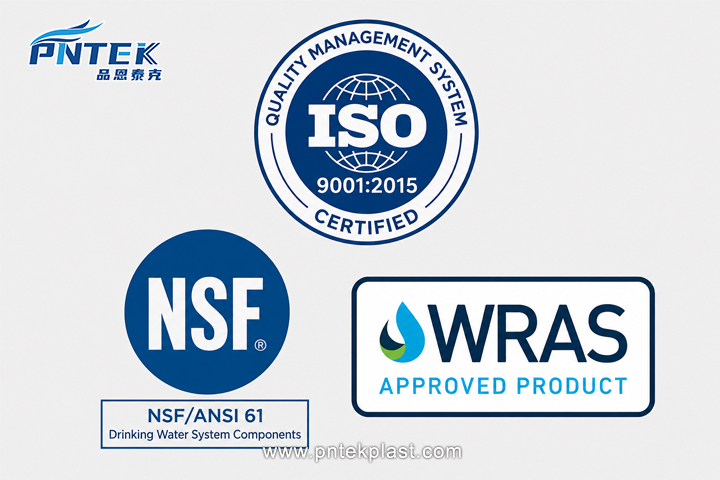
Certifications are your independent proof that a manufacturer’s claims are true. They give you confidence in the quality and safety of the products you are buying. These certifications can be grouped into two main types.
First, there is Factory-Level Certification. The most important one is ISO 9001. This certificate does not test the valve itself. Instead, it audits the entire factory’s Quality Management System. It proves that we have documented processes for everything from checking raw materials to final product testing and handling customer feedback. A factory with ISO 9001, like ours, is a more reliable and transparent partner.
Second, there are Product-Level Certifications. These involve testing the actual valve. Certifications like NSF/ANSI 61 (the American standard for drinking water components) or WRAS (the UK standard) are very important. They confirm that the PVC material and all other components are non-toxic and will not leach harmful chemicals into the water. Even if these are not required in your market, a manufacturer who holds them is demonstrating a serious commitment to quality and safety.
PVC Ball Valve Manufacturers in China vs Thailand: Which Is Better?
You are evaluating suppliers from both China and Thailand. It’s difficult to know which country offers the better combination of quality, price, and supply chain reliability for your market in Indonesia.
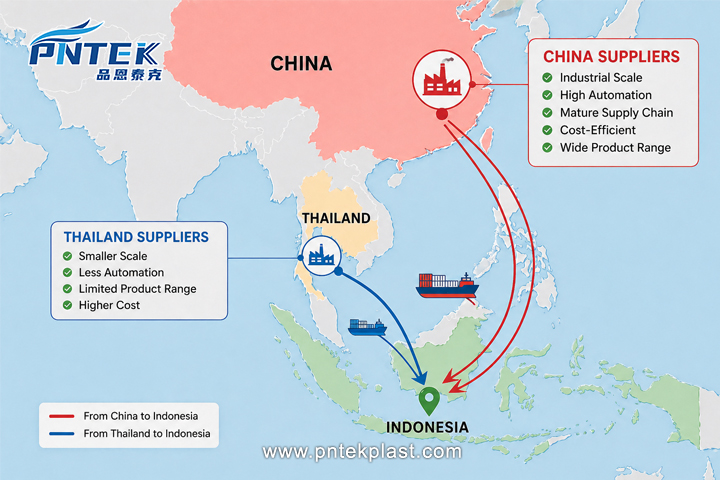
China offers a superior advantage in industrial scale, automation, and supply chain maturity. This results in better cost-efficiency and a much wider product range than most Thai manufacturers can offer, especially for large-volume buyers.
This is a great strategic question, Budi. I have many partners who have considered suppliers from all over Asia. As a manufacturer who competes on a global scale, I can share my perspective on the key differences.
The main advantage China offers is Scale and Automation. The manufacturing industry here is enormous. At Pntek, we have invested millions in high-precision injection molding machines and robotic assembly lines. This level of automation does two things: it dramatically lowers the cost per valve, and it ensures that the quality of the ten-thousandth valve is absolutely identical to the first.
Another key factor is the Supply Chain. China is the world’s largest producer of the raw PVC resin used to make valves. We have direct access to the highest quality raw materials at the best prices. This mature supply chain means we can control our costs and avoid delays. While Thailand has good manufacturers, they often cannot match this level of vertical integration and scale.
| Factor | Leading Chinese Manufacturers | Thai Manufacturers |
|---|---|---|
| Cost at Scale | Excellent | Good to High |
| Automation Level | Very High | Moderate |
| Product Range | Extremely Wide (All standards) | Often focused on regional needs |
| Supply Chain | Highly Integrated | More reliant on imported materials |
Conclusion
There is no difference between PVC and UPVC. The real difference is in the manufacturer. Choose a partner who uses pure materials, proves their quality with certifications, and engineers products that will last.
Post time: Apr-29-2026


