
Choosing a tap feels like a simple decision, but the wrong one causes leaks and headaches. A smart choice saves you money and keeps customers happy.
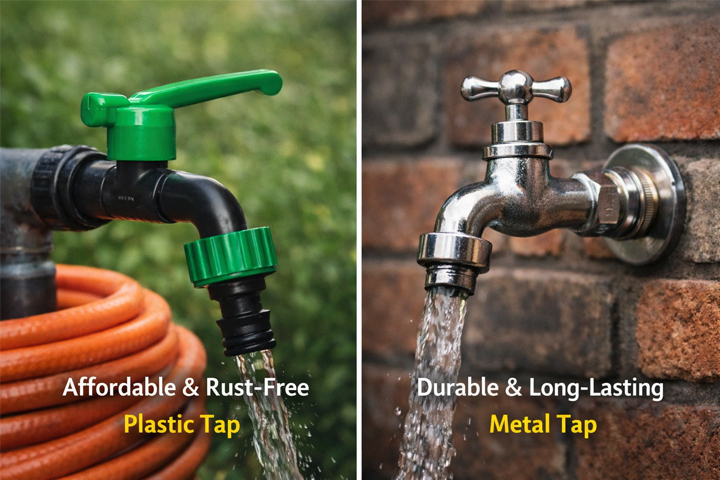
The best tap is the one that fits the job. It is not about plastic versus metal. Plastic taps are affordable and do not rust, making them great for many uses. Metal is very durable for busy places. The right choice depends on where you will use it and your budget.
For years, people have debated which material is better. I have worked in plastic manufacturing for almost 20 years, so I understand this discussion well. As a purchasing manager, you need to look past the simple arguments. You have to consider cost, how long it will last, and what your customers in a market like Indonesia really need. Let’s break down the details so you can choose with confidence.
Are plastic faucets okay?
Many people think plastic is cheap and weak, causing them to miss out on good, affordable options. The truth is, modern plastic faucets are high-quality and safe for many uses.
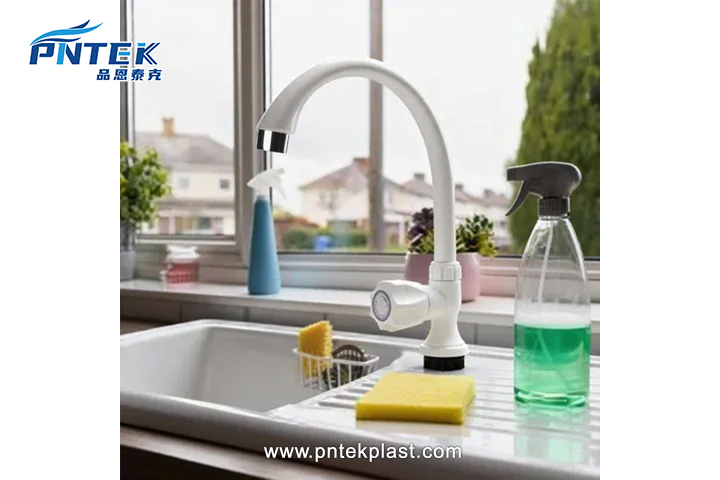
Yes, high-quality plastic faucets are more than okay. Materials like ABS and UPVC are strong, non-toxic, and will not corrode. They are a safe and reliable choice for homes and businesses, especially where you are concerned about lead from old metal taps.
In my two decades of manufacturing plastic fluid systems, I have seen the technology improve dramatically. The plastic used for taps today is not the brittle plastic from 30 years ago. We now use engineering-grade materials like Acrylonitrile Butadiene Styrene (ABS) and Unplasticized Polyvinyl Chloride (UPVC). These materials are specifically designed for strength and safety.
One of the biggest advantages is safety. Many older or low-quality metal faucets can leach lead into the water, which is a major health risk. High-quality plastic faucets are naturally lead-free. At my company, we ensure our raw materials meet international standards for potable water, like NSF. This guarantees the tap is safe for drinking water. For a purchasing manager like Budi in Indonesia, offering a certified lead-free option is a powerful selling point that builds trust with contractors and homeowners. It’s not just “okay”; it’s a responsible choice.
How long do plastic faucets last?
You worry that a plastic faucet will break quickly, costing you money and damaging your reputation. However, a good plastic faucet can last for a long time if you choose correctly.
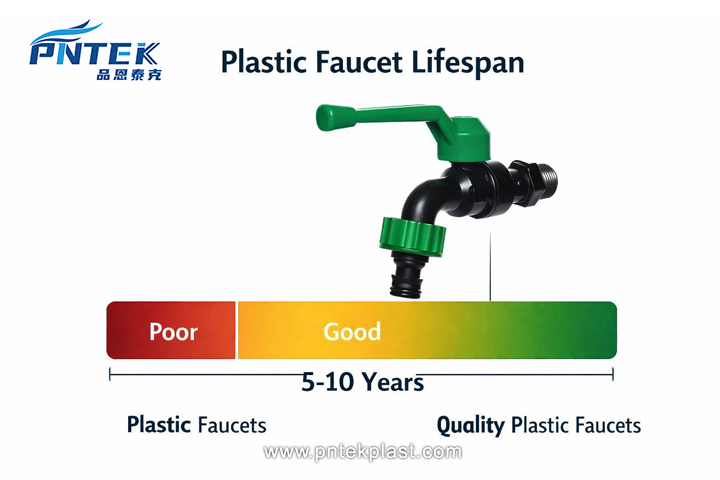
A well-made plastic faucet can last 5 to 10 years, sometimes longer. Its lifespan depends on the quality of the plastic material, the internal parts like the cartridge, and how much it is used. A quality product will perform reliably for years.
The lifespan of a faucet is about more than just its body material. From my experience, a few key factors determine how long it will really last. I once worked with a distributor in Jakarta whose customers complained about cheap plastic taps failing every year. We analyzed the failed products and found two problems: poor quality recycled plastic and cheap internal seals.
We showed him that by switching to taps made from virgin UPVC with ceramic disc cartridges, his customers could get over 7 years of use. The price was slightly higher, but he eliminated customer complaints and saved them huge replacement costs. This is what you should look for:
Key Factors for Faucet Lifespan
| Factor | Why It Matters | What to Look For |
|---|---|---|
| Body Material | Determines strength and crack resistance. | Virgin UPVC or ABS, not recycled plastic. |
| Cartridge Type | Controls water flow and prevents drips. This is the most common failure point. | Ceramic disc cartridges are much more durable than plastic or rubber washers. |
| Usage | A faucet in a busy public restroom wears out faster than one in a guest bathroom. | Match the faucet’s durability rating to its expected use. |
| Installation | Over-tightening can crack the plastic body or strip threads. | Follow the manufacturer’s instructions. Do not use excessive force. |
A good plastic faucet is an engineered system. When you focus on these details, you can confidently source products that last.
What are 5 disadvantages of plastic?
You know that plastic is not a perfect solution for every situation. Ignoring its weak points can lead to making the wrong choice and product failures down the line.
The main disadvantages of plastic faucets are a public perception of low quality, lower resistance to very hot water, damage from sunlight (UV rays), risk of cracking if over-tightened, and a less premium look compared to polished metal.
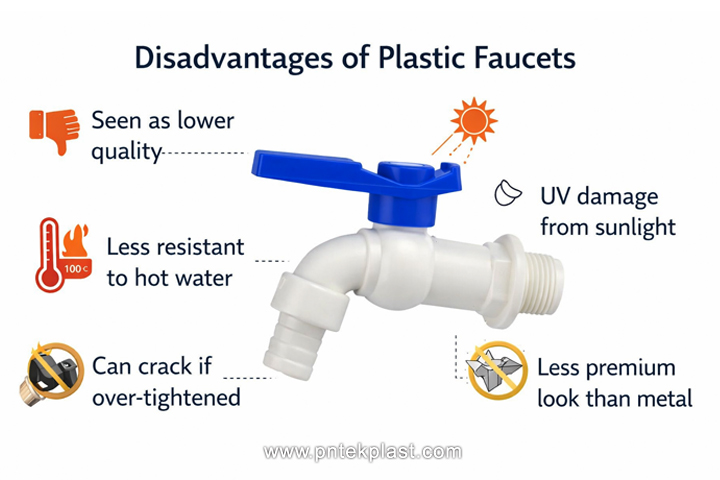
Understanding these limits is key to using plastic taps effectively. It’s about using the right tool for the job. Here’s a practical breakdown for a buyer:
- Perception of Quality: In many markets, including parts of Southeast Asia, customers automatically think metal is better. For a distributor, this is a marketing challenge. You need to educate customers on the benefits of modern, certified plastics.
- Heat Resistance: Most plastic taps are designed for cold and warm water lines. They are not suitable for boiling water dispensers or industrial high-temperature applications. The plastic can warp or fail. Always check the temperature rating.
- UV Degradation: Standard plastic can become brittle and discolor if left in direct sunlight for years. If the tap is for outdoor use, you must choose one made with UV-stabilized plastic. I always ask my customers about the final application for this reason.
- Installation Sensitivity: This is a common and preventable problem. Plumbers used to working with metal can easily over-tighten a plastic fitting and cause a crack. We advise our partners to include very clear, simple installation guides with pictures to prevent this.
- Aesthetics: For a luxury hotel or a high-end kitchen design, the brilliant shine of chrome-plated brass has a premium feel that plastic often can’t match. Plastic is functional, but its appearance is more practical than decorative.
Knowing these points doesn’t mean you should avoid plastic. It means you can guide your customers to the perfect solution and prevent problems before they start.
How long will plastic last in water?
Many materials break down in water over time. You might worry that plastic, when always wet or underwater, will degrade and fail. The opposite is actually true.
Plastic, especially PVC and UPVC, is incredibly stable and long-lasting in water. It does not rust, corrode, or break down. In water piping systems, it can last for over 50 years without any significant decay, making it extremely reliable.
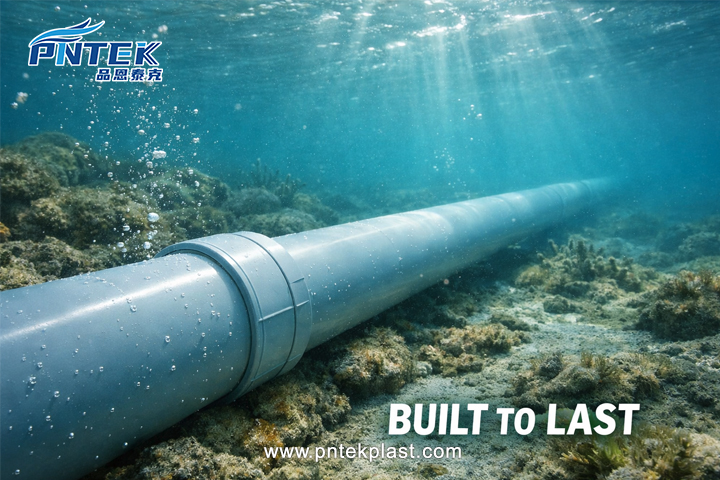
This question is different from asking about a faucet’s mechanical lifespan. This is about the raw material’s ability to survive in water. Plastic’s performance here is its greatest strength.
The reason is simple chemistry. PVC is chemically inert. This means it doesn’t react with water, or with the minerals and chemicals commonly found in it. This is why PVC and UPVC have been the global standard for underground water mains, irrigation systems, and drainage pipes for more than 60 years. The material itself is proven to be trustworthy for the long term.
I have seen 30-year-old iron pipes cut open. The inside is often almost completely blocked by rust. A 30-year-old PVC pipe, in contrast, looks nearly new on the inside. For anyone managing water infrastructure, this is a critical difference. No rust means a consistent flow rate and, most importantly, cleaner, healthier water for the end-user. It’s this fundamental reliability that makes plastic such an essential material for modern water management.
Conclusion
Choosing between plastic and metal is not about good versus bad. It is about matching the right material to the job, budget, and how long you need it to last.
Post time: Mar-30-2026


