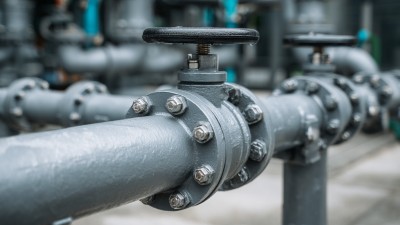
Buyers around the world are asking a pretty important question these days: when it comes to China-made UPVC valves, what options really combine reliable sealing, traceable materials, and a fair price over the long run?
The potential here is huge. According to Grand View Research, the global market for PVC pipes hit around $53.4 billion in 2023, and it’s expected to keep growing—thanks to ongoing investments in infrastructure and water-treatment projects. MarketsandMarkets also points out that the Asia-Pacific region is a major hub for both manufacturing and demand for industrial valves. Now, these numbers don’t just cover UPVC valves alone—they give us a sense of the entire supply chain behind this category.
China’s manufacturing scene is pretty vast. Companies like Asahi/America, Georg Fischer, and China Lesso are all competing across a range of applications—whether it’s chemical processing, irrigation, or municipal use. But here’s the thing:ashing price doesn’t tell the full story. You might find a valve that looks identical on the outside, but details like pressure ratings, gasket materials, threading precision, and testing records can be totally different—and these things actually matter, especially when the valve’s installed near a chlorination tank or buried underground.
As Dr. Hans-Joachim Schmitz, a plastics piping expert, once pointed out, “Material choice is what really determines system reliability long before anything’s installed.” So, it’s super important for buyers to do their homework—things like factory audits, checking ISO 9001 certifications, reviewing dimensional reports, and examining pressure-test results. Standards like EN 1452, ISO 16135, and ASTM specs are helpful tools for making good comparisons, but always remember: certifications can’t be taken at face value. It pays to dig a little deeper.
And here’s the tough but honest part—just because a quote looks cheap doesn’t mean it’s a real bargain. Some suppliers throw out impressive numbers, but they don’t always share the testing conditions or how long the product’s supposed to last. This guide aims to look at the leading Chinese UPVC valves based on real-world evidence, how transparent the suppliers are, and whether the products actually fit the intended application. But at the end of the day, it’s on you to verify every technical claim—things can change pretty fast, and what’s true today might not be tomorrow.

What Are China UPVC Valves and How Are They Used?
China UPVC valves are flow-control devices made from unplasticized polyvinyl chloride. They use a rigid, corrosion-resistant body instead of metal. Common designs include ball, butterfly, check, diaphragm, and gate valves. They serve cold-water lines, irrigation, aquaculture, chemical dosing, wastewater, and swimming-pool systems. UPVC does not rust. That is a practical advantage in humid plant rooms. However, it is not suitable for every fluid or temperature.
A China UPVC valve normally connects through solvent welding, threaded adapters, or flanges. Ball valves isolate a pipe quickly, while butterfly valves control larger diameters with less material. Check valves prevent reverse flow near pumps. Selection should match pressure, temperature, fluid chemistry, pipe standard, and connection size. ISO 9393-1 and ISO 9393-2 specify pressure-testing methods for thermoplastic valves. Real purchasing teams should request shell, seat, leakage, and dimensional test records. A low price means little without traceable inspection data.
The global plastic valves market is projected to expand at roughly 5% annually through 2030, according to Mordor Intelligence’s market assessment. Grand View Research also identifies water treatment and chemical processing as major demand areas for plastic piping systems. Those figures support continued interest in Chinese supply chains. Still, reports often group several plastic types together. They may not represent UPVC alone. Buyers should therefore verify resin grade, pressure class, test temperature, and third-party inspection before approval. A valve can look perfectly clean and still fail after repeated cycling.
Which UPVC Valve Types Are Commonly Exported from China?
China’s UPVC valve exports commonly include ball valves, butterfly valves, check valves, diaphragm valves, and gate valves. Ball valves are widely used in water treatment, irrigation, aquaculture, and light chemical piping. Their quarter-turn handles make isolation quick, especially in compact equipment rooms. Union-end designs also simplify maintenance because the valve body can be removed without cutting the pipe.
Butterfly valves suit larger pipelines where weight and installation space matter. Check valves prevent reverse flow in pumps, storage tanks, and filtration systems. Diaphragm valves offer better control for fluids containing particles or requiring cleaner flow paths. Gate valves remain useful for fully open or fully closed service, although they are not ideal for frequent throttling. Fit matters. Buyers should check socket, threaded, or flange connections before ordering.
During technical reviews, experienced importers examine pressure ratings, operating temperature, sealing materials, and dimensional drawings. A valve marked “UPVC” is not automatically suitable for every medium. Chemical compatibility can change with concentration and temperature. Some suppliers provide reliable samples but weaker production consistency, so batch inspection is still sensible. I have seen projects focus on unit price and overlook actuator clearance, causing expensive site modifications. That assumption fails. Clear specifications, traceable test records, and practical sample testing make exported UPVC valves safer choices for global piping systems.
What Are the Top China UPVC Valves for Global Buyers? - Which UPVC Valve Types Are Commonly Exported from China?
| UPVC Valve Type |
Common Export Size Range |
Typical Pressure Rating at 20°C |
Typical Operating Temperature |
Common End Connections |
Typical Applications |
Common International Reference Standards |
Key Buyer Considerations |
| UPVC Ball Valve |
DN15–DN100
(1/2–4 in) |
PN10–PN16
(approximately 1.0–1.6 MPa) |
Approximately 0°C to 60°C, depending on design and media |
Socket
Threaded
Flanged
Union
|
Water treatment, chemical dosing, irrigation, aquaculture, swimming pools and low-corrosive process lines |
ISO 16135; ISO 1452; applicable national or regional piping requirements |
Fast quarter-turn operation, low flow resistance and easy maintenance. Confirm seat material and chemical compatibility before ordering. |
| UPVC Butterfly Valve |
DN50–DN600
(2–24 in) |
PN10–PN16
(approximately 1.0–1.6 MPa) |
Approximately 0°C to 60°C, subject to lining, seal and media |
Wafer
Lug
Flanged
|
Large-diameter water pipelines, wastewater, irrigation, seawater-related systems and industrial fluid handling |
ISO 16136; ISO 1452; relevant flange dimensions such as EN or ASME drilling patterns |
Lightweight and space-saving for large pipe sizes. Check face-to-face dimensions, flange drilling, disc material and actuator compatibility. |
| UPVC Diaphragm Valve |
DN15–DN100
(1/2–4 in) |
Commonly PN6–PN10
(approximately 0.6–1.0 MPa) |
Approximately 0°C to 60°C; diaphragm material is critical |
Socket
Threaded
Flanged
|
Acid and alkali handling, chemical processing, ultrapure water, wastewater and abrasive or contaminated fluids |
ISO 16138; ISO 1452; material-specific chemical-resistance requirements |
Provides reliable shut-off and isolates the operating mechanism from the fluid. Select the diaphragm compound according to chemical concentration and temperature. |
| UPVC Check Valve |
DN15–DN300
(1/2–12 in) |
PN6–PN16
(approximately 0.6–1.6 MPa) |
Approximately 0°C to 60°C, depending on seal and configuration |
Socket
Threaded
Wafer
Flanged
|
Pump discharge lines, water treatment, irrigation, chemical transfer and protection against reverse flow |
ISO 16137; ISO 1452; applicable installation and flange standards |
Compare cracking pressure, installation direction, water-hammer behavior and vertical or horizontal installation requirements. |
| UPVC Gate Valve |
DN15–DN200
(1/2–8 in) |
PN10–PN16
(approximately 1.0–1.6 MPa) |
Approximately 0°C to 60°C, depending on sealing materials |
Socket
Threaded
Flanged
|
Isolation service in water distribution, irrigation, wastewater and general non-metallic piping systems |
ISO 16139; ISO 1452; applicable flange and piping standards |
Designed mainly for fully open or fully closed service. Avoid using it as a throttling valve unless the manufacturer specifically permits it. |
| UPVC Foot Valve |
DN20–DN300
(3/4–12 in) |
Commonly PN6–PN10
(approximately 0.6–1.0 MPa) |
Approximately 0°C to 60°C, depending on screen and seal materials |
Socket
Threaded
Flanged
|
Pump suction lines, wells, irrigation systems, water storage tanks and priming systems |
ISO 1452; applicable check-valve and piping requirements |
Usually combines a non-return function with a strainer. Check screen area, cleaning access, vertical installation requirements and suction losses. |
| UPVC Union Check Valve |
DN15–DN100
(1/2–4 in) |
PN10–PN16
(approximately 1.0–1.6 MPa) |
Approximately 0°C to 60°C, depending on seals and media |
Socket
Threaded
Double Union
|
Compact water treatment skids, dosing systems, aquarium systems, filtration equipment and maintenance-sensitive pipework |
ISO 16137; ISO 1452; relevant thermoplastic valve requirements |
Removable union ends simplify replacement and servicing. Confirm flow direction, valve orientation and spare seal availability. |
Note: Pressure and temperature figures are typical reference ranges for UPVC valves at or near 20°C. Actual ratings may be reduced by temperature, valve size, connection method, chemical concentration, pressure-piping design and the specific product configuration. Always verify the technical datasheet and applicable destination-market requirements before purchase.
What Features Make China UPVC Valves Suitable for Global Markets?
China UPVC valves suit global markets because they combine corrosion resistance, low weight, and practical installation. Grand View Research reports that the global plastic valves market is expected to grow at roughly 5% annually through 2030. This demand reflects wider adoption in water treatment, irrigation, chemical handling, and building services.
A reliable UPVC valve should withstand acids, salts, and outdoor moisture without rusting. Its smooth internal surface can reduce deposits and support stable flow. Many export-grade designs use solvent-weld or threaded connections, allowing faster assembly with fewer tools. That matters on crowded construction sites. However, material quality is not identical across suppliers. Buyers should request pressure-test records, dimensional inspection data, and batch traceability.
Performance also depends on temperature and application. ISO 1452 provides requirements for PVC-U piping systems used for water supply, while NSF/ANSI/CAN 61 addresses drinking-water system components in relevant markets. These standards do not replace local approval. A valve rated for 1.6 MPa at room temperature may require derating under heat or chemical exposure. PlasticsEurope reported global plastics production of 413.8 million tonnes in 2023, showing the scale of the material industry, but volume alone proves little. Some products look polished and still contain inconsistent seals. Global buyers should verify elastomer compatibility, cycle testing, UV resistance, and independent certification before placing repeat orders.
Which Quality Standards Apply to China-Made UPVC Valves?
For global buyers, China-made UPVC valves should be checked against the standard required in the destination market. EN ISO 16135 covers many thermoplastic ball valves, while EN ISO 16138 applies to diaphragm valves. ISO 9393 provides testing methods for thermoplastic valves, including pressure and leakage checks. These references help buyers compare designs, but they do not automatically confirm product quality.
For potable water projects, NSF/ANSI/CAN 61 may be required in North America. European projects can request approvals such as WRAS or ACS, depending on the country and application. EN 1452 is relevant to PVC-U pressure piping systems, although it should not replace a valve-specific requirement. RoHS and REACH documentation may also matter when materials, additives, or exported equipment fall within their scope. CE marking is not universal for every UPVC valve. It depends on the equipment category, pressure conditions, and applicable European rules.
A reliable inspection should review body material, seal composition, pressure class, and temperature limits. Ask for batch traceability, test reports, dimensional drawings, and the exact standards listed on each document. A factory pressure test should record test medium, duration, and acceptance criteria. Small details matter, such as visible cracks around threaded ends or stiff handwheel movement. I have seen certificates copied without matching the actual valve model. That risk deserves attention. Standards are useful only when the tested product, production batch, and destination requirements align.
How Do Leading Chinese UPVC Valve Manufacturers Compare?
Global buyers comparing leading Chinese UPVC valve manufacturers should look beyond unit price. The strongest suppliers usually control resin selection, molding temperature, and dimensional accuracy in-house. Their valves should show clean threads, even wall thickness, and smooth actuator movement. Ask whether the UPVC compound includes suitable UV stabilizers and impact modifiers. Outdoor piping exposes weak formulations quickly.
Production testing reveals larger differences. Reliable manufacturers perform hydrostatic pressure tests, shell inspections, and repeated opening-and-closing cycles. They should provide test records linked to batch numbers, not only general certificates. Check compliance with the standards required in your destination market. A capable engineering team can also explain pressure ratings, connection types, and temperature limits without vague language. That matters.
Service separates many otherwise similar factories. Compare mold development, sample approval, packaging strength, and replacement-part availability. A factory with export experience should protect valves from dust, impact, and prolonged sunlight during storage. Response time matters too. Slow answers can become costly delays. Still, no supplier is perfect. A valve may pass factory testing yet fail after poor installation, excessive torque, or unsuitable chemicals. Request application guidance and inspect a production sample before placing a large order. Photographs help, but physical inspection is better.
How Can Global Buyers Evaluate UPVC Valve Suppliers?
Global buyers comparing China UPVC valves should evaluate suppliers, not only product photos. Experience starts with application details: media, pressure, temperature, pipe size, and installation method. Ask for a technical drawing and sample before discussing volume pricing. A reliable supplier should explain seat material, sealing method, and pressure class clearly. If answers stay vague, pause.
Request recent test reports for shell strength, leakage, and operating torque. Check whether each report identifies the tested model, batch, date, and laboratory. Verify standards for the destination market, including ISO, EN, ASTM, or potable-water requirements. Requirements vary. A factory audit can reveal practical weaknesses: dusty assembly areas, mixed resin storage, or missing calibration records. Ask to see incoming material checks and production traceability. Good evidence beats confident claims.
Assess communication during a small trial order. Does the supplier confirm dimensions, labeling, packaging, and inspection points in writing? Compare sample weight, thread accuracy, handle movement, and gasket finish with the approved drawing. Request a pressure-testing video, but do not treat it as final proof. Independent inspection is wiser for critical shipments. I have seen low prices hide thin valve bodies and inconsistent inserts. That mistake is expensive. Even careful evaluation can miss field conditions. Specify spare parts, warranty limits, storage advice, and response times before payment.
What Should Buyers Check Before Importing China UPVC Valves?
When comparing China UPVC valves for global purchase, check the material before the price. Ask for the UPVC resin grade, sealing material, and pressure rating. These details affect chemical resistance, service life, and safety. Confirm the valve size, connection type, flow direction, and operating temperature. A fitting that looks correct may still fail during installation.
Tips: Request a product drawing, material certificate, pressure-test report, and sample before placing a large order. Compare the sample with the approved drawing. Check thread accuracy, socket depth, handle movement, and body finish. Also review quality-control procedures, production capacity, packaging, and inspection records. Keep communication in writing. Small details matter.
Choose a supplier that can explain test methods clearly, not one that only offers attractive photos. Ask whether each batch receives hydrostatic or air testing, and request defined acceptance criteria. Verify documents against your destination market and project requirements. Independent inspection can reduce uncertainty, especially for first-time buyers. Still, inspection is not magic. Poor specifications can produce a compliant-looking product that does not fit your system. Allow time for sampling, corrections, shipping, and possible delays. That extra planning often costs less than replacing valves after installation.
What Should Buyers Check Before Importing China UPVC Valves?
Nominal pressure classes are expressed in bar and should be verified against the valve datasheet, operating temperature, medium, connection standard, and applicable testing requirements. Buyers should also confirm material composition, dimensional compatibility, leakage performance, certificates, packaging, and batch traceability before importing.
PVC Octagonal Ball Valve Guide: Features, Uses, and Installation of 1-Inch UPVC MF Ball Valves
PVC octagonal ball valves are compact shut-off devices designed for reliable flow control in low- to medium-pressure piping systems. Made from PVC or UPVC, they provide strong resistance to corrosion, scaling, and many common chemicals. The octagonal body improves wrench grip during installation, while the quarter-turn ball mechanism allows rapid opening and closing. A 1-inch UPVC MF ball valve typically combines male and female threaded connections, making it suitable for connecting tanks, filters, irrigation lines, water-treatment equipment, and household plumbing. ISO 1452 identifies PVC-U as a suitable material for pressure piping applications, although the working pressure must always be confirmed according to temperature, thread type, and manufacturer test data.
Installation should begin with a clean, dry pipe and a check that the flow direction and thread sizes match. Apply an appropriate, non-hardening thread sealant to threaded connections, avoiding excessive force that could damage the plastic body. Tighten by hand and then lightly with a wrench; do not use the handle as a lever. Open and close the valve slowly after installation to check for leakage and ensure smooth operation. Available sizes commonly include 3/4, 1, 1-1/2, 2, 3, and 4 inches, supporting diverse system requirements. For procurement testing, a 1-inch PVC valve sample may be available from one piece, with listed pricing beginning at $0.10 per piece, subject to quotation and specifications.
FAQS
: Common types include ball, butterfly, check, diaphragm, and gate valves. Ball valves suit quick shutoff. Butterfly valves fit larger pipelines with limited space. Check valves prevent reverse flow.
They are used in water treatment, irrigation, aquaculture, and light chemical piping. Quarter-turn handles allow fast isolation. Union ends simplify maintenance without cutting the pipe.
Butterfly valves suit larger pipelines where low weight and compact installation matter. They need enough clearance for the disc and handle. This detail is often missed.
Gate valves work best when fully open or fully closed. They are not ideal for frequent throttling. Repeated partial opening may damage performance over time.
Confirm pressure rating, temperature range, sealing material, size, and connection type. Check socket, threaded, or flange connections. A visually correct valve may still fit poorly.
Review resin selection, molding control, wall thickness, threads, and actuator movement. Ask for batch-linked test records. Attractive photos are not enough.
Request dimensional drawings, material certificates, pressure-test reports, and production samples. Compare the sample with the approved drawing. Inspect thread accuracy, socket depth, and handle movement.
UPVC is not suitable for every fluid. Concentration and temperature can change chemical resistance. A valve may pass testing yet fail in service. Application review is necessary.
Check hydrostatic or air testing, acceptance criteria, packaging, inspection records, and batch traceability. Independent inspection can help. It is not magic. Clear specifications still matter most.
Conclusion
China-made Upvc Valves are widely used in water treatment, irrigation, chemical processing, aquaculture, and industrial piping because they are lightweight, corrosion-resistant, easy to install, and generally cost-effective. Global buyers can choose from ball, butterfly, check, diaphragm, and union valves, with different connection methods, pressure ratings, sizes, and sealing materials. Their suitability for international markets depends on reliable performance, stable material composition, temperature resistance, and compatibility with local piping systems.
When evaluating Chinese suppliers, buyers should review manufacturing capabilities, quality-control procedures, product testing, technical documentation, and experience with export packaging. Applicable standards and certifications should be confirmed according to the destination market and intended application. Before importing, purchasers should verify specifications, samples, inspection reports, warranty terms, lead times, minimum order quantities, spare parts availability, and after-sales communication. A careful comparison of suppliers and a clear pre-shipment inspection plan can help ensure that the selected Upvc Valves meet performance, safety, and compliance expectations.