
Finding a reliable supplier can be difficult and risky. Choosing the wrong partner often leads to quality problems, communication issues, and shipment delays, impacting your business and reputation.
To evaluate PVC valve suppliers, importers should focus on four key areas: technical capability, quality control systems, export experience, and communication responsiveness. A thorough review of these aspects provides a clear picture of a supplier’s reliability and suitability for long-term cooperation.
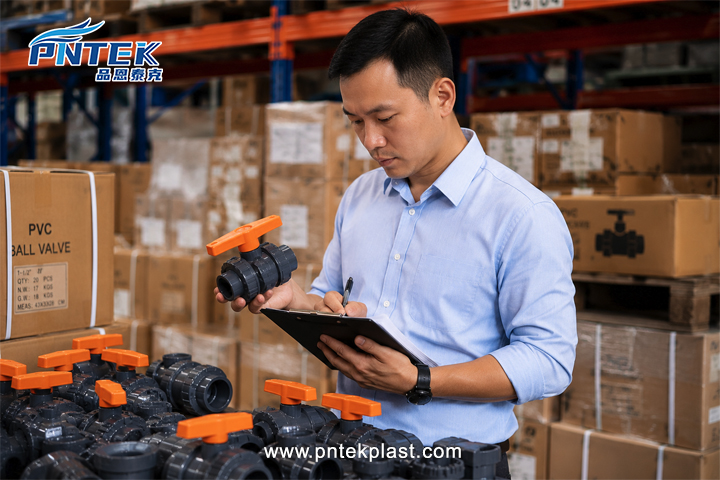
Choosing a supplier is one of the most critical decisions a purchasing manager makes. It’s not just about a single transaction but about building a stable and efficient supply chain for the future. A good supplier relationship can become a significant competitive advantage, ensuring you have consistent products to meet your customers’ demands. On the other hand, a poor choice can lead to ongoing problems that drain time and resources. Therefore, a structured approach to evaluation is essential for any serious importer.
What factors matter most when comparing PVC valve suppliers in China?
Comparing suppliers based only on the price list is a common mistake. This approach often overlooks hidden costs and long-term risks, leading to more significant problems down the road.
Beyond price, the most important factors are production consistency, material traceability, export documentation expertise, and specific experience with your target market. These elements determine the total cost and reliability of your supply chain.
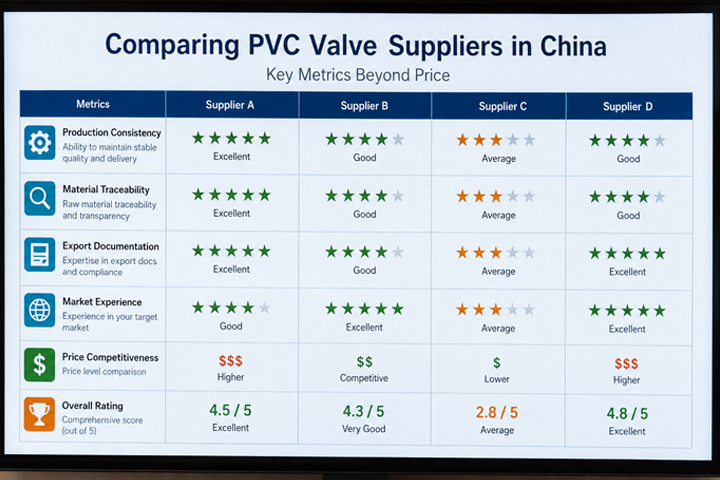
When I work with buyers like Budi in Indonesia, the conversation often starts with price but quickly moves to more practical concerns. A slightly lower unit cost means very little if the valves fail under pressure or if a shipment is held up in customs due to incorrect paperwork. A more mature sourcing strategy looks at the total cost of ownership, not just the initial price. This involves balancing cost with stability and risk.
Here’s a breakdown of what experienced buyers focus on:
Key Evaluation Factors
| Factor | What to Look For | Why It Matters |
|---|---|---|
| Production Consistency | Does the supplier have a stable process? Can they show evidence of consistent output from different batches? | Ensures that the quality of your 10th order is the same as your first. |
| Material Quality | Do they use virgin PVC resin? Can they provide material data sheets? | Determines the valve’s durability, pressure rating, and lifespan. Recycled materials can lead to brittleness and failure. |
| Export Experience | Have they shipped to your country before? Do they understand your port’s documentation requirements (e.g., Form E for ASEAN)? | Reduces the risk of customs delays, fines, and logistical headaches. An experienced partner anticipates these issues. |
| OEM Support | How do they handle requests for custom colors, handles, or packaging? Is their process clear? | For distributors building their own brand, flexible and reliable OEM support is crucial for market differentiation. |
Ultimately, a reliable supplier is a partner who helps you manage supply chain risks. Their value is measured not just in the price per valve, but in the predictability and stability they bring to your operations.
What should buyers check before choosing a PVC valve supplier in China?
Making the final decision to partner with a new supplier can feel like a leap of faith. Committing to a supplier without proper checks can lock you into a difficult relationship.
Before choosing a supplier, buyers must verify their business license, review quality certifications like ISO 9001, test product samples thoroughly, and assess the professionalism and clarity of their communication.
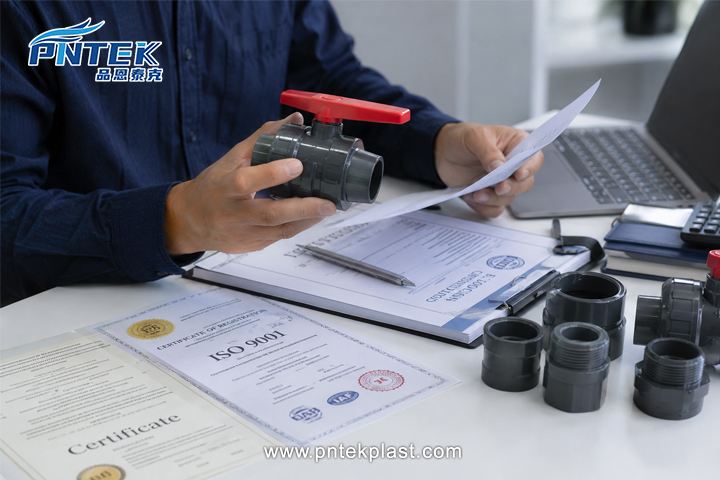
Over the years, I’ve seen many buyers rush this stage, only to face complications later. A systematic pre-commitment check is not about being mistrustful; it’s about establishing a professional foundation for a long-term business relationship. It helps align expectations and ensures that the supplier you choose on paper is the same one you’ll be working with in reality. A small amount of due diligence upfront can save you from significant issues with your orders.
Here is a practical checklist for this phase:
Supplier Vetting Checklist
- 1. Documentation & Credentials:
- Business License: Confirms the company is legally registered and specifies its business scope.
- ISO 9001 Certification: Indicates they have a documented quality management system in place. While not a guarantee of quality, it shows a commitment to process control.
- Export Records: Ask for examples of their Bill of Lading (with sensitive information redacted) to countries in your region. This is real-world proof of their export experience.
- 2. Product Sample Evaluation:
- Request samples of the exact specifications you need.
- Check physical properties: weight, dimensions, surface finish, and smoothness of operation (handle torque).
- If possible, perform basic pressure tests to see if they hold up. The sample is your baseline for quality.
- 3. Communication & Process Assessment:
- How quickly and professionally do they respond to your technical questions?
- Do they ask clarifying questions about your requirements, or just give you a price?
- A proactive and clear communicator is invaluable, especially when solving problems.
A trial order is often the best final test. It allows you to experience their entire process on a small scale, from placing the order to receiving the goods.
What quality checks are important when sourcing PVC ball valves from China?
Ensuring product quality from thousands of miles away is a major concern. A single bad batch of valves can damage your reputation and lead to costly replacements for your customers.
Essential quality checks include raw material verification, in-process dimensional control, post-assembly leak testing, and operational torque testing. These checks ensure each valve meets performance and safety standards.
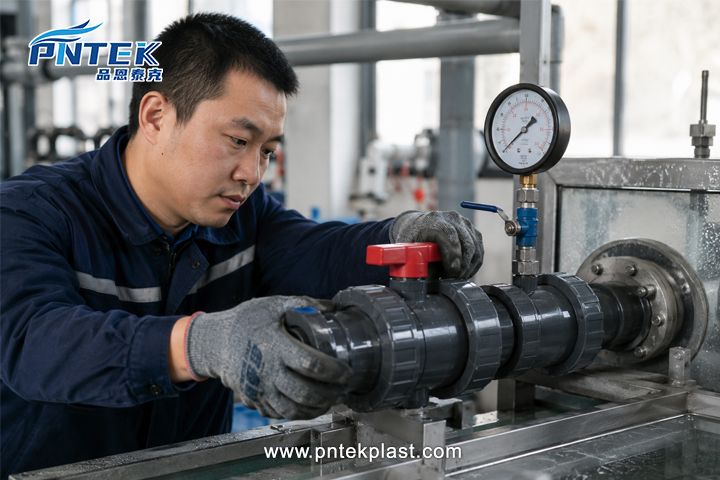
For a product like a PVC ball valve, quality is not a feature—it is the core function. A valve that leaks or cracks is a complete failure. That’s why quality control cannot be a simple final inspection. It must be a system integrated throughout the production process. From my experience, suppliers who are transparent about their quality control points are generally more reliable because they have confidence in their processes.
Here are the critical stages where checks should happen:
Key Quality Control Points
| QC Stage | Purpose | What to Check |
|---|---|---|
| Raw Material Inspection | To ensure the foundation of the product is sound. | Verifying the use of 100% virgin PVC resin. Ask for the material supplier’s batch certificate. Avoid suppliers who use excessive calcium carbonate filler or recycled plastics, which make valves brittle. |
| In-Process Control | To catch errors early, before they are compounded. | Monitoring injection molding parameters for consistency. Regular checks on the dimensions of components like the valve body, ball, and stem to ensure a proper fit. |
| Assembly & Testing | To verify the performance of the finished product. | Pressure Testing: Every valve should be tested (usually with air or water) to at least 1.5 times its working pressure to check for leaks. Torque Testing: The force required to turn the handle should be within a set range. Too tight is hard to use; too loose may indicate a poor seal. |
A professional supplier should be able to provide you with their standard quality control plan or testing reports for your production batch. This documentation provides assurance and traceability for your records.
What should buyers inspect before PVC valve shipment?
The work isn’t over once production is finished. An error discovered after the goods have arrived at your warehouse can cause massive disruptions, from inventory mismatches to project delays.
Before shipment, buyers must conduct a final inspection to verify quantities, product specifications, packaging durability, and shipping marks. Confirming that all export documents are accurate is equally crucial for smooth customs clearance.
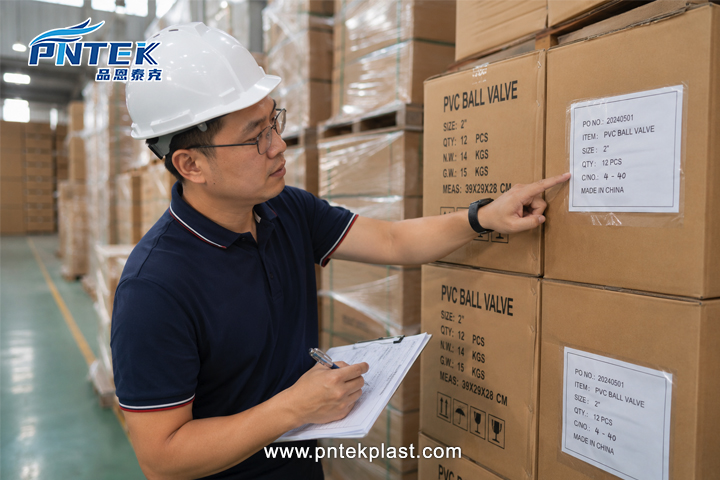
This final step is your last chance to catch any mistakes before they leave the supplier’s country. For a purchasing manager like Budi, this is a critical control point. A pre-shipment inspection protects against simple but costly errors. For instance, incorrect shipping marks can cause a container to be misplaced in a busy warehouse, while damaged packaging can lead to product loss during transit. Getting this right ensures the smooth logistical flow Budi is responsible for.
A Pre-Shipment Inspection (PSI) checklist should include:
Final Inspection Checklist
- 1. Quantity Verification:
- Conduct a random carton count and then a count of units within several cartons.
- Verify the total quantity matches the purchase order and packing list.
- 2. Quality & Specification Check:
- Randomly select a small percentage of finished valves (e.g., 2-3%).
- Compare them against the approved sample and technical specifications. Check branding, color, and markings.
- Perform a quick operational test on the handle.
- 3. Packaging & Marking Inspection:
- Packaging: Are the cartons strong enough for sea freight? Is there adequate internal protection?
- Shipping Marks: Are the shipping marks on the cartons correct and clear? Do they include the PO number, destination, carton numbers (e.g., 1 of 200), and any other required information for your warehouse team?
- 4. Documentation Review:
- Review drafts of the Bill of Lading, Packing List, and Commercial Invoice.
- Ensure descriptions, quantities, and values are correct to avoid customs issues. For markets like Indonesia, having the correct HS code and Certificate of Origin (like Form E) is non-negotiable.
Whether you perform this inspection yourself, hire a third-party inspector, or have your supplier provide a detailed report with photos and videos, never skip this step.
Conclusion
Evaluating suppliers systematically helps build a reliable supply chain. Focusing on long-term stability, communication, and verified quality over just the lowest price leads to more successful and sustainable international sourcing.
Post time: May-29-2026


