
You install a new PVC valve, but it drips constantly from the threads. Now you have a persistent leak that undermines your work and damages your reputation with the client.
Prevent leaks by using 5-8 wraps of PTFE tape, tightening only 1-2 turns past hand-tight, and ensuring threads match (NPT to NPT). Over-tightening cracks the valve and is the most common installation mistake.
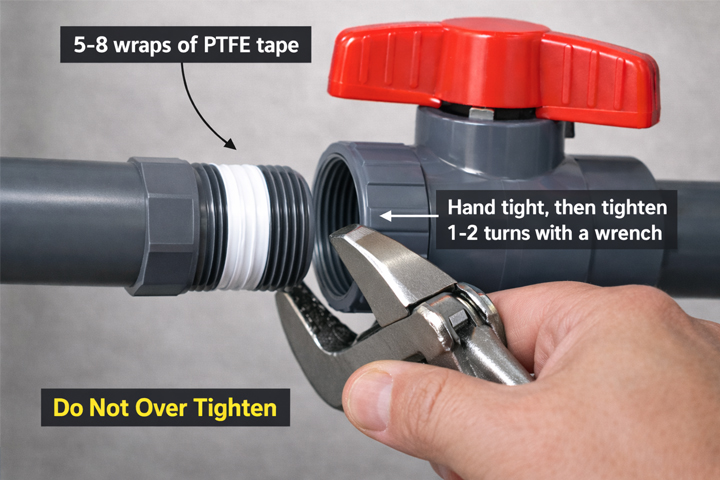
I often tell my partner Mohommad that most valve “failures” are actually installation failures. A small drip from a threaded connection can be incredibly frustrating, but it’s a clear sign that a fundamental step was missed during assembly. I have seen perfectly good valves get thrown away because of a simple installation error. Getting the connection right from the start saves so much time, money, and trouble down the road. Let’s look at how to do it perfectly every time.
How do you stop a ball valve from leaking at the threads?
A persistent drip from a new connection is frustrating. You have used sealant, but the leak won’t stop, delaying your project and causing potential water damage.
Stop a thread leak by checking your sealant application. Use high-quality PTFE tape, wrapping it 5-8 times in the direction of the threads. This ensures the tape properly fills the gaps without being pushed out during tightening.
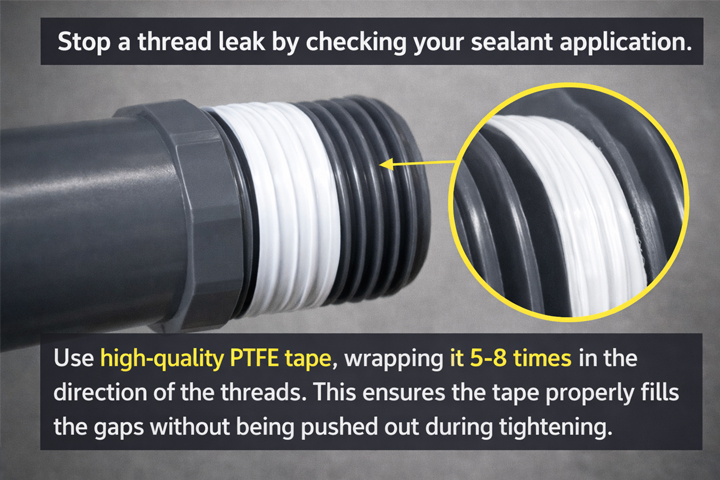
This is where most thread leaks begin and end. The tapered threads on a PVC fitting are not designed to create a seal by themselves. Their job is to create mechanical strength. The actual seal is created by the thread sealant. PTFE tape, also called Teflon tape, is the most common and effective choice. The key is in the application. First, make sure the male threads are clean and completely dry. Start wrapping on the second thread from the end. This is important to prevent any tape from being sheared off and pushed into the pipe, where it could clog the system. You must wrap the tape clockwise, the same direction you will tighten the fitting. If you wrap it counter-clockwise, the simple act of screwing the fitting in will cause the tape to bunch up and unravel. For standard fittings from 1/2″ to 1″, 5 to 8 full wraps is the ideal amount. Pull the tape taut as you wrap so it sinks into the thread valleys. You should still be able to see the outline of the threads through the tape.
How can you prevent valve leakage before installation?
You are about to connect a valve, but the threads feel slightly off when you test them. Ignoring this feeling can lead to a connection that strips or leaks no matter what you do.
Prevent leaks by confirming your threads match before you even touch sealant. Most of the world uses BSPT, while North America uses NPT. They look similar but are completely incompatible and will always leak.
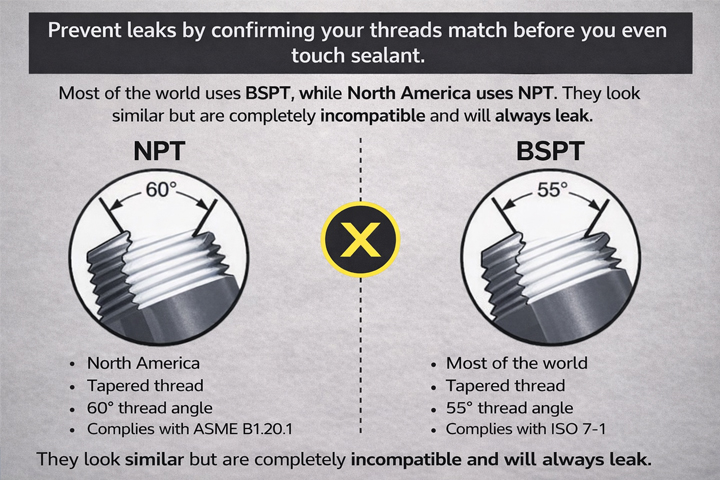
This is the most fundamental check, and missing it guarantees failure. As Mohommad and I have discussed for the Bangladesh market, you often find both NPT and BSPT standards available. They are not interchangeable.
- NPT (National Pipe Taper): This thread has a 60-degree angle.
- BSPT (British Standard Pipe Taper): This thread has a 55-degree angle.
Forcing a male NPT fitting into a female BSPT valve is a recipe for disaster. The different angles cause them to bind and cross-thread. The connection might feel tight, but you are just damaging the plastic and creating a spiral leak path that no amount of sealant can fix. Before installation, hold the male fitting to the female valve port. Look for markings. At Pntek, we clearly mark our valves with the thread type. If there are no markings, try to thread them together by hand for one or two turns. If you feel significant resistance or wobbling, stop immediately. They are almost certainly mismatched. This single five-second check prevents one of the most frustrating and completely avoidable installation failures.
Why is over-tightening the worst way to treat a leaking valve?
Your valve is dripping, so you grab a bigger wrench to give it one more turn. You hear a sharp crack, and now a small drip has become a major, unfixable failure.
Over-tightening is the number one cause of PVC valve failure. The wedge action of a tapered male thread will split the female PVC port. The correct torque is simply hand-tight, then only 1-2 more turns with a wrench.
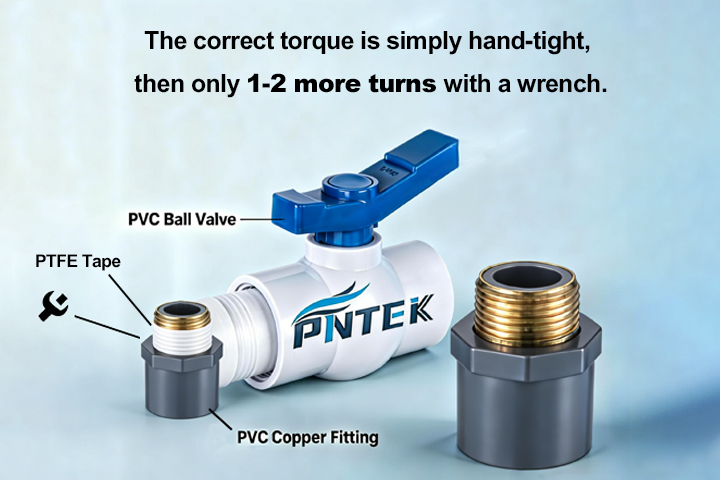
It is a natural instinct: if something leaks, tighten it more. With PVC valves, this is exactly the wrong thing to do. Unlike metal, PVC is a thermoplastic with limited elasticity. When you tighten a tapered fitting (especially a metal one) into a female PVC port, you are driving a wedge into the plastic. This creates immense outward pressure, known as hoop stress. It does not take much force to exceed the tensile strength of the PVC. This causes a hairline crack to form at the base of the threads, which then spreads under system pressure. The rule we teach is simple and absolute: Hand-Tight Plus One to Two Turns. That is it. Use a strap wrench if you can to avoid putting stress on the valve body. The seal is made by the PTFE tape compressing into the thread gaps, not by crushing the plastic into submission. If it leaks after proper tightening, the problem is not tightness. You must undo the connection and check for other issues like mismatched threads or insufficient tape.
What are three common failures from bad installation?
You face another valve failure on a job site. You keep replacing parts, but the problems persist, costing you time, money, and eroding your client’s trust in your work.
The three most common installation failures are: cracked ports from over-tightening; persistent thread leaks from using mismatched NPT/BSPT threads; and internal seal damage from debris entering the valve during installation.
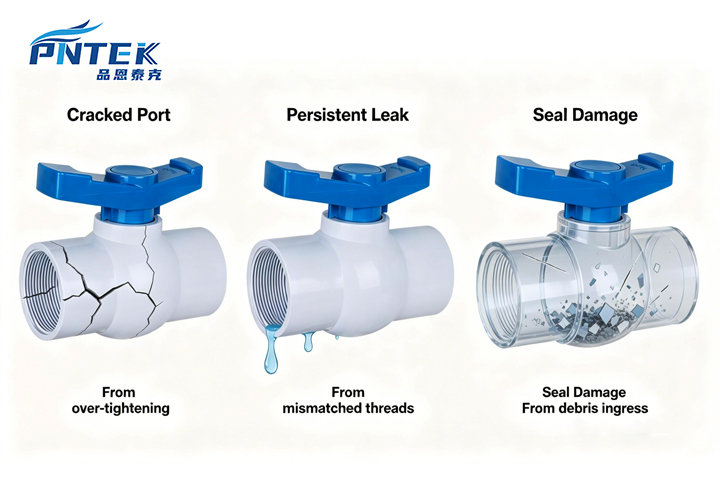
Understanding these three failures helps you build a mental checklist for every installation. When a threaded valve fails, it is almost always one of these culprits.
| Failure Type | Root Cause | How to Prevent It |
|---|---|---|
| 1. Cracked Port | Applying too much torque, especially with a large wrench. | Hand-tighten, then use a wrench for 1-2 turns only. Never more. |
| 2. Chronic Thread Leak | Forcing mismatched NPT and BSPT threads together. | Check the markings on both the valve and the fitting before applying sealant. |
| 3. Internal Seat Damage | Dirt, rocks, or PVC shavings left in the pipe get caught in the valve. | Always flush the pipes thoroughly before installing any valve. Keep valves clean. |
That third failure is often overlooked. If a ball valve becomes hard to turn or leaks when closed, it may be because a small piece of debris got washed into the valve. When the ball closes on this hard object, it can permanently score the surface of the plastic ball or damage the soft PTFE seats. This creates a permanent leak path right through the valve. Always keep your new valves in their packaging until the moment of installation, and always flush lines before installing them. A few seconds of care upfront prevents major problems later.
Conclusion
Prevent thread leaks by matching threads, using sealant correctly, and avoiding over-tightening. Proper installation is the simple secret to a reliable, long-lasting, and leak-free PVC ball valve system.
Post time: Jan-21-2026


