
Choosing the wrong plastic valve can lead to system failure from heat or chemical reactions. A leaking valve can cause major damage, project delays, and hurt your reputation with clients.
The choice depends on your application. Use standard PVC for cold water systems like irrigation. Choose CPVC for hot water lines and better chemical resistance. Use PP for specific industrial chemicals and food-grade applications.
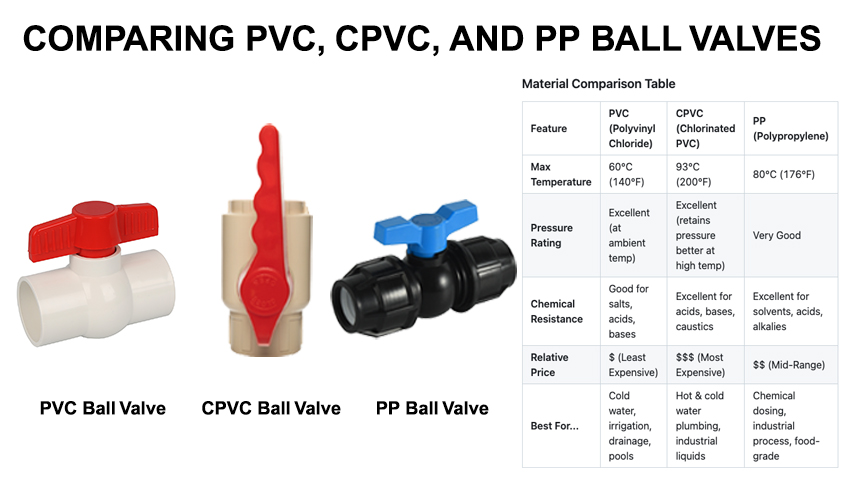
I remember a conversation with Budi about a client who was supplying a new food processing plant in Indonesia. They almost quoted the entire project with standard PVC valves to save money. We quickly discussed the hot water cleaning cycles and the specific chemicals they used. It became clear that PVC would have failed within months. By explaining the differences between PVC, CPVC, and PP, we helped them choose the right material, preventing a huge and costly problem. It is this kind of specific knowledge that builds trust and ensures a project’s success.
Which is better PVC, UPVC, or CPVC?
You see PVC, UPVC, and CPVC listed on spec sheets. They look similar, but the prices are different. Choosing incorrectly could mean you buy a weaker or an unnecessarily expensive valve for the job.
CPVC is better for hot water and has superior chemical resistance. For pipes and valves, PVC and UPVC are essentially the same thing—a strong, rigid material perfect for standard cold water applications.
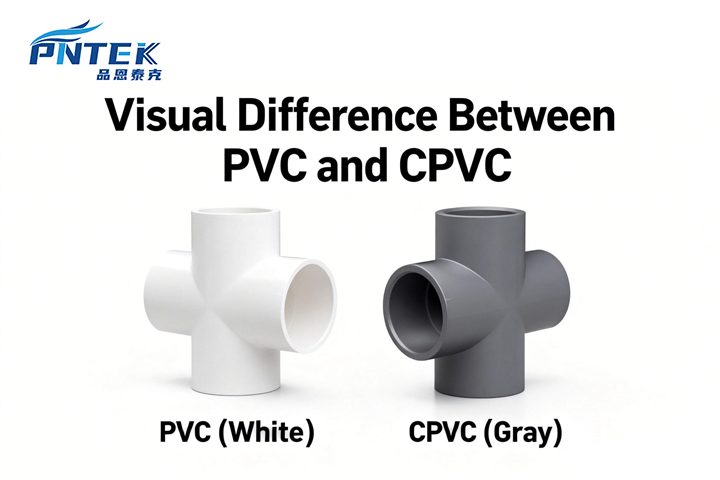
Let’s clear up a common point of confusion. When we talk about pipes and valves at Pntek, “PVC” really means “UPVC” (Unplasticized Polyvinyl Chloride). It is the rigid, durable plastic you see everywhere. So, you do not need to choose between them; they are the same for our purposes. The real choice is between PVC and CPVC. The “C” in CPVC stands for Chlorinated. An extra step in the manufacturing process adds more chlorine to the material’s structure. This simple change is what gives CPVC its two major advantages: it can handle much higher temperatures, and it can resist a wider range of chemicals, especially acids and bases. So, if the job involves only cold water, PVC is the most cost-effective choice. If heat or aggressive chemicals are involved, CPVC is the better, safer option.
What is the purpose of a CPVC ball valve?
Your client needs a valve for a hot water line in a factory or home. A standard, white PVC valve would soften, warp, and fail, causing dangerous leaks and system downtime.
The main purpose of a CPVC ball valve is to safely handle fluids at higher temperatures than standard PVC can withstand. It is specifically designed for hot water distribution and corrosive industrial fluid lines.
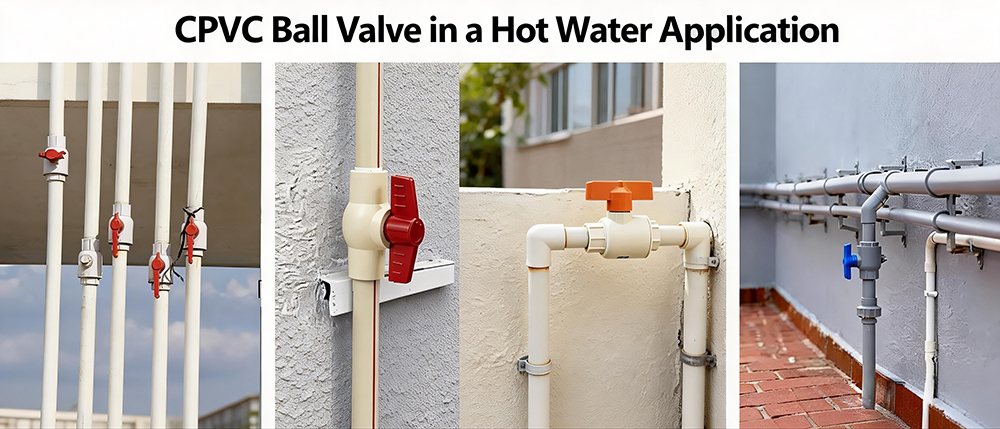
Think of CPVC as the high-performance version of PVC. Its primary job is to work where PVC cannot. Standard PVC valves should not be used for anything above 60°C (140°F). Above that temperature, the material softens and loses its ability to hold pressure. CPVC, on the other hand, performs perfectly up to 93°C (200°F). This makes it the standard material for hot and cold water plumbing in residential and commercial buildings. Its enhanced chemical resistance also means it is a great choice for water treatment facilities, chemical processing plants, and industrial applications where the fluids might be too aggressive for PVC. You use a CPVC valve when you need to guarantee performance and safety under heat and chemical stress.
Can PVC ball valves handle high pressure?
You need to select a valve for a high-flow irrigation system. You are worried that a plastic valve might not be strong enough and could risk a blowout under the system’s working pressure.
Yes, PVC ball valves are designed for high pressure. Their exact rating, such as PN10 or PN16, indicates they can handle 10 or 16 bar of pressure, but this rating decreases as the water temperature increases.
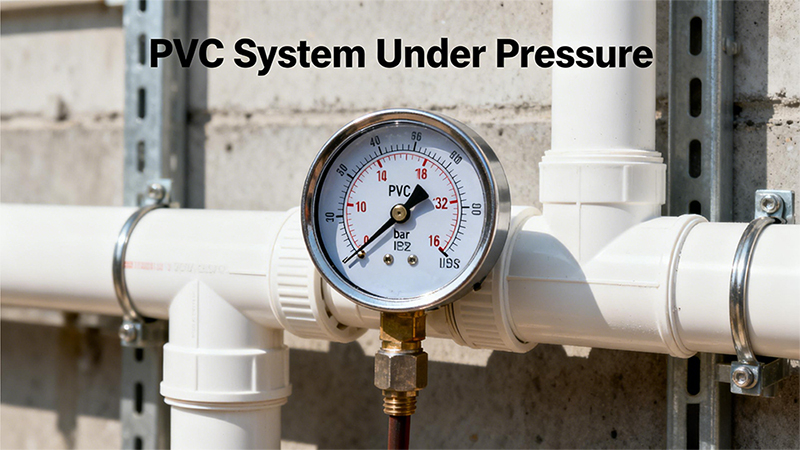
This is a critical point to understand for safety. A PN16 PVC ball valve is rated to handle 16 bar (about 232 PSI) of pressure, which is more than enough for most water applications. However, this rating is for water at room temperature (around 20°C). As the temperature of the fluid inside the pipe goes up, the PVC material becomes slightly softer, and its ability to withstand pressure goes down. For example, at 40°C, the same PN16 valve might only be safe to use at 10 bar. At 60°C, its maximum pressure rating drops to around 4 bar. This is why you must never use PVC valves for hot water under pressure. For the high-pressure irrigation systems Budi’s clients work with, which use cold or ambient temperature water, our standard PN16 PVC ball valves are perfectly strong and reliable.
Why is CPVC more expensive than PVC?
You are preparing a quote for a client and see that CPVC valves cost more than PVC ones. Your client is asking why they should pay the extra money for a valve that looks almost the same.
CPVC is more expensive because it goes through an additional, energy-intensive manufacturing step called chlorination. This extra process adds cost but results in a superior material that can handle high heat and more chemicals.
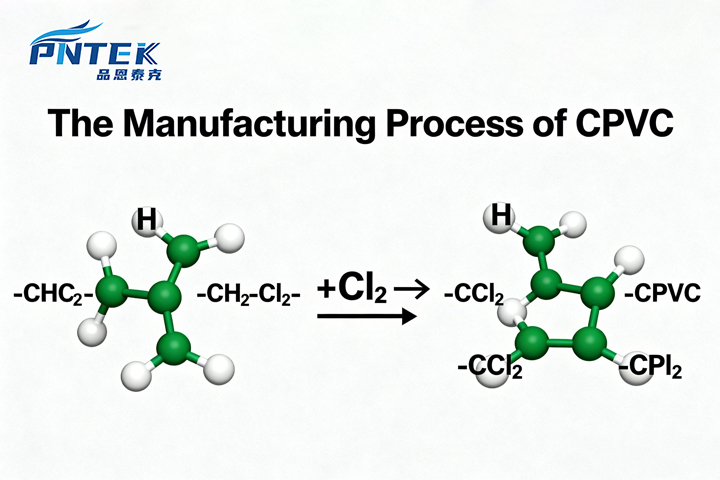
The price difference is a direct result of the manufacturing process. Both materials start as PVC resin. To make CPVC, we have to take that PVC and put it through a complex chemical reaction to force more chlorine atoms onto the polymer chains. This process requires specialized equipment, additional raw materials (chlorine), and a significant amount of energy. You are not just paying for a different color of plastic; you are paying for that advanced engineering. I always tell Budi to explain it to his clients as an investment in safety and reliability. The extra cost of the CPVC valve is tiny compared to the cost of damage, downtime, and repairs that would happen if they used a cheaper PVC valve in a hot water application where it is guaranteed to fail. It is a classic case of paying a little more for the right tool for the job.
How do PVC, CPVC, and PP Compare Side-by-Side?
You need a quick reference to compare these materials directly. Flipping between different product sheets is confusing and wastes time when you need a fast answer for a client.
This table provides a clear comparison of PVC, CPVC, and PP across key specifications. It helps you choose the right material for your application at a glance, ensuring you match the valve to the job.
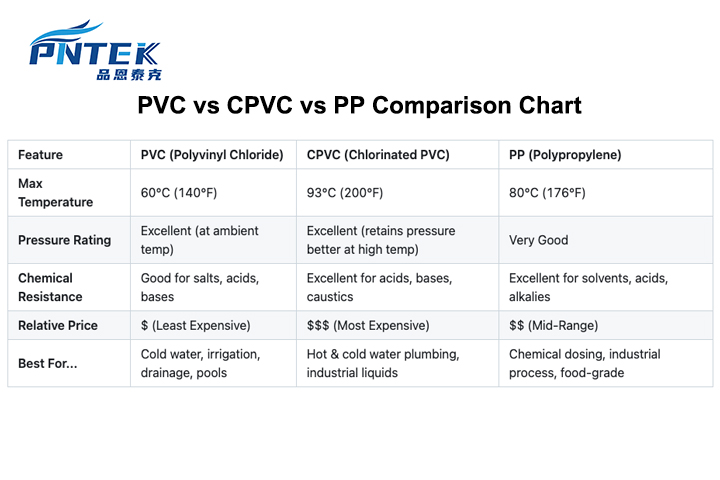
To make things simple for Budi and his team, I put together this cheat sheet. It is the fastest way to compare the materials we have discussed and to introduce Polypropylene (PP), another important option. PP is known for its excellent chemical resistance, especially to solvents, and its durability. It is a great choice for industrial and food-grade applications.
Material Comparison Table
| Feature | PVC (Polyvinyl Chloride) | CPVC (Chlorinated PVC) | PP (Polypropylene) |
|---|---|---|---|
| Max Temperature | 60°C (140°F) | 93°C (200°F) | 80°C (176°F) |
| Pressure Rating | Excellent (at ambient temp) | Excellent (retains pressure better at high temp) | Very Good |
| Chemical Resistance | Good for salts, acids, bases | Excellent for acids, bases, caustics | Excellent for solvents, acids, alkalies |
| Relative Price | $ (Least Expensive) | $$$ (Most Expensive) | $$ (Mid-Range) |
| Best For… | Cold water, irrigation, drainage, pools | Hot & cold water plumbing, industrial liquids | Chemical dosing, industrial process, food-grade |
Conclusion
Choosing the right valve is simple: use PVC for cold water, CPVC for hot water and more chemicals, and PP for specialized industrial uses. Matching the material to the job guarantees safety and reliability.
Post time: Jan-07-2026


