
You need a budget for your project, but getting a straight price for parts is impossible. This makes planning difficult and frustrating. I’ll explain the real costs for you.
The price of a 110mm HDPE end cap (SDR11) depends on the type. A butt fusion end cap is around $1.31 USD, while a socket fusion end cap is about $3.38 USD. These are just single-item product prices; the final cost depends on your order quantity.
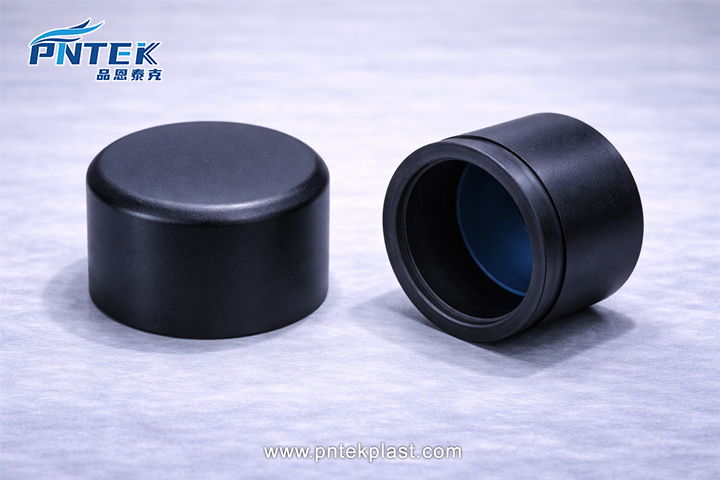
In my 18 years as a manufacturer, I’ve learned that giving a simple price is not always helpful. It’s more important to be transparent about what determines that price. The prices I mentioned are just a starting point. The real price for your project depends on things like how many you need and the shipping terms. A large order for a water distribution project in Indonesia will have a very different price per piece than someone buying just a few. My goal is to give you a clear, honest quote based on your specific needs. Let’s explore what these fittings are and why their costs are different.
What are HDPE caps?
You need to terminate a pipeline, but you’re not sure which fitting is right. Choosing the wrong cap can compromise a permanent, leak-proof seal, creating a future problem.
HDPE caps are fittings designed to seal the end of an HDPE pipe. They are installed using heat fusion methods—either socket fusion or butt fusion—to create a monolithic, permanent, and completely leak-proof barrier at the end of a pipeline.
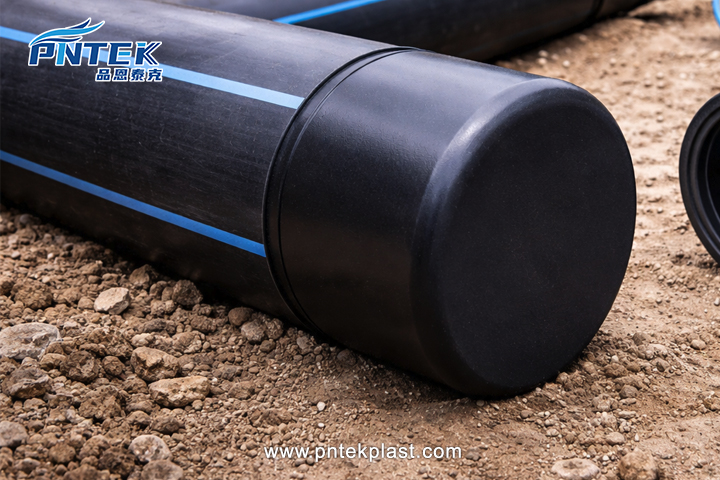
An end cap is not just a plug; it’s an integral part of the pipeline system that has to withstand the full pressure of the line. For a size like 110mm, you have two main options, and they are based on how they connect to the pipe. At my factory, we produce both types because different projects have different needs. The choice between them often comes down to the equipment the installation crew has on-site and the overall design of the pipeline. Both methods, when done correctly, create a joint that is as strong as the pipe itself, which is a key concern for engineers like Arief who need to guarantee system integrity for decades.
Socket Fusion vs. Butt Fusion End Caps
| Feature | Socket Fusion End Cap | Butt Fusion End Cap |
|---|---|---|
| Joining Method | Pipe end is inserted into the fitting’s socket. | Fitting end and pipe end are welded face-to-face. |
| Typical Size Range | Best for smaller diameters (up to 110mm). | Can be used on all sizes, but standard for 63mm+. |
| Process | Heats the outside of the pipe and inside of the fitting. | Heats the squared ends of both the pipe and fitting. |
| Cost (110mm SDR11) | Higher (approx. $3.38 USD) due to more material. | Lower (approx. $1.31 USD) as it’s a simpler molding. |
Why is HDPE so strong?
You are told to trust HDPE, but it just looks like plastic. It’s hard to believe it can be as strong as traditional materials, making you hesitate to specify it for critical jobs.
HDPE is incredibly strong because of its tightly packed, linear molecular structure. During manufacturing, the long polyethylene chains are formed with very few branches, allowing them to pack closely together. This creates a high-density, crystalline material that is exceptionally durable and rigid.
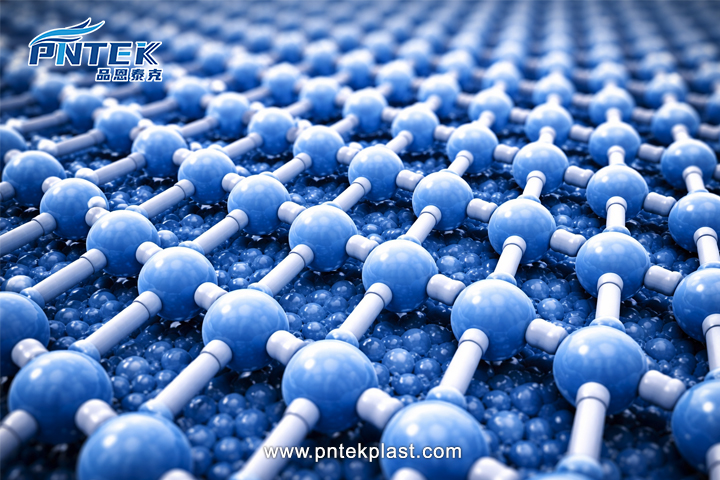
The name “High-Density Polyethylene” tells you everything. The “high density” is the secret to its strength. Think of it like packing a suitcase. If you just throw clothes in, there’s a lot of empty space. But if you fold them neatly, you can fit a lot more in. The molecules in HDPE are like neatly folded clothes; they pack together tightly. This tight structure makes it very difficult for chemicals to penetrate or for impacts to cause fractures. In contrast, Low-Density Polyethylene (LDPE) has branched molecules that are like crumpled clothes—they can’t pack tightly, so the material is soft and weak. As a manufacturer, I know the quality of the final pipe is determined by the quality of this molecular structure in the raw resin. That’s why we only source virgin, high-performance PE100 resin.
How Density Creates Strength
| Material Property | High-Density Polyethylene (HDPE) | Low-Density Polyethylene (LDPE) |
|---|---|---|
| Molecular Structure | Linear, unbranched chains | Highly branched chains |
| Packing | Tightly packed, crystalline | Loosely packed, amorphous |
| Resulting Strength | High tensile strength, rigid, hard | Low tensile strength, flexible, soft |
| Typical Use | Pressure pipes, fuel tanks | Plastic bags, squeeze bottles |
What is the disadvantage of HDPE?
You hear about all the benefits of HDPE, but you know no material is perfect. Overlooking its weaknesses can lead to failure in the field, which is a risk you cannot afford.
The main disadvantages of HDPE are its susceptibility to UV degradation if not protected, a limited service temperature compared to metals, and a high coefficient of thermal expansion. Proper joining also requires specialized equipment and trained personnel.
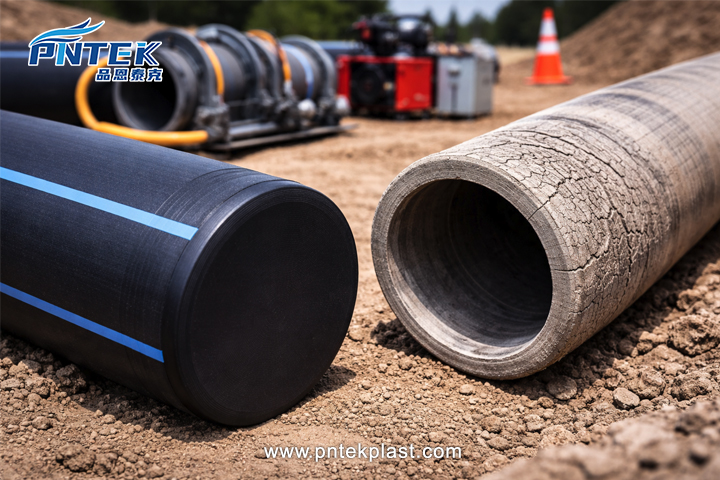
I believe in being honest about my products’ limitations. It helps our customers make better decisions. First, sunlight’s UV rays can make HDPE brittle. We solve this completely by adding about 2% carbon black to our pressure pipes, which is why they are black. The carbon black acts as a powerful UV stabilizer. Second, HDPE is not for hot water. It performs best below 60°C (140°F). For high-temperature industrial fluids, other materials are better. Third, it expands and contracts with temperature more than steel. For buried pipes, the soil holds it in place. For above-ground pipes, the design must account for this movement. Lastly, you can’t just glue it or clamp it. You need proper heat fusion equipment. While this requires an initial investment in tools and training, it’s also its greatest strength, as it guarantees a 100% leak-proof system.
Managing HDPE’s Limitations
| Disadvantage | How to Manage It |
|---|---|
| UV Degradation | Use black HDPE pipe containing carbon black for UV protection. |
| Low Temperature Limit | Only use for applications below 60°C (140°F). |
| Thermal Expansion | Account for expansion/contraction in the design of above-ground systems. |
| Requires Special Tools | Invest in proper fusion equipment and training for installers. |
Is HDPE stronger than plastic?
The word “plastic” often sounds weak or disposable. You worry that using an HDPE pipe is a compromise on strength and longevity. This misunderstanding can cause you to choose heavier, more expensive materials.
This is a common confusion, because HDPE is a type of plastic. However, it is an engineering-grade plastic that is far stronger than general-purpose “plastics.” Compared to materials used for packaging or household items, HDPE is exceptionally strong, durable, and designed for heavy-duty applications.
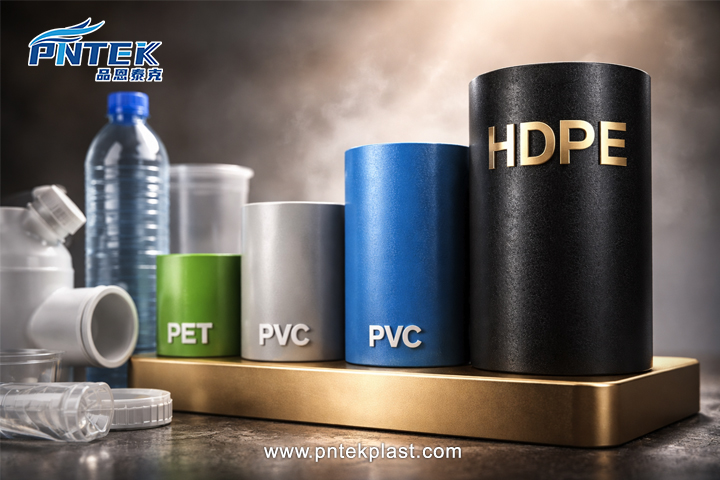
Saying “plastic” is like saying “metal.” An aluminum can and a steel beam are both metal, but they have completely different strengths and uses. It’s the same with plastics. The plastic in a disposable water bottle (PET) is not the same as the plastic in your car’s bumper (often a Polypropylene blend), which is not the same as the plastic in a high-pressure water main (HDPE). HDPE falls into the category of “engineering thermoplastics.” These are materials specifically designed to handle mechanical stress, high pressure, and harsh environments for very long periods. When a procurement manager like Arief specifies a pipe, he’s not just buying “plastic”; he’s selecting a highly engineered material with certified performance characteristics that rival or exceed traditional materials like concrete or ductile iron in many applications.
The Hierarchy of Plastics
| Plastic Category | Examples | Key Characteristics | Typical Lifespan |
|---|---|---|---|
| Commodity Plastics | PET (bottles), PP (containers) | Low cost, disposable, low strength | Months to years |
| Engineering Plastics | HDPE, Nylon, Polycarbonate | High strength, durable, chemical resistant | Decades (50–100+ years) |
| High-Performance | PEEK, Teflon | Extreme temperature & chemical resistance | Decades, specialized use |
Conclusion
The price of a 110mm end cap depends on the type, but the real cost is based on your order. Choosing HDPE ensures a strong, permanent seal for your pipeline project.
If you want an accurate quotation based on your quantity, delivery terms, and specifications, feel free to contact us for a fast and professional quote.
Post time: Mar-23-2026


