
Placing your first international order can feel intimidating. The process seems complex, with unfamiliar terms and procedures, creating uncertainty and risk for your business.
The typical ordering process involves five key stages: inquiry and quotation, sample approval, order confirmation with deposit, production and inspection, and final payment with shipment. A professional supplier will guide you through each step clearly.
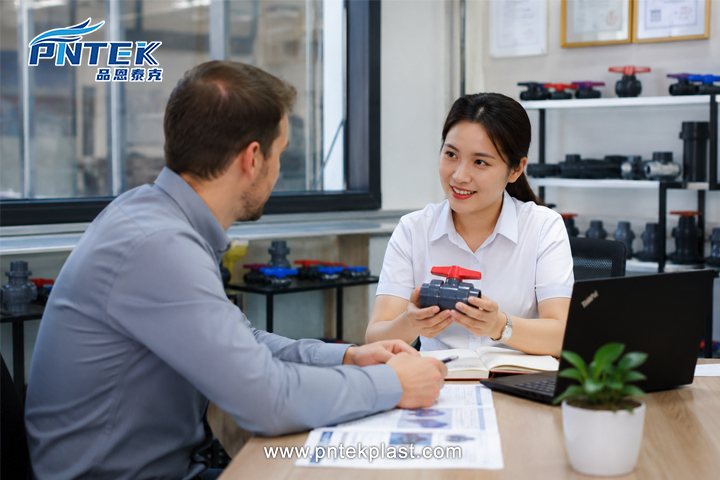
Understanding this workflow is the first step toward building an efficient and predictable supply chain. For any purchasing manager, from a large distributor in Jakarta to a small project contractor, knowing what to expect at each stage removes guesswork and allows for better planning. It transforms the transaction from a one-time purchase into a repeatable, manageable business process. Over my nearly two decades in this industry, I’ve found that transparency in this process is the foundation of all successful long-term partnerships.
What is the typical MOQ for PVC ball valve orders from China?
You need to place an order but worry about being forced to buy huge quantities. The term Minimum Order Quantity (MOQ) can be a barrier for many importers, tying up capital.
For standard PVC ball valves, the MOQ is often set by the carton, typically 10-20 cartons per size. For custom OEM orders or full container shipments, it’s usually based on a total order value, like $5,000, or filling a 20ft container.
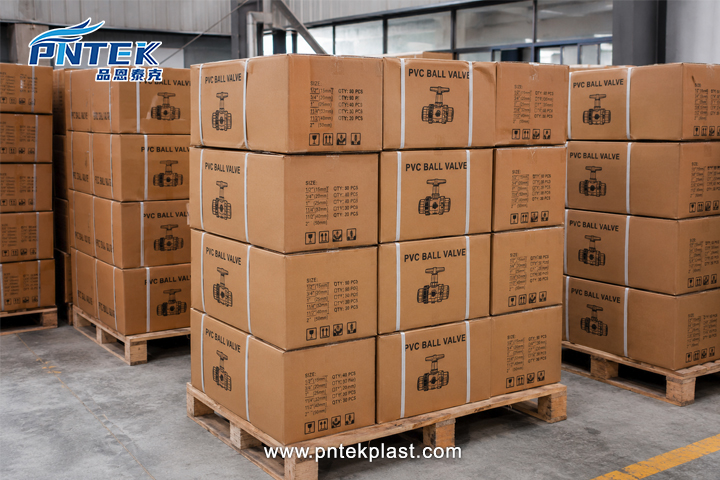
The MOQ isn’t an arbitrary number designed to block small buyers. From a production standpoint, it represents the smallest batch that can be run efficiently. Setting up an injection molding machine for a specific size and material involves time and labor. The MOQ ensures that this setup cost is justified by the production volume. For a buyer like Budi, who manages inventory for a wide range of valve sizes, understanding the supplier’s MOQ logic is key. He needs to stock from 1/2″ up to 4″ valves, and a flexible MOQ allows him to balance his stock levels across all these sizes without over-investing in any single one.
Understanding MOQ Variations
| Order Type | Typical MOQ Basis | Why? |
|---|---|---|
| Standard Items | By carton (e.g., 10 cartons) | This aligns with standard packaging and warehouse handling units. It’s efficient for both supplier and buyer. |
| OEM/Custom Orders | Higher quantity or value | Justifies the cost of custom mold setup, color matching, and special production runs. |
| Mixed Container | Total value (e.g., $5,000) or container volume (20ft) | Allows buyers to get the variety they need while still meeting a viable order size for the supplier to handle export logistics. |
The conversation about MOQ is often the start of a negotiation that helps determine if the supplier is the right fit for your business model.
Can small importers buy PVC ball valves from China with flexible MOQ?
As a smaller importer, you see the competitive pricing from China but assume high MOQs make it inaccessible. This can feel like you’re locked out of the market.
Yes, many suppliers offer flexibility by allowing mixed-product containers or working with third-party logistics to consolidate Less than Container Load (LCL) shipments. Finding a supplier whose business model aligns with yours is key.
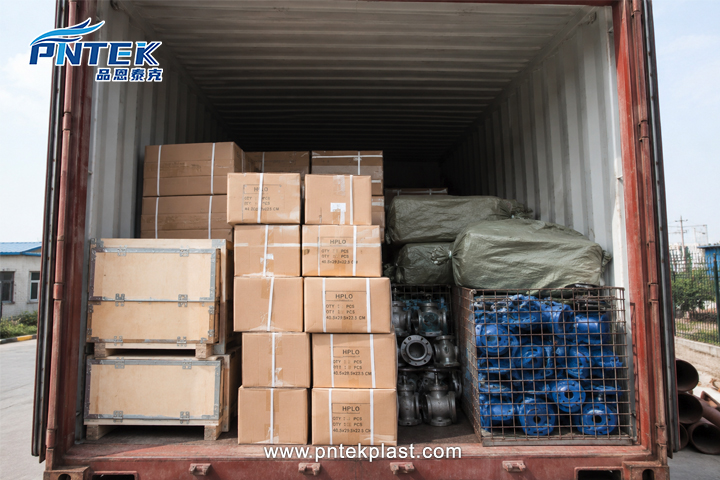
The sourcing landscape has evolved. While some large-scale producers are only set up for massive, single-product orders, many export-oriented suppliers understand the need for flexibility. We recognize that supporting a smaller importer’s growth can lead to a strong, long-term partnership. The most common solution is to allow buyers to mix many different items—valves of different sizes, fittings, and other related products—into a single container. This allows you to build a full order that meets the supplier’s minimum export value while getting the wide product variety your market demands.
Strategies for Lower MOQs
- Focus on Mixed Containers: This is the best strategy. Find a supplier with a broad product catalog. You can order just a few cartons of each size you need, and as long as the total order fills a reasonable portion of a container (e.g., a 20ft container), the supplier can process it.
- Look for LCL Options: Some suppliers are willing to ship Less than Container Load (LCL). In this case, your order is combined with other buyers’ orders in a single container. While the per-unit shipping cost is higher than a Full Container Load (FCL), it’s a viable way to start with smaller volumes.
- Partner with a Trading Company: Trading companies often specialize in consolidating orders from multiple factories and can be a good option for buyers needing very small quantities of many different items.
What is the typical production lead time for PVC ball valves?
You’ve placed an order, but now face uncertainty about when your goods will be ready. This ambiguity makes it impossible to plan your inventory or promise delivery dates to your customers.
The typical production lead time for a standard PVC ball valve order is 30 to 45 days. This clock starts from the date the deposit is received and all order details are confirmed.
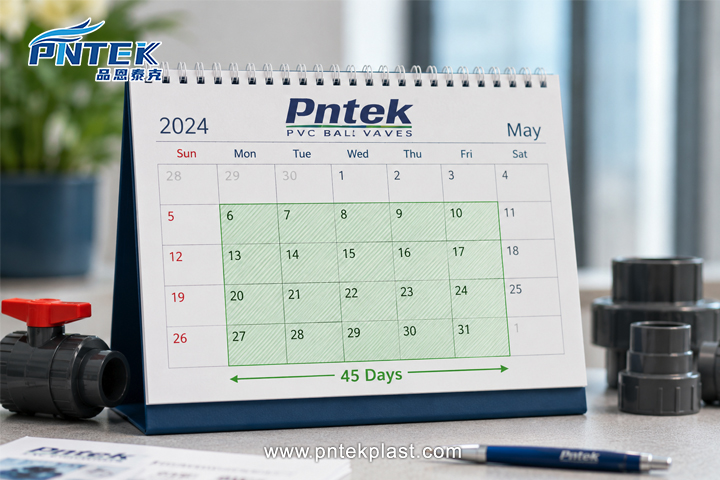
It’s critical to understand that “lead time” is not the total time until the goods are in your warehouse. It is the time required for production only. A professional supplier should be able to give you a clear and realistic production schedule when you place your order. For a purchasing manager responsible for supply chain continuity, this date is a critical piece of data. It allows them to coordinate with their logistics partners, inform their sales team of incoming stock, and manage customer expectations. Unpredictable lead times create chaos, so a supplier’s ability to consistently meet their stated lead time is a key indicator of their professionalism and reliability.
Total Delivery Timeline Breakdown
- Production Lead Time: 30-45 days
- Inland Transit & Port Formalities (China): 3-7 days
- Ocean Freight (e.g., China to Jakarta): 10-15 days
- Customs & Unloading (Your Port): 3-7 days
Total estimated time: Roughly 46 to 74 days from deposit payment to goods clearing your local customs. This is the timeline you should use for your business planning.
What affects PVC valve production lead times?
Your supplier quoted a 30-day lead time, but your shipment is delayed. Unexpected delays can disrupt your entire business, causing stockouts and damaging your reputation with customers.
Lead times are affected by raw material availability, the current production schedule, order complexity (OEM vs. standard), and seasonal demand peaks, especially before the Chinese New Year holiday.
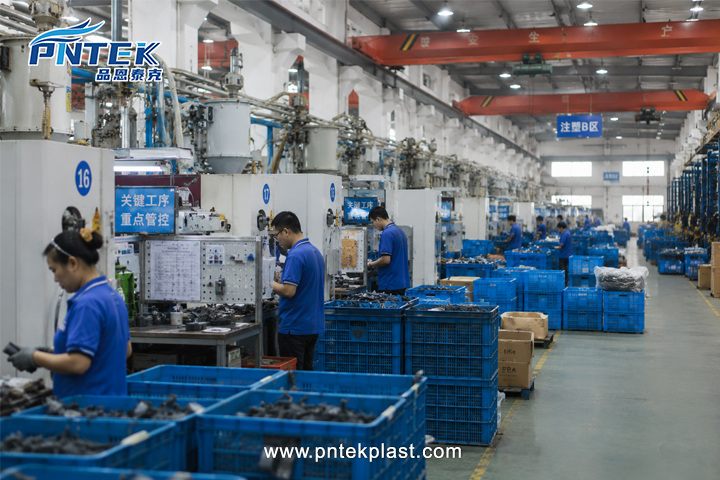
A production line is a complex system with many variables. While suppliers strive for consistency, external factors can and do impact schedules. A transparent partner will communicate these potential risks to you proactively. For example, if there’s a sudden spike in PVC resin costs, it might cause a short-term supply crunch. I always advise clients, particularly those planning projects in Indonesia, to factor in a small buffer for their timelines. Planning an order in Q4 for shipment before Chinese New Year (usually late Jan/early Feb) is very different from placing an order in May. Understanding these dynamics helps you plan better and avoid last-minute emergencies.
Key Factors Influencing Lead Times
| Factor | Impact | How to Manage It |
|---|---|---|
| Peak Season (Q4) | High. Lead times can extend by 1-3 weeks as everyone rushes to ship before Chinese New Year. | Place orders by October for pre-CNY shipment. Communicate your needs far in advance. |
| Chinese New Year (Jan/Feb) | Critical. Most facilities shut down for 2-4 weeks. Production doesn’t just stop; it ramps down before and ramps up after. | Plan for no production or shipments during this window. Confirm your supplier’s specific holiday schedule. |
| Raw Material Fluctuation | Medium. Sudden price spikes or shortages of PVC resin can cause temporary production pauses. | Work with suppliers who maintain good relationships with their material providers. |
| OEM/Custom Orders | High. Creating new molds or custom components adds significant time to the first order (e.g., 30-60 extra days). | Start the OEM development process well ahead of your market launch date. Subsequent orders will have a standard lead time. |
Conclusion
Understanding the ordering process, from MOQ to lead times, demystifies sourcing from China. Clear communication and proactive planning with your supplier are essential for building a reliable and efficient supply chain.
Post time: Jun-02-2026


