
Joining pipes is essential, but weak connections lead to failures. An HDPE coupling creates a permanent, monolithic bond, ensuring total system integrity and peace of mind for decades.
An HDPE coupling is used to join two lengths of HDPE pipe. Through heat fusion, it creates a continuous, leak-proof connection that is just as strong as the pipe itself. This eliminates mechanical weak points and ensures long-term reliability in buried or critical applications.
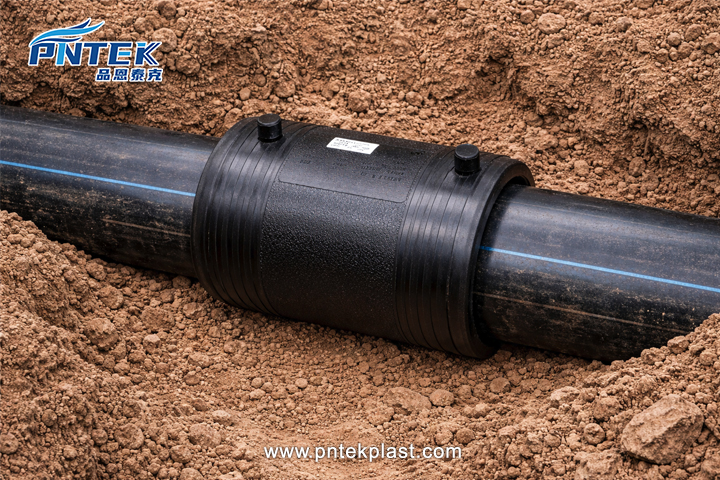
I’ve seen countless projects succeed or fail based on one thing: the quality of the joint. In my 18 years as a manufacturer, I’ve learned that a pipe is just a tube, but the connection point is where engineering and quality truly matter. An HDPE coupling isn’t just a connector; it’s a guarantee of a seamless system. This is especially true in demanding environments like those in Indonesia, where reliable water management is critical. Let’s look at how these connections are made and why they are so superior to traditional methods.
How do you connect HDPE to HDPE?
Connecting HDPE pipes can seem complex. Using the wrong technique can create a weak spot that will fail under pressure. Heat fusion is the only way to truly connect them.
You connect HDPE to HDPE using heat fusion methods. The most common are butt fusion for larger pipes, socket fusion for smaller pipes, and electrofusion for repairs. These techniques melt the plastic surfaces together, creating a single, solid, and completely leak-proof joint when cooled.
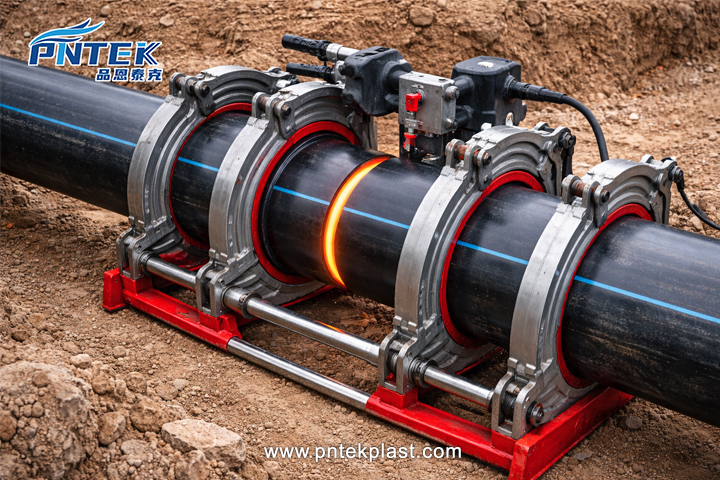
The core idea behind connecting HDPE is not to just join it, but to fuse it. We are literally remolding two separate pieces into one. Unlike PVC which uses glue or metal pipes that use threads, HDPE uses its thermoplastic nature to its advantage. By applying controlled heat, we bring the material to its melting point. Once molten, the polymer chains from both the pipe and the fitting are free to mix together. As we apply pressure and let it cool, these chains interlock and solidify, creating a bond that is just as strong, if not stronger, than the original pipe wall. This is what we call a monolithic system—it’s as if the entire pipeline was made from a single piece of plastic from the start. This eliminates any potential leak path, a concern I often hear from engineers who manage critical water infrastructure.
Creating a Monolithic System
| Method | How It Works | Best For |
|---|---|---|
| Butt Fusion | Melts the squared ends of two pipes and presses them together. | Large diameter mainlines (water, gas). |
| Socket Fusion | Melts the outside of the pipe and the inside of a fitting. | Smaller diameter pipes in plumbing and distribution. |
| Electrofusion | Uses a fitting with internal heating coils to melt the joint. | Repairs, tie-ins, and difficult-to-access areas. |
What is the full form of HDPE?
We use industry acronyms daily without a second thought. But not knowing what HDPE means can hide its best qualities. Understanding its name reveals why it’s a superior material.
HDPE stands for High-Density Polyethylene. It’s a thermoplastic polymer known for its incredible strength-to-density ratio. This “High-Density” structure is what gives the pipe its rigidity, chemical resistance, and durability, making it perfect for demanding infrastructure projects.
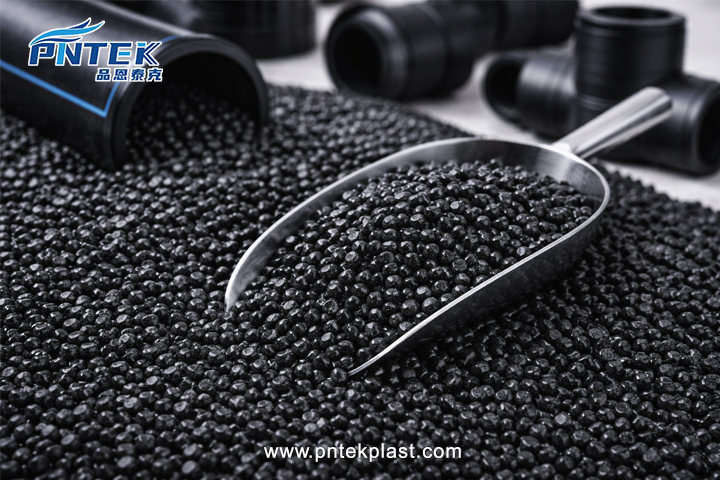
Let’s break down the name, because it tells you everything you need to know. “Polyethylene” refers to the basic polymer structure—long chains of ethylene molecules. It’s a very simple and stable plastic. The key part is “High-Density”. During the manufacturing process, we create these polymer chains with very little branching. This allows them to pack closely together, creating a dense, crystalline structure. This high density is directly responsible for the material’s best features: its stiffness, strength, and excellent resistance to chemicals and abrasion. As a manufacturer, we primarily work with PE100, a high-performance grade of HDPE. When you compare it to other materials, its advantages become very clear.
What the Name Tells You
| Property | High-Density Polyethylene (HDPE) | Polyvinyl Chloride (PVC) | Low-Density Polyethylene (LDPE) |
|---|---|---|---|
| Density | High (more crystalline) | High (but heavier) | Low (more branching) |
| Strength | Very high impact & tensile strength | Rigid, but can be brittle | Very flexible, low strength |
| Chemical Resistance | Excellent | Good | Moderate |
| Flexibility | Flexible, can be coiled | Rigid, cannot bend | Very flexible |
Does HDPE have joints?
In traditional piping, joints are the number one cause of leaks and failures. This is a constant source of worry. With HDPE fusion, these traditional weak points simply disappear.
Technically no, a properly fused HDPE system does not have joints in the traditional sense. The heat fusion process creates a monolithic pipeline. The point of connection becomes a continuous piece of plastic with the same strength and integrity as the pipe wall itself.
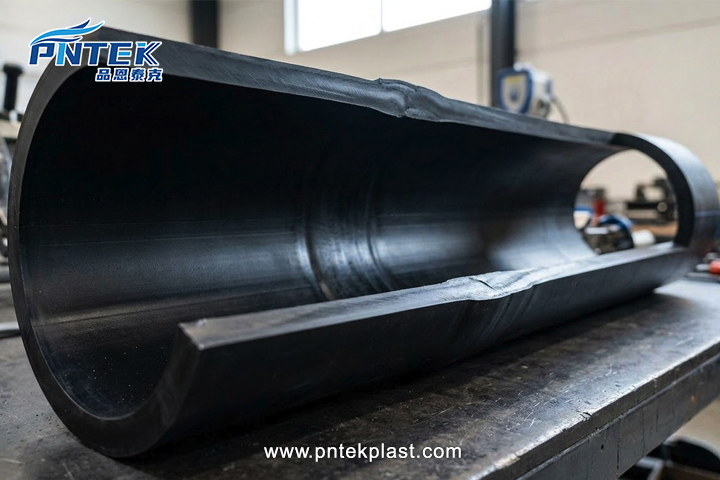
This question gets to the very heart of why HDPE is so revolutionary. When people think of a “joint,” they imagine a mechanical connection—a gasket, a flange with bolts, or a threaded fitting. These are all places where two different components are forced together, creating a potential path for leaks. An HDPE fusion weld is completely different. It’s not a joint; it’s a continuation. There are no gaskets to degrade, no bolts to re-tighten.
In many infrastructure projects where ground conditions can be unstable, this is a massive advantage. A rigid pipeline with mechanical joints will leak when the ground shifts. A flexible, monolithic HDPE pipeline moves with the ground, maintaining its integrity. It removes the single biggest risk factor from any buried pipeline project.
The Advantage of a ‘Jointless’ System
| Feature | Fused HDPE System | PVC Gasketed System | Steel Flanged System |
|---|---|---|---|
| Leak Potential | Zero | Moderate (gasket failure) | High (bolt torque, gasket) |
| Maintenance | None required | Periodic inspection | Requires re-tightening |
| Flexibility | Fully flexible | Limited flexibility at joint | Rigid |
| Strength | As strong as the pipe | Weakest point in the system | Strong but susceptible to corrosion |
What are the methods of joining HDPE pipe?
You know HDPE needs to be fused, but there are several ways to do it. Choosing the wrong method for the job can waste time and money, compromising your project’s integrity.
The three primary methods for joining HDPE pipe are all based on heat fusion. Butt fusion is for large pipes (63mm+), socket fusion is for smaller pipes (up to 110mm), and electrofusion is ideal for repairs, tie-ins, and situations where other methods are not practical.
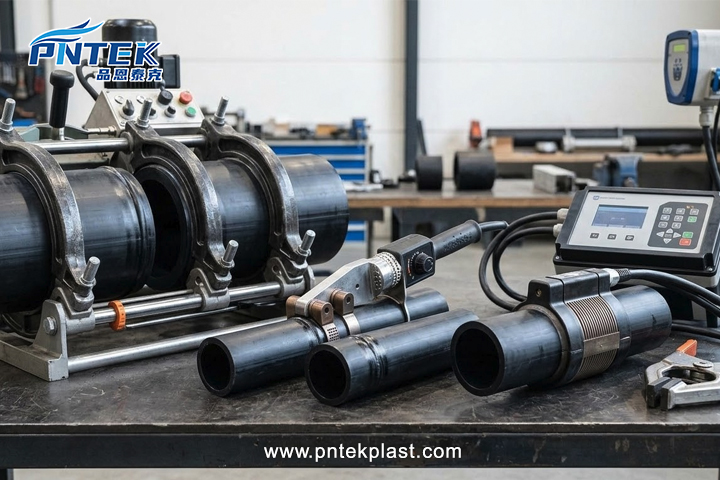
While all methods use heat, they are designed for different situations. Butt fusion is the workhorse for large infrastructure. It involves precisely facing the pipe ends, heating them on a plate, and pressing them together to form a weld.
For smaller diameters, Socket fusion is faster and more convenient. Here, we heat the outside of the pipe and the inside of a fitting’s socket simultaneously before pushing them together.
Finally, there’s Electrofusion. These fittings have built-in heating coils. You slide the fitting over the pipes, connect it to a power source, and the coils melt the plastic from the inside out.
There are also mechanical fittings, but these are mostly for transitions to other pipe materials or temporary setups, not for creating the primary, permanent pipeline.
Matching the Method to the Application
| Method | Pipe Size Range | Common Application | Key Advantage |
|---|---|---|---|
| Butt Fusion | 63mm and up | Water/gas distribution mainlines | Most cost-effective for large pipes |
| Socket Fusion | 20mm to 110mm | Residential water, industrial plumbing | Fast, easy, and reliable for small pipes |
| Electrofusion | 20mm and up | Repairs, tie-ins, tight spaces | High reliability in difficult conditions |
| Mechanical | All sizes | Transitions to metal, temporary lines | No special fusion equipment needed |
Conclusion
An HDPE coupling joins pipe into a continuous, leak-proof system. Understanding the right fusion method is key to building infrastructure that is strong, reliable, and free from traditional joint failures.
Post time: Mar-10-2026


